
Emergency Lighting Buyer Guide
A real emergency light battery pack factory in China owns the SMT line that builds the inverter PCB, sources cells directly from a tier-one battery vendor with lot-traceable COA documents, and keeps discharge test records tied to each serial number. If the supplier cannot show you photos of their ageing ovens, hipot stations and constant-current load banks, you are talking to a trading office that adds margin and erodes traceability.
The right pack for your fixture depends on three hard variables: the host luminaire’s normal LED load in watts and forward voltage window, the emergency duration your local code mandates—typically 90 minutes under NFPA 101 or EN 1838, 2 hours under BS 5266-1, or 3 hours for some Middle East and Southeast Asia projects—and the third-party test report the inspector at destination will demand, whether that is EN 60598-2-22, UL 924, or AS/NZS 2293. A 10W LED panel running 36V nominal needs a very different inverter output window and battery string than a 3W exit sign.
The remainder of this section walks through the physical and documentary checks that separate a qualified manufacturer from a reseller: in-house versus partnered assembly capacity, battery chemistry trade-offs and cell provenance, test equipment and record retention, sample lead time and payment structure, and whether the supplier has after-sales engineering staff who can debug a failed duration test remotely.
Battery Chemistry and Cell Sourcing
LiFePO4 3.2V 1500mAh to 6000mAh packs dominate new designs because they deliver 1500 to 2000 cycles at 80 percent depth of discharge and tolerate 0°C to 60°C ambient. A 3.2V 3000mAh LiFePO4 cell driving a 4W emergency load at 140 lumens output yields roughly 2 hours 20 minutes. Li-ion 18650 3.7V 2000mAh to 3500mAh cells offer higher energy density but shorter cycle life, typically 500 to 800 cycles, and stricter UN 38.3 transport documentation for air freight. NiCd 1.2V 700mAh to 1500mAh packs remain in legacy maintained circuits but carry cadmium RoHS restrictions in EU markets and lower energy density, so a 10W emergency load needs physically larger assemblies.
Ask for the cell manufacturer’s name, lot number format, and whether the pack assembler holds a direct purchase agreement or buys through a broker. Tier-one cell vendors include EVE, Lishen and Farasis for LiFePO4; Samsung, LG and Panasonic for Li-ion 18650. A factory with traceability keeps incoming cell test records for voltage, internal resistance and capacity at 0.2C discharge.
Inverter and Assembly Capacity
The inverter PCB converts battery DC to the constant current output the LED module requires. Key parameters: input voltage range AC 85-265V or 100-277V for universal mains, output window typically DC 9-42V at 150mA to 350mA for panel and linear applications, DC 20-80V at 100mA to 200mA for high-bay drivers. The changeover relay switches between mains and emergency modes; relay contact rating must exceed the LED driver inrush current by 30 percent margin.
In-house SMT capacity means the factory can revise firmware or output current within days, not weeks. A partnered assembly house adds flexibility for volume but lengthens sample lead time from 5-7 days to 12-15 days and complicates root-cause analysis if a batch fails duration test. Ask to see the SMT line, reflow profile records, and AOI or X-ray inspection reports.
Test Equipment and Record Retention
A qualified factory keeps discharge and duration test records for every production batch. The minimum equipment set includes: programmable DC electronic load banks for 1W to 50W constant-current discharge, environmental chambers for 20°C and 0°C duration verification per EN 1838, hipot testers for 1500V AC or 3000V DC dielectric withstand, and battery ageing racks that cycle packs through 50 to 100 charge-discharge cycles for reliability sampling.
Ask for a sample batch test report. It should show: initial charge time 16 to 24 hours for LiFePO4, discharge duration at rated load with voltage and lumen output logged each minute, and end-of-discharge battery voltage. For self-test and DALI test facility variants, the report should verify automatic monthly function tests and annual duration tests per EN 62034.
Third Party Reports and Market Specific Requirements
Do not accept a generic “CE certificate” as proof of EN 60598-2-22 compliance. Ask for the test report number, issuing laboratory accreditation (UKAS, DAkkS, CNAS with ILAC MRA), and whether the report covers the specific battery chemistry and inverter output window you are ordering. For UL 924 entry to North America, the report must cover the complete emergency luminaire or recognized component status for the battery pack with specific mating inverters. For AS/NZS 2293 in Australia and New Zealand, discharge duration is tested at 20°C and the report must list the exact LED module model tested.
Sample Lead Time Payment Structure and After-Sales Engineering
Sample lead time from a factory with in-house assembly and common cell stock is 5 to 7 working days for standard LiFePO4 packs, 10 to 12 days for custom output windows or DALI variants. MOQ typically runs 500 to 1000 pieces for standard packs, 2000 to 3000 pieces for custom PCB layouts. Payment structure for new export buyers is commonly 30 percent TT deposit, 70 percent against copy of bill of lading; some factories accept Alibaba Trade Assurance for initial orders under USD 50000.
After-sales engineering capability matters when a batch fails duration test at destination. A trading office forwards your complaint to the factory and waits. A real manufacturer has firmware engineers who can adjust the inverter current limit remotely and battery technicians who can analyze returned cells for internal resistance drift or electrolyte dry-out. Ask whether the supplier has resolved a field failure in the last twelve months and what documentation they provided the buyer.
Types and Configurations of Emergency Lighting
| Type or Class | Typical Rating or Output | Duration or Runtime | Best Suited For | Notes |
|---|---|---|---|---|
| Reduced-Power Emergency LED Driver 10–50% Mode | 3W–15W emergency output at 10–50% of normal luminaire wattage | 90 min or 180 min | LED panels, LED tubes, linear office luminaires | Constant-current DC 9–42V output window, 150–700mA; LiFePO4 3.2V 2000–4000mAh pack; slower lumen depreciation than NiCd |
| Full-Power Emergency LED Driver 100% Mode | Matches normal luminaire wattage, e.g. 20W–60W | 90 min or 180 min | LED high bays, warehouse aisles, retail atria | Requires LiFePO4 6.4V 6000mAh or larger pack; heavier battery, longer charge time 24h; meets EN 1838 minimum 50% floor illuminance at full output |
| Maintained Emergency Exit Sign with Self-Test | 80–120 lm face luminance, LED 2W–5W normal / 2W–5W emergency | 180 min or 3h | Public buildings, shopping centres, transport hubs | Internal changeover relay; AC 85–265V input; NiCd 3.6V 900–1500mAh or Li-ion 18650 3.7V 2200mAh; EN 60598-2-22 and EN 1838 compliance documentation required |
| Non-Maintained Emergency Twin Spotlight | 400–800 lm per head, 5W–10W LED each head, 100% on battery | 90 min or 180 min | Industrial warehouses, loading bays, external canopies | IP65 enclosure typical, IK08; LiFePO4 6.4V 3000mAh; manual test key standard, DALI-2 self-test optional; BS 5266-1 or AS/NZS 2293 documentation to be requested |
| Self-Test Emergency Driver with DALI Interface | 10–50% or 100% selectable; 3W–30W emergency | 90 min or 180 min | Smart buildings, BMS-integrated installations, spec-grade projects | EN 62034 automatic test cycle; DALI addressable fault reporting; LiFePO4 3.2V 4000mAh or 6.4V 4000mAh; 500–800 cycles; higher unit cost, lower labour cost over 10 years |
| High-Density COB LED Emergency Strip 24V | 10–15W/m, 1000–1500 lm/m, 480 LEDs/m, CRI 90+, 2700K–6500K | 90 min or 180 min via external driver/battery pack | Architectural coves, retail display, wayfinding in ceilings | DC 24V working voltage; cut length 50mm or 100mm; PCB 10mm width, 2oz copper; paired with external emergency driver 24V DC output; IP20 or IP67 jacket option; not standalone—requires separate inverter and battery enclosure |
Reduced-Power Emergency LED Driver 10–50% Mode
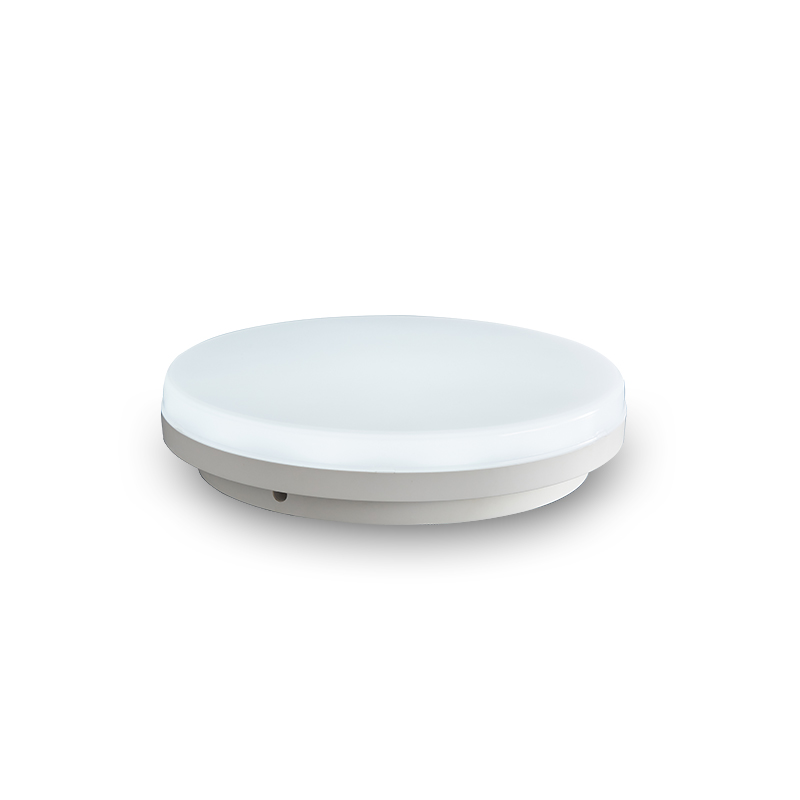
This is the volume configuration for office and commercial retrofits. Electrical contractors and luminaire OEMs adding emergency versions to existing LED panels or LED tubes buy this type because the battery pack stays compact and the cost increment per luminaire stays low. The driver delivers a constant-current DC output, typically 9–42V at 150–700mA, which the OEM must match to the LED module’s forward-voltage window. Emergency output is 10–50% of normal wattage—often 3W to 15W—so the resulting lumen package is enough for safe egress per EN 1838 but not enough to continue work. The battery is usually LiFePO4 3.2V 2000–4000mAh, giving roughly 500–800 cycles and a 90-minute or 180-minute duration. Charge time is 12–18 hours. What it cannot do: it will not maintain full task lighting during an evacuation, and if the specifier requires 100% output for high-risk task areas, this driver is non-compliant for that application.
Full-Power Emergency LED Driver 100% Mode
Facility managers in warehouses, manufacturing plants, and retail atria specify this when the normal luminaire is an LED high bay or large linear and the safety plan requires no reduction in illuminance during mains failure. The driven load matches normal wattage—20W to 60W is typical—so the battery pack scales to LiFePO4 6.4V 6000mAh or larger, with a 24-hour charge time and noticeably higher weight and volume. The constant-current inverter must handle the full LED module voltage window without current sag. Price per unit is 2.5× to 4× that of a reduced-power driver, and the luminaire OEM must redesign the housing for battery accommodation and thermal management. What it cannot do: it cannot be squeezed into a slim LED panel ceiling void; the battery mass and the heat dissipation requirement make this a dedicated high-bay or industrial trunking solution only.
Maintained Emergency Exit Sign with Self-Test
Lighting designers and M&E consultants in the UK, Europe, and the Middle East specify this for public buildings where the exit sign must be illuminated at all times—normal and emergency. The maintained wiring configuration uses an internal changeover relay so the LED face stays lit from mains AC 85–265V during normal operation and switches to battery 3.6V–3.7V on failure. Face luminance is 80–120 cd/m² minimum per EN 1838. Self-test versions per EN 62034 cycle monthly and annually, reporting fault status via an LED indicator; DALI versions add remote monitoring. NiCd 3.6V 900–1500mAh packs remain common for price-sensitive projects, while Li-ion 18650 3.7V 2200mAh packs offer longer cycle life but stricter UN 38.3 transport rules. What it cannot do: a maintained sign cannot be wired as non-maintained without losing its primary function, and if the mains supply to the sign circuit fails while the battery is depleted, the sign goes dark with no warning.
Non-Maintained Emergency Twin Spotlight
Industrial procurement officers and electrical contractors buy this for warehouses, loading bays, and external canopies where normal lighting is separate and the emergency function is purely egress-oriented. The fitting contains two adjustable LED heads, each 400–800 lm at 5W–10W, powered from a central LiFePO4 6.4V 3000mAh battery. IP65 and IK08 are standard ratings for harsh environments. Manual test key is the base configuration; DALI-2 self-test adds cost but reduces maintenance labour over a 10-year building lease. BS 5266-1 or AS/NZS 2293 documentation must be requested from the supplier—do not assume it ships with the carton. What it cannot do: it provides no illumination during normal operation, so the space must have adequate general lighting from another system, and the beam angle (typically 60–90° per head) leaves shadow zones if not spaced correctly.
Self-Test Emergency Driver with DALI Interface
Specifiers for smart buildings, BMS-integrated offices, and institutional projects with in-house maintenance teams pay the premium for this class. The driver automates the EN 62034 test cycle—monthly functional tests and annual duration tests—and reports pass/fail/fault over DALI-2 to the building management system. Output is selectable 10–50% or 100%, 3W–30W, with LiFePO4 3.2V 4000mAh or 6.4V 4000mAh packs rated 500–800 cycles. The labour saving is real: no manual test key access, no logbook entries, no scaffolding for high-bay luminaires. What it cannot do: the DALI bus requires commissioning, and if the integrator does not programme the emergency addresses correctly, faults go unreported. Also, the upfront unit cost and the engineering overhead make this uneconomic for small retail or residential projects.
High-Density COB LED Emergency Strip 24V
Architectural lighting designers and specialist contractors buy this for coves, display niches, and wayfinding where continuous linear light is part of the design intent and emergency egress must be integrated seamlessly. The strip itself is not self-powered; it is a 24V DC LED strip at 10–15W/m, 1000–1500 lm/m, 480 LEDs/m COB package, CRI 90+, 2700K–6500K, with 50mm or 100mm cut length on 10mm PCB with 2oz copper. Emergency function comes from an external driver/inverter and battery pack, sized to the total wattage of the strip run. IP20 is standard; IP67 silicone jacket is available for humid locations. What it cannot do: the strip cannot operate standalone as éclairage de secours without the separate driver and battery enclosure, and the voltage drop over long runs (typically 3% per 5m at 24V) means the emergency driver must be positioned within the calculated loop or supplemented with parallel feeds. The system also requires clear documentation so future maintenance staff do not treat it as standard decorative strip and omit battery testing.
Specifications and How to Read Them
| Parameter | Entry Level | Mid Range | High Specification |
|---|---|---|---|
| Input voltage | AC 220-240V 50Hz | AC 100-277V 50/60Hz | AC 85-265V 50/60Hz |
| Driven load (normal mode) | 3W LED module | 10W LED panel | 50W LED high bay |
| DC output window | 9-12V @ 300mA | 24-36V @ 350mA | 100-240V @ 200mA constant current |
| Emergency output | 150 lm (100% of normal) | 400 lm (40% of normal) | 2,000 lm (100% of normal) |
| Emergency duration | 90 minutes | 3 heures | 3 heures |
| Battery chemistry | NiCd 3.6V 600mAh | Li-ion 18650 3.7V 2,600mAh | LiFePO4 3.2V 3,000mAh |
| Charge time | 24 hours | 6 hours | 4 hours |
| Cycle life | 300-500 cycles | 800-1,000 cycles | 2,000+ cycles |
| Test facility | Manual test key | Automatic self-test per EN 62034 | DALI-2 emergency with addressable monitoring |
| Wiring mode | Non entretenu | Maintained or non-maintained | Maintained with changeover relay |
| IP/IK rating | IP20 / IK02 | IP65 / IK07 | IP66 / IK10 |
| Ambient temperature | 0°C to +25°C | -10°C to +40°C | -20°C to +50°C |
| Dimensions (L×W×H) | 180×40×30mm | 260×60×40mm | 380×90×55mm |
| Unit price FOB Shenzhen ( indicative 500+ pcs ) | $4.50-6.50 | $12.00-18.00 | $35.00-55.00 |
| Sample lead time | 3-5 days | 5-7 days | 7-10 days |
| Bulk lead time | 15-20 days | 20-25 days | 25-35 days |
How to Read an Emergency Driver Datasheet Line by Line
Input Voltage Range and Frequency
The entry-level build accepts only AC 220-240V at 50Hz, which covers the UK, Europe, and most of Southeast Asia but excludes Japan (100V) and North America (120V). The mid-range and high-spec units span AC 100-277V or 85-265V at both 50 and 60Hz, allowing one SKU to ship to Saudi Arabia (127V 60Hz), Mexico (127V), and Australia (240V) without modification. Ask your supplier to confirm the actual input tolerance: some datasheets print “85-265V” but the power factor correction circuit only performs above 180V.
Driven Load in Watts
This is the normal-mode LED load the driver can sustain, not the emergency output. A 3W entry-level driver cannot power a 10W LED panel in normal operation; the inverter would overheat and the battery would discharge at an unspecified rate. The high-specification 50W unit matches LED high bays and linear trunking systems. Verify whether the wattage rating applies at the top of the ambient temperature range—some manufacturers derate linearly above 35°C.
DC Output Voltage Window and Current
Emergency drivers are constant-current devices, not constant-voltage. The entry-level 9-12V @ 300mA window suits 3V LED chips in series-parallel arrays. The mid-range 24-36V @ 350mA matches 24V LED strips and small panels. The high-specification 100-240V @ 200mA constant current output drives long LED strings directly, eliminating voltage-drop losses in high-bay applications. Check whether the output is truly isolated: non-isolated designs save cost but place the LED load at mains-referenced potential, complicating insulation testing.
Emergency Output in Lumens and Percentage of Normal
EN 1838 and BS 5266-1 require escape-route lighting to deliver minimum 1 lux on the centreline, with open areas at 0.5 lux. The entry-level 150 lm at 100% of normal output means the emergency LED runs at full rated current, sacrificing duration for brightness. The mid-range 400 lm at 40% of normal output is typical for maintained systems: the same LED array runs dimmed in emergency mode, extending battery life. The high-specification 2,000 lm at 100% of normal output supports full-power emergency operation for 3 hours, required in high-risk task areas per BS 5266-1 clause 6.3. Demand photometric test reports for your specific luminaire optics—lumen figures without beam distribution are meaningless.
Durée de la situation d'urgence
90 minutes satisfies most jurisdictions for escape lighting. Three hours is mandatory for UK premises where occupants sleep (BS 5266-1), for Saudi Arabia (SASO), and for many African markets where grid reliability is poor. Confirm whether the duration is tested to end-of-discharge voltage: some suppliers quote 180 minutes but the lamp extinguishes at 150 minutes while the battery still holds residual charge below the inverter cutoff.
Battery Chemistry Voltage and Capacity
NiCd 3.6V 600mAh delivers roughly 2.2Wh. At 80% inverter efficiency, this yields 1.7Wh usable—enough for 3W for 34 minutes, or 1.5W for 68 minutes, explaining why entry-level units achieve 90 minutes only at very low loads or with optimistic maths. Li-ion 18650 3.7V 2,600mAh stores 9.6Wh, enabling genuine 3-hour duration at 10W with appropriate inverter efficiency. LiFePO4 3.2V 3,000mAh stores 9.6Wh with superior thermal stability and cycle life. NiCd tolerates deep discharge but contains cadmium, restricted under EU Battery Regulation 2023/1542 from 2027. Li-ion requires UN 38.3 testing for transport. LiFePO4 is the chemistry of choice for high-temperature installations (up to +60°C ambient) but carries a 15-20% price premium over Li-ion.
Charge Time and Cycle Life
The entry-level NiCd needs 24 hours for initial charge and suffers memory effect if partially discharged repeatedly. The mid-range Li-ion reaches 80% capacity in 3 hours, full charge in 6 hours. The high-specification LiFePO4 accepts higher charge current, achieving 90% in 2 hours. Cycle life definitions vary: NiCd 300-500 cycles typically means to 80% of initial capacity at 0.1C discharge. LiFePO4 2,000+ cycles assumes 0.5C discharge and 25°C ambient. At +45°C, cycle life halves for all chemistries.
Test Facility
Manual test key: a physical switch or fuse removal simulating mains failure, requiring a maintenance visit monthly or as required by local regulations. EN 62034 self-test: the driver automatically performs brief functional tests (typically 1-5 minutes monthly, 30-120 minutes annually) with LED status indication. DALI-2 emergency: addressable monitoring with 24-hour functional test reporting, battery health trending, and luminaire failure alerts to the building management system. DALI requires Part 252 compliance for emergency; verify the supplier’s DALI certificate references the correct test house report number.
Maintained Versus Non-Maintained Wiring
Non-maintained: the emergency driver receives permanent live and switched live; the lamp illuminates only on mains failure. Maintained: the driver receives permanent live, switched live, and neutral; the lamp runs normally via the switched circuit and transfers to battery on failure. The mid-range and high-specification units include a changeover relay rated for the driven load—typically 2A at 250V AC inductive. Check relay contact material: silver-nickel for standard duty, silver-tin oxide for frequent switching in maintained systems with short-duty normal operation.
IP and IK Rating
IP20: finger-safe, no dust or moisture protection. Suitable for interior luminaire housings. IP65: dust-tight and protected against water jets, required for covered exterior walkways in the Middle East and Southeast Asia. IP66: powerful water jets, needed for exterior emergency bulkheads in exposed locations. IK02: 0.25J impact, adequate for ceiling-recessed fittings. IK07: 2J, withstands casual impact in warehouses. IK10: 20J, mandatory for sports facilities, prisons, and railway platforms per EN 60598-2-22. Verify IP ratings are tested to EN 60529 with the complete luminaire assembled, not the bare driver module.
Ambient Temperature Range
The entry-level 0°C to +25°C excludes unheated UK stairwells in winter and Middle Eastern plant rooms in summer. The mid-range -10°C to +40°C covers most European commercial applications. The high-specification -20°C to +50°C addresses Nordic cold stores and Gulf Region rooftop plant rooms. Battery capacity derates below 0°C: at -20°C, Li-ion delivers 50-60% of rated capacity, which the supplier must compensate with oversized cells or reduced emergency output.
Dimensions and Mounting
Entry-level 180×40×30mm fits within 25mm ceiling voids. Mid-range 260×60×40mm requires 35mm void or surface mounting with cable entry knockouts. High-specification 380×90×55mm typically mounts externally on high-bay reflectors or within linear trunking end caps. Confirm mounting bracket material: steel zinc-plated for interior, 304 stainless for humid environments, 316 stainless for coastal or chemical exposure.
Reading Strip Emergency Datasheets
For LED strip emergency systems, the parameters shift:
| Parameter | Entry Level | Mid Range | High Specification |
|---|---|---|---|
| Working voltage | DC 12V | DC 24V | DC 48V |
| Power per metre | 4.8W/m | 14.4W/m | 19.2W/m |
| Lumens per metre | 360 lm/m | 1,200 lm/m | 2,000 lm/m |
| LEDs per metre | 60 × 2835 SMD | 120 × 2835 SMD | 180 × 2110 SMD |
| CRI | Ra 70 | Ra 80 | Ra 90 |
| Colour temperature | 6,500K only | 3,000K / 4,000K / 6,000K selectable | 2,700K-6,500K tunable white |
| Cut length | 50mm | 100mm | 166mm |
| Reel length | 5 metres | 5 metres | 5 metres |
| PCB width / copper weight | 8mm / 1oz | 10mm / 2oz | 12mm / 3oz |
| IP class | IP20 | IP65 gel-coated | IP67 extruded silicone |
Working Voltage: DC 12V allows simple battery direct drive but suffers 8.3% voltage drop per metre at 4.8W/m, limiting run lengths to 5 metres from a single feed. DC 24V halves the current and doubles the permissible run. DC 48V reduces cable losses further but requires Class II or SELV compliance verification in some jurisdictions.
W/m and lm/m: The entry-level 4.8W/m at 360 lm/m achieves 75 lm/W—acceptable for indicator strips but insufficient for escape-route illumination per EN 1838. The mid-range 14.4W/m at 1,200 lm/m (83 lm/W) provides genuine corridor lighting. The high-specification 19.2W/m at 2,000 lm/m (104 lm/W) with Ra 90 supports wayfinding in premium commercial interiors. Verify whether lm/m is measured at 25°C LED junction temperature or at steady-state 85°C—thermal droop can reduce output 10-15%.
Cut Length: Determined by LED series grouping. 50mm cuts (12V, 3 LEDs) allow precise length matching but waste copper at every cut point. 166mm cuts (48V, 28 LEDs) reduce termination points but constrain layout flexibility.
Price Drivers and Lead Time Reality
Bill of Materials Sensitivity
The battery dominates cost: LiFePO4 cells cost $0.15-0.25 per Wh at factory gate, Li-ion 18650 $0.08-0.15 per Wh, NiCd $0.05-0.10 per Wh but with shorter life. A 3-hour LiFePO4 pack for 50W output requires 45-55Wh, representing $7.00-14.00 in cell cost alone. The inverter PCB with constant-current regulation adds $3.00-8.00 depending on topology (flyback versus LLC resonant). The changeover relay in maintained systems: $0.80 for standard, $2.50 for high-inrush rated. Housing and thermal management complete the picture.
In-House Capability Indicators
A genuine manufacturer, not a trading office, will show SMT lines with pick-and-place for LED driver ICs and battery management system components. Battery sourcing traceability means cell-level purchase orders from EVE, CATL, BYD, or Lishen—not anonymous repackaged cells. Demand discharge and duration test records: each production batch should have 100% functional test and sampled duration verification to declared time at rated load. Ageing stations run products at +45°C for 4-8 hours to precipitate early failures. Hipot (dielectric withstand) test at 1,500V AC or 2,000V DC for 60 seconds verifies isolation between mains and output circuits.
Third-Party Test Reports
Do not accept a generic “CE certificate.” Ask for the test report number and issuing laboratory (SGS, TÜV Rheinland, Intertek, DEKRA, BSI). For EN 60598-2-22 compliance, the report must cover your specific product configuration: driver, battery, and LED load combination. For UKCA marking post-Brexit, the report must reference a UK-recognised approved body or the manufacturer’s UKCA technical file. For UL 924 entry to North America, the report must list the exact model and factory location. For AS/NZS 2293 in Australia, RCM registration requires an Australian importer with electrical safety responsibility.
Sample Lead Time and Payment Structure
Standard samples from stock: 3-5 days for entry-level, 7-10 days for high-specification with custom battery configuration. Custom samples with your specific LED load voltage: 10-15 days. Payment terms for new relationships: 100% T/T in advance for samples below $500 value; 30% deposit, 70% before shipment for first orders under $10,000. Established accounts may negotiate L/C at sight for orders above $50,000, but L/C charges ($300-800 per transaction) erode margin on small volumes.
Trade Terms and Export Practicalities
FOB, CIF, CFR, EXW
EXW (Ex Works): you collect from the factory door, bearing all export clearance, ocean freight, insurance, and import duty. Lowest supplier price, highest buyer complexity. FOB (Free On Board): supplier delivers to Shenzhen or Ningbo port, clears export customs, and loads on vessel. You pay ocean freight and marine insurance. CIF (Cost Insurance Freight): supplier arranges freight to your destination port and insurance to that point; you handle import clearance and inland delivery. CFR (Cost and Freight): same as CIF but without marine insurance—rarely advisable for emergency lighting containing lithium batteries. For battery-equipped products, FOB Shenzhen is standard; CIF to Jebel Ali, Felixstowe, or Lagos adds $800-2,500 per 20-foot container depending on current shipping rates and IMO Class 9 hazardous cargo surcharges.
L/C and T/T
T/T (telegraphic transfer): direct bank transfer, 1-3 days clearing. L/C (letter of credit): bank-guaranteed payment against presentation of compliant documents. L/C protects the buyer against non-shipment but requires meticulous document matching—commercial invoice, packing list, bill of lading, certificate of origin, and for battery products the UN 38.3 test summary. Discrepancy fees of $50-150 per document error are common.
HS Code and Customs Classification
Emergency lighting drivers and complete luminaires typically fall under HS 9405.40 (other electric lamps and lighting fittings). LED strips: 9405.42 or 9405.49 depending on classification by customs at destination. Battery packs separately shipped may classify as 8507.80 (lithium-ion batteries). Correct classification determines import duty rate: 0-6% for luminaires in EU MFN tariff, 3.7% for US HTS 9405.40, 5% for Saudi Arabia GCC common tariff.
CE and UKCA Marking
CE marking requires EU Declaration of Conformity citing EN 60598-2-22, EN 55015 (EMC), and EN 61547 (immunity). The manufacturer or EU authorised representative holds the technical file. UKCA marking references identical BS EN standards but requires UK-based responsible person from 2025 for most products. Northern Ireland maintains CE under Windsor Framework.
UN 38.3 Battery Test Report
Lithium batteries shipped by air (IATA DGR) or sea (IMDG Code) require UN 38.3 testing: altitude simulation, thermal cycling, vibration, shock, external short circuit, impact/crush, overcharge, and forced discharge. The test summary must be available to the shipper and carrier. For assembled emergency drivers with internal batteries, the completed product may be classified as “battery-powered equipment” (UN 3171) if batteries are installed and protected from short circuit, exempting from full Class 9 dangerous goods declaration for air transport in limited quantities. Verify with your freight forwarder: rules differ for passenger versus cargo aircraft.
Packing List and Certificate of Origin
Standard carton packing: individual box with foam insert, 20-50 units per master carton, palletised at 500-800 kg per pallet for 20-foot container loading. For lithium battery shipments, each carton requires Class 9 label, UN number, and handling marks. Certificate of origin (CO) from China Council for the Promotion of International Trade (CCPIT) or customs authority enables preferential tariff claims under free trade agreements: ASEAN-China, RCEP, or bilateral agreements with Chile, Pakistan, or New Zealand.
MOQ and Lead Time
Entry-level emergency drivers: 500 pieces MOQ, 15-20 days lead time. Mid-range: 300 pieces, 20-25 days. High-specification with LiFePO4 custom configuration: 100 pieces, 25-35 days. LED strip emergency systems: 1,000 metres MOQ for custom CCT or PCB width, 5-7 days for standard reels from stock. Annual framework agreements reduce lead times 20-30% by securing cell inventory.
After-Sales Engineering Capability
Qualify suppliers on their ability to troubleshoot your installation remotely. A genuine manufacturer provides: thermal images of driver mounting in your luminaire housing, battery replacement instructions with torque specifications for safety-critical terminals, DALI address programming guides, and firmware updates for self-test algorithms. Request a written warranty terms document: 3 years for entry-level NiCd products, 5 years for Li-ion, 5-7 years for LiFePO4. The warranty should cover capacity retention to 80% of rated duration, not merely functional operation. Spare battery availability 10 years after model discontinuation is a reasonable request for life-safety equipment.
Emergency Lighting Price and What Drives It
| Class | Typical Rating or Output | Duration or Runtime | Indicative FOB USD |
|---|---|---|---|
| Basic LED exit sign, thermoplastic housing | 8–12 lm face illumination, single-sided | 90 min | 4.50–7.00 |
| Steel exit sign, IP20, maintained or non-maintained | 15–25 lm face, double-sided | 90 min | 9.00–14.00 |
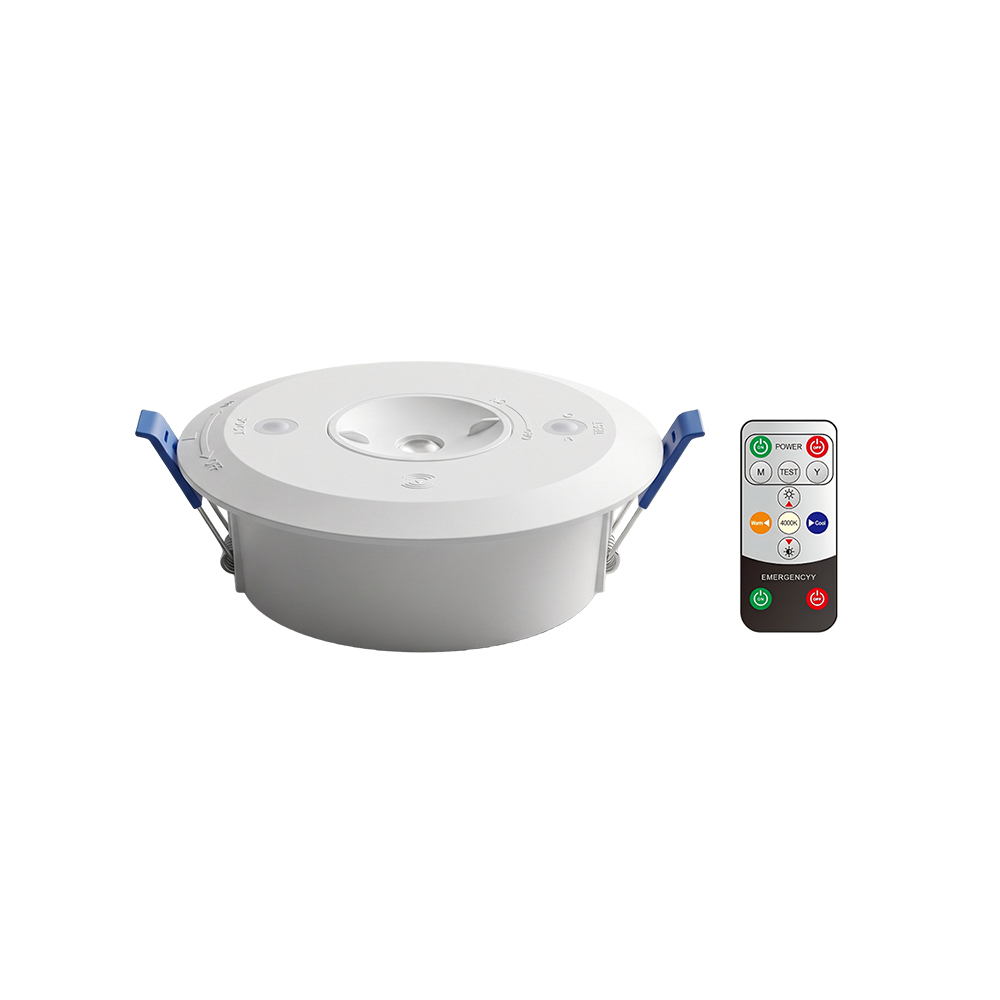
| Recessed or surface emergency downlight, 3 W LED | 150–200 lm emergency, 10% of normal | 90 min | 12.00–19.00 |
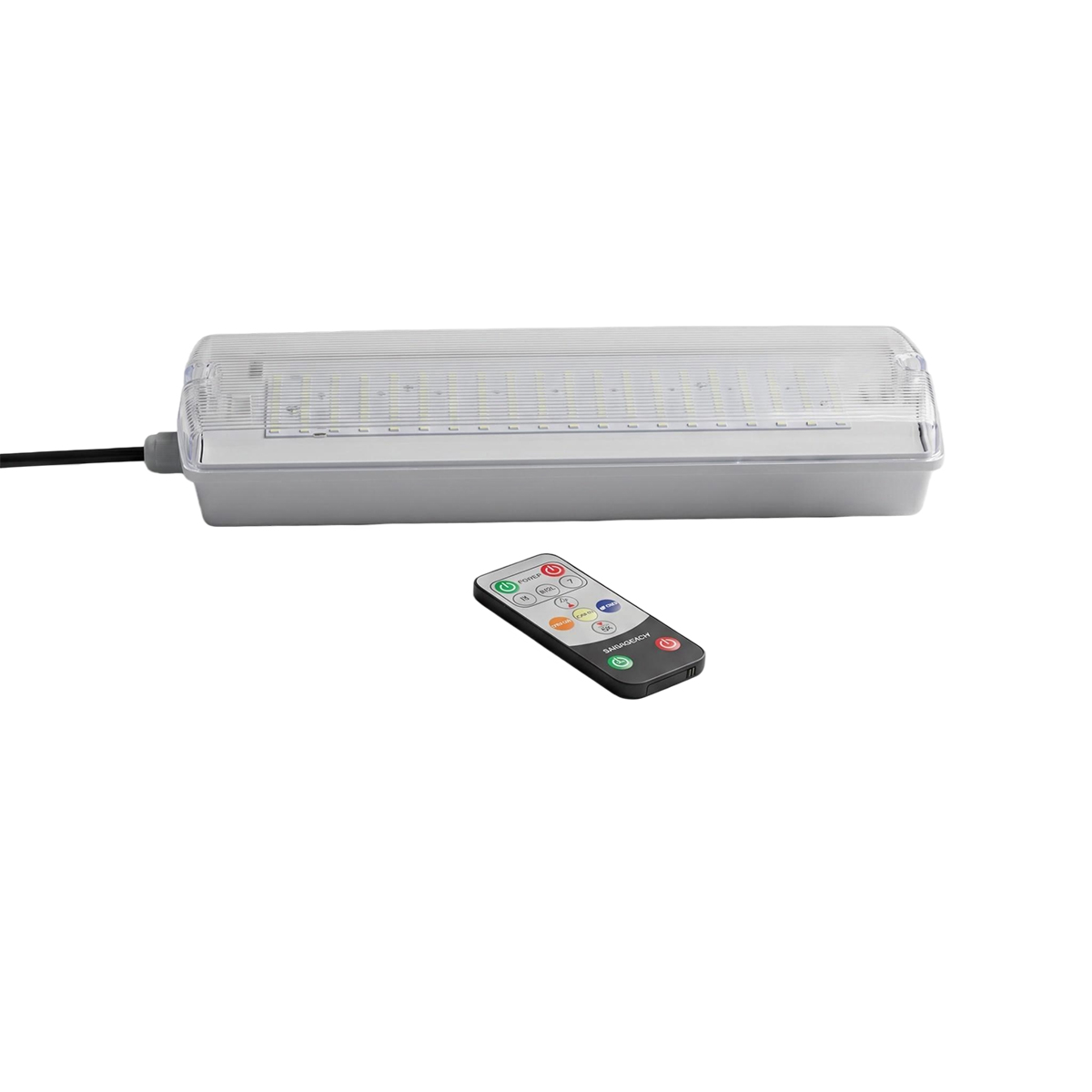
| LED emergency bulkhead, polycarbonate, IP65 | 300–400 lm, 15–20% of normal | 90 min to 3 hr | 16.00–26.00 |
| Emergency twin spotlight, 2×3 W LED heads | 400–600 lm total, 20–25% of normal | 90 min to 3 hr | 22.00–35.00 |
| Emergency driver for LED panel/high bay, 10–20 W load | 1000–2000 lm at 10–100% selectable | 90 min to 3 hr | 28.00–48.00 |
| Full-power emergency driver, 30–60 W maintained output | 3000–6000 lm, 100% of normal | 90 min to 3 hr | 55.00–95.00 |
| Self-test or DALI-addressable module, add-on | As above with EN 62034 automatic test | 90 min to 3 hr | +15%–35% over base |
These bands assume standard order quantities of 500–2000 pieces, NiCd or Li-ion 18650 cell chemistry, and EN 60598-2-22 compliance testing already completed. LiFePO4 packs, UL 924 or AS/NZS 2293 third-party reports, and sub-300-piece orders push figures to the upper end or beyond.
What Actually Drives the Price
The battery pack and the third-party approval are normally the two largest line items on any emergency lighting product. Everything else is comparatively predictable.
Battery cells account for 18–35% of unit FOB depending on chemistry and duration. A NiCd 3.6V 1200mAh stick for 90 minutes at 3W costs less than a Li-ion 18650 3.7V 2600mAh pack, which in turn costs less than a LiFePO4 3.2V 3000mAh block with 500–800 cycle life. LiFePO4 offers thermal stability and longer calendar life but carries a 40–60% premium over Li-ion 18650 and roughly double the NiCd equivalent. The cell brand matters: tier-one cells with full traceability (lot codes, factory COA, UN 38.3 test summary) cost 15–25% more than unbranded or relabelled cells.
Driver and inverter electronics run 12–22% of FOB. The constant-current inverter stage, changeover relay for maintained/non-maintained switching, and charge control circuit must match the LED load voltage window. A typical output window is DC 9–42V at 150–350mA for panel applications, or DC 3–12V at 500–900mA for small luminaires. Components rated for 85°C ambient versus 65°C add 8–12%.
LED package where integral to the luminaire: 8–15% for mid-power SMD, 15–25% for dedicated emergency LED arrays with tight binning.
Enclosure and hardware: 10–18%. IP65 polycarbonate versus IP20 ABS, steel versus aluminium reflector, captive hinge and tamper-proof hardware each step the cost.
Test and certification amortised over batch: 5–15% depending on batch size. EN 60598-2-22 and EN 1838 photometric testing, plus thermal and endurance sequences, run €4,000–€12,000 per product family at a notified body or accredited lab. Spread across 500 units this is €8–24 per piece; across 5,000 units it drops to €0.80–2.40. Third-party approval for UL 924 or AS/NZS 2293 is separate and typically €8,000–€25,000 per family.
Assembly labour: 6–12% at current Guangdong rates. Battery welding and inverter potting are skilled steps; pure screw-fixture assembly is cheaper.
Export packing, inland freight, sea/air freight, insurance: 8–14% combined. Lithium cells trigger IATA and IMDG restrictions. UN 38.3 testing is mandatory for air freight; many suppliers default to sea freight for lithium-ion or LiFePO4 packs to avoid the documentation burden and the 30% freight cost premium air carries for hazardous cargo. A 40-foot container holding 4,000–6,000 emergency units costs $2,500–$4,500 FOB Shenzhen to Felixstowe or Jebel Ali at 2025 rates; equivalent air freight for a 500 kg lithium shipment runs $6,000–$10,000.
Destination duty, VAT, clearance: varies by market. UK/EU: generally 2.5–4% duty on luminaires plus 20% VAT. Middle East GCC: 5% VAT, typically zero duty on lighting. Brazil, Nigeria, Argentina: 15–35% duty plus local taxes.
Why the Cheapest Quote Is Cheaper
A quote at 60% of the mid-market band normally means one or more of the following: a 600mAh NiCd cell instead of 1200mAh, yielding 45 minutes not 90; emergency output derated to 5% of normal rather than 10% or 100%; a self-built inverter without EN 61347-2-7 or IEC 62034 evaluation; or a design that has never seen a third-party test lab. The supplier may ship with a generic battery datasheet rather than a UN 38.3 test summary, which blocks air freight and risks customs seizure. Ask directly: what is the cell part number and manufacturer? Has the complete product, not just the cell, been submitted for EN 60598-2-22 Annex A endurance? Can they provide discharge curves at 25°C and at the product’s rated Tambient?
Five-Year Running Cost Comparison
| Cost Element | Low-First-Cost Unit (NiCd, basic inverter) | Mid-Range Unit (Li-ion 18650, self-test) | Premium Unit (LiFePO4, DALI, full power) |
|---|---|---|---|
| Initial FOB per unit | $6.50 | $18.00 | $55.00 |
| Battery replacement cycle | Every 2.5–3 years (NiCd memory, sulphation) | Every 4–5 years (Li-ion capacity fade) | Every 6–8 years (LiFePO4 cycle life) |
| Battery replacement cost, landed | $4.50 × 2 = $9.00 | $8.00 × 1 = $8.00 | $14.00 × 0.5 = $7.00 |
| Annual functional test labour, 10 min × $45/hr | $7.50/year × 5 = $37.50 | $3.75/year × 5 = $18.75 (auto self-test reduces manual) | $1.50/year × 5 = $7.50 (DALI automated) |
| Expected failure rate, years 1–5 | 12–18% (relay, cell, inverter capacitor) | 5–8% | 2–4% |
| Replacement unit cost for failures | $6.50 × 15% = $0.98 | $18.00 × 6.5% = $1.17 | $55.00 × 3% = $1.65 |
| Five-year total per installed point | $53.98 | $45.92 | $71.15 |
The mid-range Li-ion unit with self-test (EN 62034) typically wins on total cost of ownership in commercial buildings where labour rates are above $35/hour. The premium LiFePO4/DALI option pays back in 24/7 facilities with high labour costs and where 100% maintained emergency output is specified under BS 5266-1 or local variants. The low-first-cost NiCd unit only makes sense in price-sensitive markets where replacement labour is inexpensive and the installation is small enough that manual testing burden is negligible.
Supplier Qualification Checklist
Use this to distinguish a factory from a trading office before placing a deposit.
Production capacity
– In-house SMT line or at least partnered SMT with dedicated capacity? Ask for machine model (Yamaha, Juki, Panasonic) and daily board output.
– Battery pack assembly: spot welding in-house or subcontracted? In-house welding allows faster sample turnaround and better lot traceability.
– Ageing and hipot test stations: how many channels, what duration (typically 2–4 hours burn-in at 40°C ambient for emergency drivers)? Request a photo of the test rack with timestamp.
Battery sourcing and traceability
– Cell manufacturer name and factory location, not just “imported cells”.
– UN 38.3 test summary number for the exact cell model, not the pack.
– Cycle life claim backed by manufacturer datasheet or in-house test records: 500 cycles at what depth of discharge?
Discharge and duration test records
– Can they provide a discharge curve for the specific product at rated load, showing voltage versus time to the cut-off threshold?
– Do records cover the full ambient range, typically 0°C to 45°C or the product’s claimed Tambient?
Third-party documentation for the destination market
– Do not accept “CE available” or “we can do UL”. Ask: has a sample of this exact SKU been tested to EN 60598-2-22 by a lab with ISO 17025 accreditation, and can you provide the report number? For UL 924 or AS/NZS 2293, the same specificity applies.
– Note that EN 1838 photometric data (minimum 1 lux on escape route, 0.5 lux open area) is normally part of the EN 60598-2-22 test sequence but confirm it is included.
Sample lead time and payment structure
– Sample from stock or from production: 3–7 days versus 15–25 days.
– Payment: 30% TT deposit, 70% against copy of B/L is standard for first orders. LC at sight adds 1.5–3% cost and is reasonable above $50,000. Escrow or PayPal for samples only.
After-sales engineering
– Can they provide wiring diagrams for maintained versus non-maintained circuits with your specific luminaire?
– Do they offer firmware updates for DALI self-test modules if the local DALI gateway version changes?
– What is the claimed defect rate, and what is the actual return procedure (replacement parts, cross-ship, credit note)?
A trading office will hesitate on the test rack photo, the discharge curve, and the exact test report number. A factory will have these ready or produce them within 48 hours.
Industry Applications for Emergency Lighting
| Sector | Typical Installation | Recommended Specification | Why This Product Fits |
|---|---|---|---|
| Commercial Offices and Fit-Outs | Recessed LED panels, surface-mounted bulkheads in open-plan floors and meeting rooms | 3-hour duration, 10% to 100% maintained output, LiFePO4 3.2V 5000mAh, AC 220-240V 50Hz input, DC 50-200V 350mA output, self-test or DALI-2 auto-test to EN 62034 | Maintained wiring avoids dark ceilings during normal hours; self-test reduces manual inspection labour across large floorplates |
| Hospitals and Clinics | Corridor bulkheads, operating theatre downlights, stairwell luminaires | 3-hour duration minimum, 100% maintained output, LiFePO4 3.2V 6000mAh to 9600mAh, AC 85-265V input, DC 25-80V 700mA output, IP44 minimum, changeover relay with <0.25s transfer | Critical care routes cannot tolerate output drop; maintained operation ensures continuous illumination during generator sequencing |
| Warehouses and Logistics Centres | High-bay LED fittings with emergency drivers, aisle way bulkheads | 90-minute or 3-hour duration, 10% to 50% emergency output, Li-ion 18650 7.4V 4400mAh or LiFePO4 6.4V 6000mAh, AC 100-277V input, DC 100-240V 300mA output, IP65, -10°C to +45°C ambient | High-bay spacing demands lumen maintenance; wide voltage input suits three-phase industrial distribution |
| Car Parks and Stairwells | Surface-mounted bulkheads, recessed downlights, wall-mounted twin spots | 3-hour duration, 10% to 30% output, NiCd 3.6V 4000mAh or LiFePO4 3.2V 5000mAh, AC 220-240V input, DC 12-50V 200mA output, IP65, IK08 minimum | Vandal resistance and moisture protection non-negotiable; battery chemistry must tolerate sub-zero winter starts |
| Hotels and Residential Common Areas | Decorative ceiling fittings, corridor bulkheads, exit sign combinations | 90-minute or 3-hour duration, 10% to 100% maintained output, LiFePO4 3.2V 3000mAh to 5000mAh, AC 220-240V input, DC 25-60V 250mA output, manual test key or self-test | Maintained operation preserves ambient aesthetics; compact battery packs fit shallow ceiling voids in retrofit projects |
Commercial Offices and Fit-Outs
Open-plan offices in London, Dubai and Singapore typically specify 3-hour duration under BS 5266-1 or AS/NZS 2293. The maintained versus non-maintained decision hinges on ceiling design: a maintained emergency LED panel running at 100% normal output and switching to 10% emergency output avoids the visual interruption of a dark fitting in a lit room. A LiFePO4 3.2V 5000mAh pack delivers roughly 3 hours at 4W to 5W emergency load, which translates to 350 lumens to 450 lumens from a 4000-lumen nominal panel. Charge time from flat is 24 hours to 48 hours. Self-test circuitry to EN 62034 is standard specification for landlords managing 500-plus fittings across a business park; manual test keys are rarely accepted in new-build Class A office stock. Buyers should request third-party test reports showing the inverter output holds constant current within ±5% across the 50V to 200V LED window at +25°C ambient.
Hospitals and Clinics
Hospital corridors and critical care routes in the UK and Middle East normally mandate 3-hour duration per BS 5266-1 and local health authority guidance. The changeover relay must transfer from mains to battery within 0.25 seconds to avoid perceptible flicker that could disturb surgical or diagnostic activity. A 100% maintained system is effectively universal in new hospital construction: the luminaire stays at full normal output on mains, then either sustains that output on generator supply or drops to a specified emergency level on battery. LiFePO4 chemistry dominates because of thermal stability in ceiling voids that may reach +40°C; a 6.4V 6000mAh pack or 3.2V 9600mAh parallel configuration supports 8W to 12W emergency load for 180 minutes. Output window of DC 25V to 80V at 700mA suits 20W to 40W LED downlights. IP44 is the practical minimum for clean corridor environments; IP65 is specified for plant rooms and sterile service corridors with hose-down regimes.
Warehouses and Logistics Centres
High-bay emergency lighting in distribution centres faces a spacing problem: a 15-metre mounting height with 10-metre aisle spacing requires maintained emergency output of 50% or full power to meet the 0.5-lux minimum on the floor in some jurisdictions, or 10% where local codes permit reduced high-bay levels. The emergency driver sits remote from the LED high-bay, typically in a ventilated canopy or on the truss, connected by two-core plus earth cable. Li-ion 18650 7.4V 4400mAh packs or LiFePO4 6.4V 6000mAh packs are common; the 18650 offers higher energy density but shorter cycle life of 300 to 500 full discharges versus 800 to 1500 for LiFePO4. Input voltage range of AC 100V to 277V covers North American 277V branch circuits and European 230V without separate SKUs. Output window of DC 100V to 240V at 300mA matches 100W to 200W nominal LED high-bays at fractional emergency load. Ambient rating of -10°C to +45°C is essential for uninsulated steel sheds in continental Europe and the US Midwest.
Car Parks and Stairwells
Multi-storey car parks in the UK, UAE and Southeast Asia combine moisture, salt in coastal locations, and physical impact risk. IP65 and IK08 are baseline specifications; IK10 is increasingly requested for ground-floor and ramp fittings. Battery chemistry selection splits by climate: NiCd 3.6V 4000mAh tolerates -20°C discharge but carries memory-effect maintenance penalties and cadmium disposal restrictions in the EU; LiFePO4 3.2V 5000mAh operates to -10°C with better cycle life and lighter weight. A 3-hour duration at 10% to 30% output is standard for BS 5266-1 compliance in escape stair cores; car park open decks may accept 90-minute duration where the escape route is short and directly ventilated. Output of DC 12V to 50V at 200mA suits compact bulkheads and exit sign combinations. Buyers should verify the supplier’s discharge test records show capacity retention after 200 cycles at +45°C, which simulates three to four years of summer peak loading in Gulf Cooperation Council climates.
Hotels and Residential Common Areas
Hotel corridors and apartment common areas prioritise aesthetic continuity. A maintained emergency fitting at 100% normal output preserves the lighting designer’s intent until mains failure, then drops to 10% to 30% emergency output or sustains full output depending on battery sizing. Shallow ceiling voids in retrofit projects, common in 1960s to 1990s building stock across Europe and Latin America, demand compact battery packs: LiFePO4 3.2V 3000mAh in a 120mm × 35mm × 25mm housing fits behind a 150mm downlight aperture. Charge time of 16 hours to 24 hours from flat is acceptable in continuously occupied buildings. Manual test key acceptance varies by market: UK facilities managers often prefer self-test or DALI-2 auto-test to reduce access disruption, while some Southeast Asian residential developments still specify key switches for cost control. The output window of DC 25V to 60V at 250mA covers 10W to 15W LED downlights and small bulkheads. CRI 80+ and 3000K to 4000K colour temperature matching is standard specification for hospitality interiors.
Ordering and Importing Step by Step
Three mistakes regularly leave a delivered batch unusable. The fixes are simple.
Mistake 1: Output window mismatch. The emergency driver’s DC output range does not match the host fixture LED module’s forward voltage and current draw. The fixture either does not light in emergency mode or runs at fraction of rated output. Fix: Record the fixture’s LED board Vf and If before ordering; demand the supplier’s inverter output window in writing—typical ranges are DC 9-42V at 150-350mA, DC 50-200V at 100-250mA, or DC 180-260V at 50-100mA for linear schemes.
Mistake 2: Duration or illuminance shortfall. The battery capacity or inverter efficiency yields less than the code-mandated 90 minutes, 2 hours or 3 hours, or the emergency lux on the escape route falls below minimum. Fix: Specify the required duration and minimum emergency output in lumens or percentage of normal output—commonly 10% for open areas, 50% or 100% for anti-panic and task lighting—then require batch discharge test records proving compliance.
Mistake 3: Missing lithium documentation at customs. UN 38.3 test summaries, MSDS, or conformity certificates absent or incorrect; shipment held or returned. Fix: Confirm before payment that the supplier will provide UN 38.3 test summary numbers, proper lithium battery labels, and the destination market’s required conformity mark documentation.
Step By Step Ordering Checklist
1. Record Host Fixture Parameters
| Parameter | What to Document | Why It Matters |
|---|---|---|
| Normal LED driver output | Constant current mA and voltage range | Determines emergency inverter matching |
| LED module forward voltage | Vf at operating temperature | Sets the DC output window the inverter must cover |
| Normal wattage | W at full output | Baseline for emergency output percentage |
| Driver architecture | Integrated vs separate driver, DALI dimmable? | Affects wiring topology and test facility compatibility |
| Physical space | Length × width × height inside housing | Battery pack and inverter must fit; LiFePO4 3.2V 3000mAh packs are roughly 18mm × 26mm × 66mm per cell versus NiCd 3.6V 1500mAh packs at 22mm × 22mm × 43mm |
If you are a luminaire OEM adding emergency to your own fixture, send the supplier a sample fixture or detailed mechanical drawing. A real manufacturer will request this; a trading office often skips this step and guesses.
2. Confirm Duration and Emergency Output Level
| Application | Typical Requirement | Battery Implication |
|---|---|---|
| General escape route | 90 minutes at ≥1 lux on floor | LiFePO4 3.2V 3000mAh or Li-ion 18650 3.7V 2600mAh per 3-5W load |
| High-risk task area | 3 hours at ≥10% normal output | Larger pack or higher capacity cells, 5000-7000mAh |
| Anti-panic open area | 2 hours at ≥50% normal output | Significant battery volume; confirm fixture space |
EN 1838 and BS 5266-1 specify minimum illuminance; EN 60598-2-22 covers the luminaire construction. AS/NZS 2293 requires 90 minutes minimum. UL 924 typically requires 90 minutes. Ask the supplier for discharge curves at your specific load, not generic cell data.
3. Choose Maintained or Non-Maintained Wiring
| Type | Wiring | Use Case |
|---|---|---|
| Non entretenu | Switched live to inverter, separate unswitched live to charging circuit | Standard for most emergency-only fittings; lower cost, simpler wiring |
| Mis à jour | Single switched live, internal changeover relay | Where normal and emergency use same lamps; required for some exit signs and public spaces |
Maintained versions need a changeover relay rated for the LED load current and voltage. Confirm the relay contact rating—typically 2A at 250V AC or 3A at 30V DC for LED loads.
4. Decide Test Facility
| Option | Wiring Complexity | Cost | Best For |
|---|---|---|---|
| Manual test key | Simple two-wire | Lowest | Small installations with dedicated maintenance staff |
| Self-test (EN 62034) | Standard wiring, internal timer | Moderate | Most commercial installations; automatic monthly and annual tests |
| DALI self-test | DALI bus wiring, addressable | Highest | Managed buildings with BMS integration, remote monitoring |
Self-test units need functional and duration test logic; DALI versions add addressability and status reporting. A real manufacturer will explain which EN 62034 test modes their firmware supports—functional test monthly, duration test annually, or both.
5. Confirm Mains Voltage and Frequency
| Market | Typical Input | Tolerance | Frequency |
|---|---|---|---|
| UK, Europe, Middle East, Africa, Southeast Asia, Latin America | AC 220-240V | ±10% | 50Hz |
| North America | AC 100-277V or 120-347V | ±10% | 60Hz |
| Some industrial sites | AC 85-265V universal | ±10% | 50/60Hz |
Universal input drivers cost more but cover multiple markets from one SKU. If your project spans 50Hz and 60Hz regions, specify universal input to avoid separate inventories.
6. Verify Conformity Mark and Test Reports
| Market | Mark | What to Request from Supplier |
|---|---|---|
| UK | UKCA | Third-party test report to EN 60598-2-22 and EN 1838 |
| EU | CE | Test report, DoC, risk assessment; EN 60598-2-22, EN 1838, EN 62034 if self-test |
| Middle East | SASO, ESMA, or local | CB report often accepted; confirm with local importer |
| Australia/NZ | RCM | Test report to AS/NZS 2293 |
| North America | cULus or ETL | UL 924 test report |
Never accept a supplier’s claim of holding a certificate. Request the test report number, testing laboratory name, and scope of approval. Verify directly with the laboratory if the project value justifies it. A real manufacturer has these reports organized by model; a trading office produces excuses.
7. Check IP Rating and Ambient Temperature
| Mounting Position | Minimum IP | Ambient Range | Battery Impact |
|---|---|---|---|
| Indoor office, dry | IP20 | 0°C to +25°C | Standard Li-ion or NiCd acceptable |
| Corridor, occasional dust | IP44 | -5°C to +35°C | LiFePO4 preferred for wider temperature tolerance |
| Outdoor canopy, parking | IP65 | -20°C to +45°C | LiFePO4 mandatory; NiCd capacity collapses below 0°C |
| Industrial, chemical | IP66/IP67 | -20°C to +50°C | Confirm cell specification; derate duration at extremes |
IK rating matters for vandal-prone locations: IK08 (5J impact) or IK10 (20J) for public spaces. Battery cycle life also degrades at temperature extremes—LiFePO4 typically 2000 cycles at 25°C, falling to 800-1000 cycles at 45°C.
8. Agree MOQ Sample Approval and Production Lead Time
| Item | Typical Range | Negotiation Point |
|---|---|---|
| Sample lead time | 7-15 days | Real manufacturers with SMT in-house hit 7-10 days; trading offices need 15-25 days |
| Sample cost | $50-200 per unit | Often credited against first order |
| MOQ | 100-500 units | Higher for custom battery packs or bespoke firmware |
| Production lead time | 25-45 days | Confirm if battery cells are in stock or on 30-day procurement |
| Payment structure | 30% deposit, 70% before shipment; or LC at larger volumes | Avoid 100% advance for first order |
Insist on sample approval before mass production. Test the sample for full duration discharge at rated load, switchover time, and charging recovery. Record lux levels at project mounting height.
9. Require Batch Duration Test Records
A real manufacturer tests every batch or performs incoming inspection with discharge stations. Request:
- Date-stamped discharge test records for your production batch
- Initial voltage, end-of-discharge voltage, and duration at rated load
- Charge time to full capacity—typically 16-24 hours for NiCd, 4-8 hours for Li-ion/LiFePO4
- Hipot test voltage applied—typically 1500V AC or 3000V AC for 60 seconds per IEC 61347
Ageing test stations run products at elevated temperature for 24-48 hours before final test. Ask if this is standard process or optional.
10. Arrange Lithium Battery Shipping Documents
| Document | Purpose | Source |
|---|---|---|
| UN 38.3 test summary | Proves cells passed altitude, thermal, vibration, shock, short circuit, crush, overcharge tests | Cell manufacturer or battery pack assembler |
| MSDS/SDS | Hazard communication for handlers | Supplier or chemical manufacturer |
| Lithium battery label | Class 9 dangerous goods marking | Shipper prepares per IATA/IMDG |
| Shipper’s declaration | Required for >100Wh per package air freight | Freight forwarder |
Freight mode rules:
| Mode | Limit | Practicality |
|---|---|---|
| Air freight (IATA PI 965 Section IB) | 35kg net lithium per package; UN 38.3 required | Fastest; most expensive; paperwork intensive |
| Air freight (PI 966, packed with equipment) | Same limits; equipment must be operational | Easier if emergency drivers shipped installed in fixtures |
| Sea freight (IMDG Code) | No net mass limit; proper stowage and segregation | Cheapest for volume; 25-35 day transit |
| Express courier (DHL/FedEx) | Varies; often 35kg per shipment | Convenient for samples; prohibitively expensive for bulk |
A real manufacturer ships lithium regularly and has freight forwarder relationships. A trading office often surprises you with unexpected courier charges or incorrect documentation.
11. Confirm Carton and Pallet Packing
| Caractéristiques techniques | Typical | Request |
|---|---|---|
| Inner carton | 5-10 units per carton, foam or corrugated insert | Confirm gross weight under 25kg for manual handling |
| Outer carton marking | Model, quantity, gross/net weight, battery warning label | Barcode if your warehouse requires |
| Pallet | 800kg-1200kg max, ISPM-15 treated wood | Specify EUR pallet (1200×800mm) or standard (1200×1000mm) |
| Container loading | 20GP: 10-12 pallets; 40HQ: 20-24 pallets | Confirm stackability; some emergency exit signs crush if double-stacked |
Photograph the packing before shipment. Disputes over damage are easier to resolve with dated packing photos.
12. Plan Commissioning and First Annual Test
| Activity | Timing | Responsibility |
|---|---|---|
| Functional test of every fitting | At commissioning, before handover | Installer |
| Duration test (full discharge) | Within first month of operation | Facility manager or maintenance contractor |
| Record emergency lux levels | At commissioning and after duration test | Lighting designer or M&E consultant |
| Logbook entry or DALI BMS record | Immediate | Automated for DALI; manual for key-switch systems |
EN 62034 self-test units reduce ongoing labour but the first annual test must still verify actual illuminance, not just circuit function. BS 5266-1 requires log records retained for three years. Provide the facility manager with the supplier’s emergency output specification in writing—lumens, percentage of normal, and minimum lux at defined mounting height—so they have a benchmark for future tests.
Supplier Qualification Red Flags
| Indicator | Real Manufacturer | Trading Office |
|---|---|---|
| SMT and assembly | Owns or partners dedicated lines; will show video or host visit | Refuses visit, sends generic factory photos from internet |
| Battery sourcing | Names cell brand (BYD, EVE, Lishen, Samsung SDI); provides cell COA and traceability | Vague “A-grade cells”; no batch numbers |
| Test equipment | Describes discharge stations, hipot testers, integrating spheres, ageing ovens | Mentions “QC department” without specifics |
| Third-party reports | Provides report numbers and laboratory contacts readily | Delays, provides partial screenshots, or claims “in process” |
| Engineering support | Asks about your fixture parameters, suggests output window, warns about thermal constraints | Sends price list immediately, no technical questions |
| After-sales | Offers remote diagnostic guidance, firmware updates, replacement protocol | Disappears after payment |
A real manufacturer invested in emergency lighting engineering will challenge your specification if it risks non-compliance. A trading office will agree to anything.
Related Hymark Products
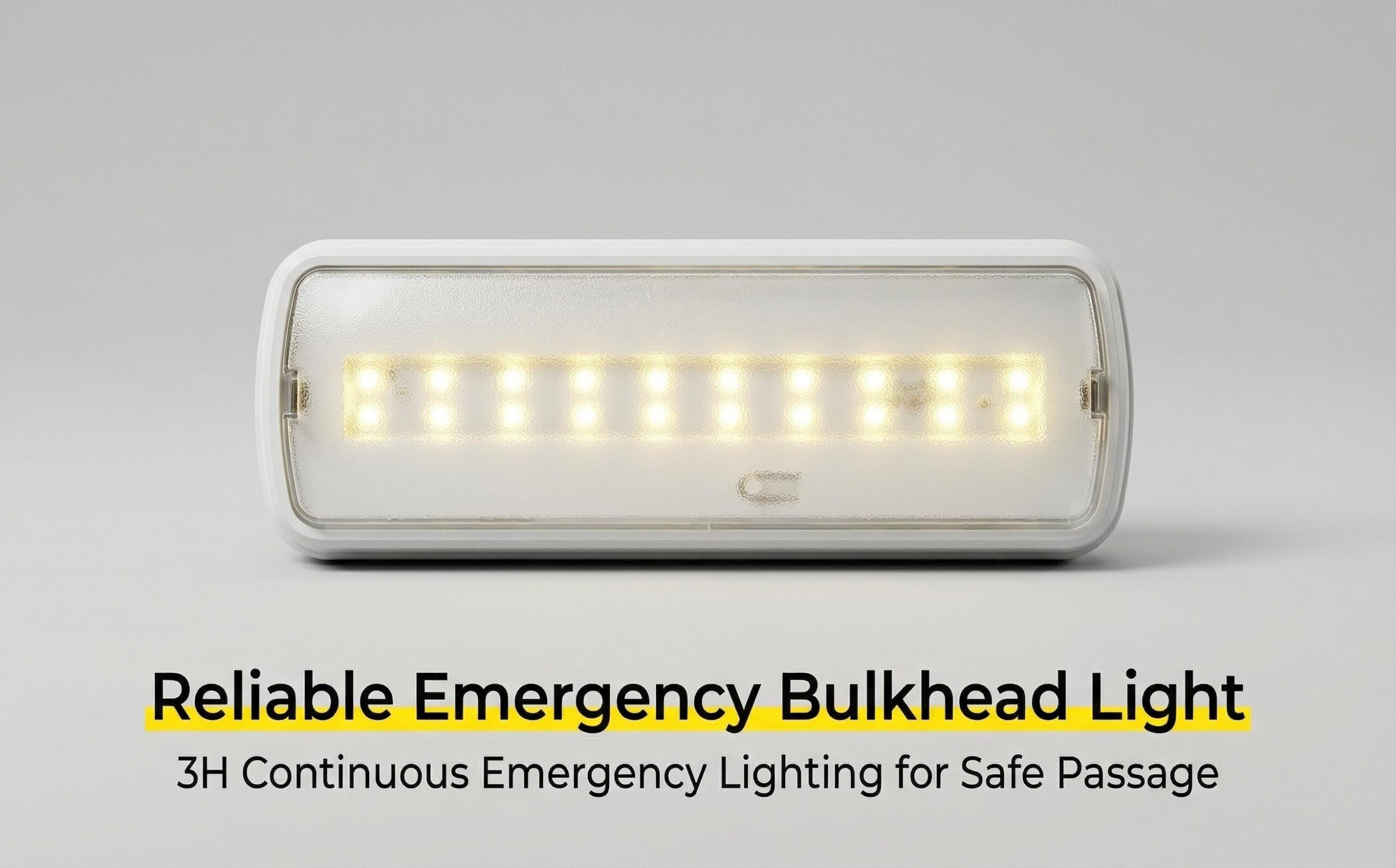
Éclairage de secours
Self-contained emergency lighting with selectable 90 minute to 3 hour duration and maintained or non-maintained wiring.
Frequently Asked Questions About Emergency Lighting
Q: What is the minimum order quantity and can I order samples first?
MOQ is 500 units for standard emergency drivers and 300 units for exit signs or twin spots. Sample orders of 1–5 pieces ship within 5–7 working days from confirmed payment. Sample unit cost runs 1.3–1.8× the bulk unit price depending on battery chemistry. Sample freight is collect or prepaid by arrangement. Bulk lead time is 25–35 days after deposit for orders under 2,000 units.
Q: How do I confirm your emergency driver fits my host fixture?
Match three parameters: input voltage range (AC 85–265V or 100–277V covers most markets), normal LED load in watts, and the forward-voltage window of your LED module. Hymark constant-current inverters output DC 25–80V at 150–350mA or DC 100–240V at 100–200mA depending on model. Provide your LED spec sheet; engineering reviews compatibility within 24 hours. The changeover relay rating must also exceed your normal driver output current.
Q: What emergency duration and light output options are available?
Standard durations are 90 minutes, 2 hours, and 3 hours per EN 1838 and BS 5266-1. Emergency output is typically 10%, 20%, or 30% of normal lumens—common setups include 500lm at 20% for a 2,500lm panel, or 1,000lm at 20% for a 5,000lm high bay. Higher percentages reduce duration unless battery capacity increases. EN 60598-2-22 requires minimum 50% of declared emergency output at end of duration.
Q: What is the difference between maintained and non-maintained wiring?
Non-maintained: the emergency driver feeds the LED only during mains failure, using a changeover relay that switches from normal driver to inverter. Maintained: the emergency driver supplies the LED continuously during normal operation and switches to battery on failure; this requires a switched live plus permanent live. Maintained wiring suits spaces needing illumination even during testing. Confirm your luminaire wiring compartment has terminals for both configurations.
Q: What self-test and monitoring options do you offer?
Manual test key is standard: press and hold for 30-second functional test or 90-minute duration test. Automatic self-test per EN 62034 adds timed functional and duration tests with LED status indication. DALI-2 self-test allows remote interrogation, fault logging, and scheduled testing via building management systems. DALI models cost 15–25% more and require compatible luminaire wiring. Non-DALI self-test still records faults locally via flashing LED codes.
Q: What battery chemistry do you use and how often must it be replaced?
NiCd 3.6V 1,500mAh packs suit 90-minute duration at low wattage; replacement interval 3–4 years; 500–800 cycles. Li-ion 18650 3.7V 2,600mAh packs extend duration or reduce size; replacement interval 4–5 years; 800–1,000 cycles. LiFePO4 3.2V 3,000mAh packs offer 2,000+ cycles, 5–7 year service life, and stable thermal performance; cost premium is 20–35% over Li-ion. Charge time to 80% capacity is 16–20 hours for NiCd, 12–16 hours for Li-ion, 10–14 hours for LiFePO4.
Q: What payment terms do you accept and how is pricing structured?
New accounts: 30% TT deposit, 70% LC at sight or TT before shipment. Repeat orders over $50,000: 20% deposit, 80% against copy of B/L. Pricing drivers include battery chemistry (LiFePO4 > Li-ion > NiCd), emergency duration, self-test complexity, and output wattage. IP65 rating adds 8–12% over IP20. OEM branding with silkscreen or laser marking adds $0.15–$0.40 per unit depending on complexity.
Q: What conformity documentation and shipping considerations apply for lithium battery models?
Ask your supplier to provide third-party test reports for EN 60598-2-22, EN 1838, and EN 62034 for Europe; UL 924 for North America; AS/NZS 2293 for Australia. Do not accept certificate claims without report numbers you can verify. Li-ion and LiFePO4 batteries require UN 38.3 test summaries for air freight (IATA DGR Section IB or Section II depending on watt-hour rating) and IMDG Code documentation for sea freight. Cells over 100Wh per pack typically ship as Class 9 dangerous goods. Sea freight is preferred for bulk orders; air freight limited to 35kg net lithium content per package. Carton packing is 20–24 units per carton, 12–16 cartons per pallet; FOB Shenzhen or CIF destination port available.
Important Notice
Specifications, output and duration figures and price ranges in this guide are indicative and are provided
for planning purposes only. Actual emergency output, duration, battery life, ingress protection and available conformity documentation
differ by model and by destination country, and emergency lighting design remains the responsibility of the project designer. Buyers
must confirm their own mains voltage and frequency, the emergency lighting standard enforced locally, the host fixture compatibility
and their import requirements before placing an order. All figures are subject to written confirmation in the final proforma invoice
issued by Hymark.
Sourcing Emergency Lighting from Hymark
Hymark’s engineering team co-designs and manages R&D in-house for the full emergency range: emergency exit signs, emergency luminaires, twin spotlights, and LED emergency drivers for LED high bays, panel lights, tubes and linear lights. The company was founded in 2013 as a global LED exporter, shifted focus to LED emergency technology and high-performance LED strips in 2017, and launched Hymark as its premium brand in 2026. Product design and global distribution are managed directly, with manufacturing executed through a strategic partnership with dedicated facilities that have also operated since 2013.
What to Verify Before Placing an Order
Buyers should confirm the supplier can provide discharge and duration test records for the exact battery batch shipped. For LiFePO4 3.2V 3000mAh packs, this means 3-hour discharge curves at the rated emergency load (for example, 4W emergency output, 180 minutes, with lumen output maintained at 50% or higher of normal output depending on EN 1838 requirements). For NiCd 3.6V 1500mAh packs, verify 90-minute discharge at 3W to 5W. Ask for constant current inverter output stability records: DC output window such as 9-42V at 350mA or 700mA, with changeover relay response time under 0.25 seconds.
Ageing and hipot test stations should be visible during a factory visit or video call. A real manufacturer will show 100% functional testing on every emergency driver, not batch sampling. Third-party test reports for the destination market—EN 60598-2-22 and EN 62034 for Europe, BS 5266-1 for the UK, UL 924 for North America, AS/NZS 2293 for Australia—should be available for review without claims that the supplier “holds” them; the buyer’s name will appear on the certificate of conformity for their specific order.
Sample Lead Time and Payment Structure
Hymark ships samples within 5 to 7 working days for standard emergency drivers and battery packs. Custom OEM or ODM samples with silk-screen branding or modified output windows require 10 to 14 working days. Payment is typically 30% deposit, 70% against copy of bill of lading for first orders; negotiable terms for repeat buyers with established trading records.
Export Configuration and Terms
Orders are supplied with selectable emergency duration (90 minutes, 2 hours, or 3 hours), maintained or non-maintained wiring, self-test or DALI test facility options, and IP ratings from IP20 to IP65 depending on fixture integration. Input voltage range covers AC 85-265V or 100-277V for universal markets, or 220-240V for dedicated regions. Battery chemistry is specified per order: LiFePO4 for 500-800 cycle life and safer transport, Li-ion 18650 for higher energy density, or NiCd for legacy compatibility. Charge time ranges from 16 to 24 hours to full capacity. Export carton packing is standard; FOB Shenzhen or CIF destination port terms are available. MOQ is 500 units for standard emergency drivers, negotiable for mixed container loads.
Send your host fixture type and wattage, the emergency duration your code requires, your mains voltage, and your destination port. Hymark will return a quotation within 24 hours via WhatsApp or email.
Get a Factory Direct Quote on Emergency Lighting
JIALINGHANG ELECTRONIC CO., LTD. has been in LED lighting since 2013 and has focused on
LED emergency technology and high performance LED strips since 2017. Hymark products are co-designed with our
dedicated manufacturing partners, built with selectable emergency duration and maintained or non-maintained wiring, and function
tested before packing. Send us the host fixture type and wattage, the emergency duration your local code requires, your mains
voltage and your destination port and we will return a quotation within 24 hours.


 English
  Spanish
  Arabic
  French
  German
  Russian
  Portuguese
  Italian
  Vietnamese