
Non Maintained Emergency Lighting Buyer Guide
Wird nicht gepflegt Notbeleuchtung activates only when mains power fails; maintained Notbeleuchtung operates during normal conditions and switches to battery backup during failure. The choice between the two configurations depends on the host fixture’s normal function, the building occupancy profile, and whether local codes mandate continuous illumination or permit dark standby luminaires.
The remainder of this page covers how to match a non-maintained emergency driver or module to the host fixture’s electrical architecture, which standards govern acceptance testing, and what documentation to request from a supplier before placing an order.
Host Fixture Matching
Non-maintained emergency units require a switched live feed that is interrupted during normal operation. The emergency driver sits in standby, trickle-charging the battery pack at 0.05C to 0.1C. When mains drops, the changeover relay closes within 0.5 seconds per EN 60598-2-22 and the inverter delivers constant current to the LED module.
| Parameter | Typical Non-Maintained Driver | Notes |
|---|---|---|
| Input voltage | AC 85-265V or 100-277V | Match to site mains; 220-240V for UK/EU, 120V for UL 924 markets |
| Standby power draw | < 0.5W | Higher draw indicates poor standby efficiency |
| Emergency output window | DC 9-42V at 150-350mA | Must sit within the LED module’s forward voltage range |
| Driven load | 3W to 25W | For LED panels, tubes, linear lights; high-bay drivers to 60W |
| Battery chemistry | LiFePO4 3.2V 1500-3000mAh or Li-ion 18650 3.7V 2200-2600mAh | LiFePO4 offers 800-1500 cycles; Li-ion 18650 offers 500-800 cycles |
| NiCd alternative | 3.6V 1200-1800mAh | Lower cycle life, 300-500 cycles; heavier; declining availability |
| Charge time | 16-24 hours to 80% capacity | Full charge to 100% adds 4-6 hours |
| Emergency duration | 90 minutes, 2 hours, 3 hours | BS 5266-1 typically requires 3 hours for UK premises; EN 1838 baseline is 1 hour |
| Emergency output | 10% of normal lumen output minimum, often 50-100% | EN 1838 specifies minimum 1 lux average escape route; open area minimum 0.5 lux |
| Test facility | Manual test key, self-test per EN 62034, or DALI-2 | Self-test automates the monthly functional and annual duration checks |
| Ambient temperature | -10°C to +45°C or -20°C to +55°C | LiFePO4 tolerates wider range than Li-ion; derate above 35°C |
| IP/IK rating | IP20 for interior drivers; IP65 for weatherproof housings | IK08 minimum for vandal-prone locations |
Maintained wiring, by contrast, runs the emergency lamp continuously from a permanent live, with the battery circuit activating only on mains failure. Do not specify a non-maintained driver for a maintained circuit: the unit will not illuminate during normal operation.
Supplier Qualification
Request these items before order confirmation:
- Test reports to EN 60598-2-22 or the relevant local standard (UL 924 for North America, AS/NZS 2293 for Australia/New Zealand). Ask for the report number and issuing laboratory; verify scope covers the exact model and battery configuration.
- Photometric data showing emergency lumen output at 1 hour, 2 hours, and end of rated duration. Lumen maintenance below 80% at end-of-discharge indicates undersized battery or excessive driver loss.
- Battery UN 38.3 test summary for lithium chemistries. Air freight and many sea carriers require this; IATA and IMDG regulations apply to packed batteries over 100Wh or standalone shipments.
- Declared cycle life at 25°C ambient with 80% depth of discharge. A supplier quoting 2000 cycles for Li-ion 18650 at 100% DoD is overstating; 500 cycles at full discharge is realistic.
- Wiring diagram showing switched live, neutral, earth, and optional DALI control lines. Confirm the diagram matches your site’s fire-alarm interface requirements.
Market-Specific Configuration Notes
| Market | Mains Voltage/Frequency | Expected Conformity Mark | Typical Duration Requirement | Notes |
|---|---|---|---|---|
| UK | 230V 50Hz | UKCA or CE pending transition | 3 hours per BS 5266-1 | Non-maintained standard for offices, warehouses; maintained for corridors with dimmed normal lighting |
| EU | 220-240V 50Hz | CE | 1-3 hours per national annex to EN 1838 | Germany often requires 3 hours; France accepts 1 hour for some occupancies |
| Middle East | 220-240V 50Hz or 415V 3-phase | CE or SASO depending on country | 90 minutes to 2 hours | High ambient temperatures favour LiFePO4; specify +55°C rating |
| Southeast Asia | 220V 50Hz | SNI, PSB, or CE for imports | 90 minutes common | Humidity and salt corrosion require IP65 minimum for coastal sites |
| Africa | 220-240V 50Hz | CE accepted in many markets; local homologation varies | 90 minutes to 3 hours | Grid instability favours self-test units that flag pre-failure |
| Latin America | 110-220V 50/60Hz | INMETRO for Brazil; CE elsewhere | 90 minutes typical | Voltage range 85-265V covers most countries |
Ordering Practicalities
FOB Shenzhen pricing for non-maintained emergency drivers ranges approximately USD 8-18 for 3-10W units with LiFePO4 1500mAh, and USD 22-45 for 20-40W high-bay drivers with 3000mAh LiFePO4. Complete non-maintained exit signs or twin-spot luminaires run USD 15-35 depending on housing material and IP rating.
MOQ typically stands at 500 pieces for custom-labelled drivers or 200 pieces for standard stock models. Sample lead time is 5-7 days; production lead time 25-35 days for orders under 2000 pieces. Carton packing is 20-50 units per carton, 10-12 cartons per pallet; request lithium battery handling labels and MSDS for air shipments.
Types and Configurations of Non Maintained Emergency Lighting
| Type or Class | Typical Rating or Output | Duration or Runtime | Best Suited For | Notes |
|---|---|---|---|---|
| Reduced Output LED Emergency Driver (10–30% Mode) | 3W–10W emergency; 300–800 lm | 90 min or 180 min | LED panels, LED tubes, linear fixtures in offices and retail | Constant current output 25–80V DC at 120–350 mA; LiFePO4 3.2V 1500–3000 mAh pack; 6–8 hour charge; 500–800 cycles |
| Full Power Emergency Driver (100% Mode) | Matches normal luminaire output; 10W–60W | 90 min or 180 min | LED high bays, industrial battens, corridors requiring full task lighting | Output 25–240V DC at 300–700 mA; Li-ion 18650 7.4V 2200–4400 mAh or LiFePO4 6.4V 3000–6000 mAh; 8–10 hour charge; changeover relay |
| Self-Test Non-Maintained Exit Sign | 8–25 cd/m² face brightness; 2W–5W internal LED | 90 min or 180 min | Public buildings, healthcare, education; UK and EU projects | NiCd 3.6V 900–1800 mAh or LiFePO4 3.2V 1200 mAh; EN 62034 automatic test cycle; manual test key override |
| Non-Maintained Emergency Twin Spotlight | 2 × 3W LED heads; 400–600 lm per head | 90 min or 180 min | Warehouses, loading bays, plant rooms, outdoor canopies | IP65 common; IK08; LiFePO4 6.4V 2200 mAh; adjustable heads; non-maintained wiring only |
| DALI-Integrated Emergency Module | 10–50% or 100% selectable; 5W–25W | 90 min, 120 min, 180 min selectable | Smart buildings, DALI-2 lighting networks; spec-driven projects | DALI Type 8 or Type 20; self-test reporting to BMS; EN 62034; Li-ion 7.4V 2600–5200 mAh |
| High-Density SMD LED Emergency Strip (IP65) | 14.4–19.2 W/m; 1400–2000 lm/m; 120 LEDs/m | 90 min at reduced 30% output | Architectural coves, retail displays, wayfinding accents | 24V DC working; 50 mm cut; 10 mm PCB, 2 oz copper; 3000 K or 4000 K; CRI 80+; LiFePO4 3.2V 3000 mAh driver pack |
Reduced Output LED Emergency Driver
This is the default choice for luminaire OEMs converting standard LED panels, LED tubes, or linear battens to emergency capability without redesigning the thermal management. The driver delivers 10–30% of normal luminous flux—typically 300–800 lumens from a 30W–40W host fixture—through a constant current window of 25–80V DC at 120–350 mA. A LiFePO4 3.2V 1500–3000 mAh pack achieves 90 minutes at 3W–5W or 180 minutes at reduced load, with 6–8 hour recharge and 500–800 cycle life. Electrical contractors and lighting wholesalers order these in bulk for retrofit programmes because the module fits inside the original gear tray. What it cannot do: illuminate a space to full task levels during evacuation; BS 5266-1 and EN 1838 still require adequate ambient illumination from other sources, and the reduced output may not satisfy corridors or open-plan areas without supplementary units.
Full Power Emergency Driver
Full power drivers maintain 100% of normal lumen output during mains failure, making them essential for industrial LED high bays, long corridors, and areas where reduced light creates a hazard. The inverter stage must match the host driver’s output window—often 25–240V DC at 300–700 mA—necessitating larger Li-ion 18650 7.4V 2200–4400 mAh or LiFePO4 6.4V 3000–6000 mAh packs, an 8–10 hour charge cycle, and a changeover relay rated for the full load current. M&E consultants and facility managers specify these for manufacturing plants and distribution centres. The trade-off is cost, physical size, and battery weight; a 60W full-power module may double the gear compartment depth and require reinforced mounting. It cannot be squeezed into slimline panels or shallow battens without thermal and spatial compromise.
Self-Test Non-Maintained Exit Sign
These units combine a pictogram face with an internal battery and automatic test logic per EN 62034, cycling functional and duration tests without manual intervention. Face brightness of 8–25 cd/m² meets EN 1838 viewing distance requirements. Battery chemistry varies by price tier: NiCd 3.6V 900–1800 mAh remains common in budget specifications despite environmental restrictions in some EU jurisdictions, while LiFePO4 3.2V 1200 mAh offers longer cycle life and easier transport. A manual test key overrides the automatic cycle for commissioning and inspector verification. Facility managers and building operators in the UK, EU, and Middle East favour self-test for compliance record-keeping. What it cannot do: provide general area illumination; it is strictly egress marking, and the 2W–5W internal LED does not contribute to lux levels on the floor.
Non-Maintained Emergency Twin Spotlight
Twin spotlights deliver directional emergency lighting from two adjustable 3W LED heads, typically 400–600 lumens each, powered by a central LiFePO4 6.4V 2200 mAh pack. IP65 and IK08 ratings suit warehouses, loading bays, and plant rooms where dust, moisture, and mechanical impact are present. The non-maintained wiring configuration—live and switched live from a dedicated key switch or contactor—ensures the heads illuminate only during mains failure. Industrial procurement officers and electrical contractors in Africa, Southeast Asia, and Latin America specify these for cost-sensitive projects. Limitation: the narrow beam distribution requires careful aiming; EN 1838 anti-panic and escape-route uniformity may need additional linear or panel emergency units to fill shadows.
DALI-Integrated Emergency Module
DALI-integrated modules embed Type 8 (emergency) or Type 20 (input device) functionality, reporting battery status, test results, and fault flags to the building management system over the DALI bus. Output is selectable—10–50% for energy conservation or 100% for critical tasks—across 5W–25W ranges with 90, 120, or 180 minute duration settings. Li-ion 7.4V 2600–5200 mAh packs support the higher communication quiescent current. Lighting designers and specifiers in smart-building sectors (Northern Europe, UAE commercial towers) demand these for centralised compliance dashboards. The constraint: the host luminaire must be DALI-2 compatible, the installation requires certified DALI bus power and addressing discipline, and a failed DALI bus can mask emergency fault reporting even if the local unit functions correctly.
High-Density SMD LED Emergency Strip
Emergency strip lighting extends wayfinding into architectural coves, under-canopy accents, and retail display niches. A 24V DC working voltage, 50 mm cut length, and 10 mm PCB with 2 oz copper support 120 SMD LEDs per metre at 14.4–19.2 W/m, delivering 1400–2000 lm/m in normal operation. During emergency, a matched LiFePO4 3.2V 3000 mAh driver pack reduces output to approximately 30% for 90 minutes. IP65 extrusion suits damp locations; 3000 K or 4000 K options with CRI 80+ satisfy basic colour rendering. Lighting designers and luminaire OEMs buy these for bespoke accent-emergency combinations. What it cannot do: achieve the 1 lux minimum on the centreline of an escape route per EN 1838 without supplementary calculation and dense spacing; the narrow PCB and modest lumen package are decorative first, life-safety second.
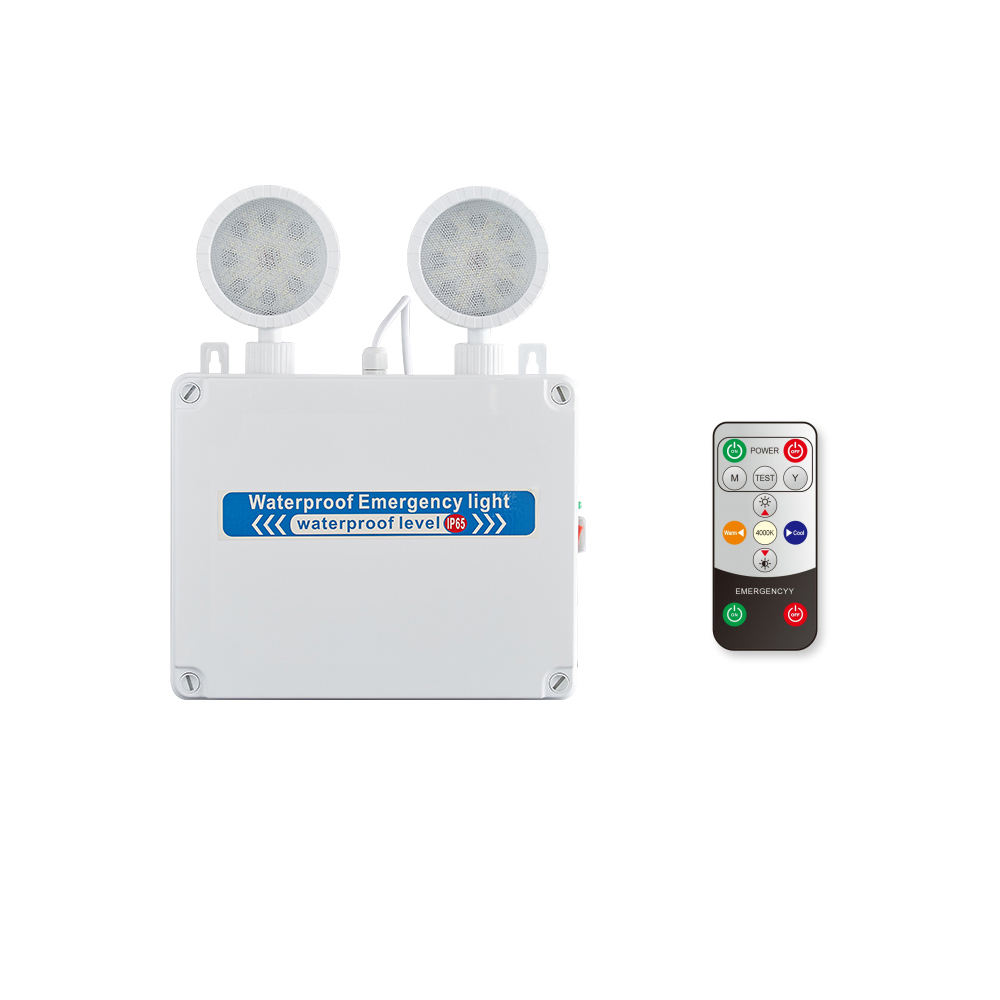
Specifications and How to Read Them
| Parameter | Entry Level | Mid Range | High Specification |
|---|---|---|---|
| Input voltage | AC 220–240V 50Hz | AC 100–277V 50/60Hz | AC 85–265V 50/60Hz |
| Driven load | 3–10W | 10–25W | 25–60W |
| DC output window | 9–42V 150mA | 9–60V 300mA | 20–80V 500mA |
| Emergency output | 150 lm (10% of normal) | 500 lm (25% of normal) | 1500 lm (50% of normal) |
| Emergency duration | 90 minutes | 3 Stunden | 3 Stunden |
| Battery chemistry | NiCd 3.6V 1200mAh | Li-ion 18650 7.4V 2200mAh | LiFePO4 12.8V 3000mAh |
| Charge time | 24 hours | 6–8 hours | 4–6 hours |
| Cycle life | 300–500 cycles | 500–800 cycles | 1500–2000 cycles |
| Test facility | Manual test key | Self-test per EN 62034 | Self-test + DALI |
| Wiring mode | Wird nicht gepflegt | Non-maintained or maintained | Non-maintained or maintained |
| IP/IK rating | IP20 / IK02 | IP65 / IK07 | IP66 / IK08 |
| Ambient temperature | 0°C to +45°C | -10°C to +50°C | -20°C to +55°C |
| Abmessungen | 150 × 50 × 30 mm | 200 × 65 × 40 mm | 280 × 90 × 55 mm |
| Mounting | Internal clip | Internal clip or bracket | Internal clip, bracket, or remote |
Reading the Input Voltage and Frequency Line
The input voltage range tells you which markets the driver will survive. A unit marked 220–240V 50Hz only suits the UK, Europe, Australia and most of Southeast Asia. Wider 100–277V 50/60Hz coverage handles Japan (100V), North America (120V) and commercial sites with 277V distribution. The frequency matters for transformer-based chargers; switch-mode designs tolerate either 50 or 60 Hz. Check that your host fixture’s ballast or LED driver draws within the stated input window, not just the nominal national voltage.
Reading the Driven Load and DC Output
“Driven load in watts” is the maximum LED power the emergency inverter can support during mains failure. The DC output voltage window (for example, 9–42V) must overlap the forward-voltage range of your LED module at its emergency current. A constant-current output of 150mA, 300mA or 500mA sets the lumen fraction; higher current means brighter emergency light but shorter battery life if the capacity is fixed. Confirm the inverter is true constant-current, not resistive-drop, or lumen maintenance will drift as the battery discharges.
Reading Emergency Output in Lumens and Percentage
EN 1838 and BS 5266-1 set minimum illuminance on escape routes: 1 lux on the centreline, 0.5 lux over the full width. The datasheet “emergency output in lumens” is the source; the percentage of normal output tells you how much the host fixture dims. A 25% figure is common for open-area anti-panic lighting, while 10% may suffice for small exit signs or twin spots with dedicated optics. Ask the supplier for the photometric file or at least the beam spread; raw lumens without distribution data do not prove compliance.
Reading Emergency Duration
Ninety minutes is the legal minimum across the UK, EU and most Commonwealth codes. Three hours appears in healthcare, assembly buildings and some Middle East specifications. The duration must be achieved at end of battery life, not when new; EN 60598-2-22 requires the declared duration after the rated cycle life has elapsed. Verify whether the stated minutes are at full output or include a degradation tail.
Reading Battery Chemistry Voltage and Capacity
NiCd 3.6V packs are the legacy choice: tolerant of temperature extremes, but heavy, cadmium-restricted under RoHS, and needing 24-hour charge after deep discharge. Li-ion 18650 cells at 7.4V or 11.1V offer higher energy density and 6–8 hour recharge, yet require protection circuits and UN 38.3 transport certification. LiFePO4 12.8V or 25.6V packs carry the highest cycle life (1500–2000), fastest recharge (4–6 hours), and safest thermal profile, but occupy more volume per watt-hour and cost more upfront. Match the nominal voltage to your LED string; a 12.8V pack driving a 36V LED module will need a boost inverter, adding cost and loss.
Reading Charge Time and Cycle Life
Charge time determines how soon the fitting is compliant after a full discharge test. A 24-hour NiCd recharge is acceptable in permanently staffed buildings; 6 hours or less matters for 24/7 operations. Cycle life is quoted at standard temperature (20°C); halve it for every 10°C above ambient if the battery sits near the ceiling. Ask the supplier for the test method: IEC 62034 defines a cycle as 90 minutes discharge plus recharge to 80% capacity, not full.
Reading Test Facility
Manual test key is the minimum: a switch or fuse bypass that simulates mains failure. Self-test per EN 62034 automates duration and function checks, typically every 30 days with a brief discharge and annual full-duration test; results display via LED status or audible warning. DALI integration allows remote polling, centralised logging, and fault reporting to the building management system. DALI emergency devices need a DALI-2 input on the host luminaire or a separate DALI bus; confirm compatibility before ordering.
Reading Maintained Versus Non-Maintained Wiring
Non-maintained wiring energises the LED only during mains failure. The live and switched live to the emergency driver are both on the same permanent phase; the changeover relay opens when voltage drops. Maintained wiring runs the emergency LED during normal operation as well, either from the same driver or via a separate switched circuit; the relay or electronic switchover transfers to battery on power loss. Maintained mode suits spaces where the emergency lamp is the only source in that location and must be lit during occupancy. Non-maintained is simpler, cooler-running, and avoids the relay as a failure point. Some drivers offer switchable modes; the datasheet should state whether the change is by wiring or DIP switch.
Reading IP and IK Rating
IP20 suits internal mounting in clean ceiling voids or office luminaires. IP65 with sealed cable glands is needed for car parks, tunnels, food-processing and external soffits. IP66 adds hose-down protection for heavy industry. IK02 (2 joules) is adequate for concealed gear trays; IK07 (7 joules) or IK08 (8 joules) resists vandalism in public circulation areas. The rating applies to the complete assembled emergency pack, not just the driver enclosure; verify the battery compartment and test-point cover carry the same figure.
Reading Ambient Temperature Range
Lithium chemistries lose capacity below 0°C and age faster above 45°C; NiCd performs to -20°C but suffers memory effect. If the host fixture is a sealed LED high bay in a Middle East warehouse, internal temperatures can reach 70°C; specify an emergency pack with remote battery placement or derate the duration. Hymark’s high-specification range allows -20°C to +55°C ambient with LiFePO4; entry-level NiCd is limited to 0°C to +45°C.
Dimensions Mounting and Host Fixture Matching
Measure the gear tray or ceiling-void depth before ordering. A 280 × 90 × 55 mm high-specification pack will not fit a slim 600 × 600 mm LED panel without external mounting. Internal clips suit T-bar or plasterboard ceilings; brackets allow wall or pendant mounting for twin spots. For OEM luminaire builds, request the mechanical drawing to confirm PCB stand-off height and cable-entry positions relative to your host housing.
Trade Terms and Export Practicalities
FOB (Free On Board) means the supplier delivers to the port of departure, cleared for export; ocean freight and insurance are the buyer’s responsibility. CIF (Cost Insurance Freight) adds freight and marine insurance to the named destination port; the buyer handles unloading and onward carriage. CFR (Cost and Freight) is identical to CIF but without insurance. EXW (Ex Works) places all transport cost and risk on the buyer from the factory gate; useful only if you have a China-based consolidator. L/C (Letter of Credit) protects both parties through bank intermediation but adds 1–3% cost and documentary complexity. T/T (Telegraphic Transfer) in 30% deposit, 70% against copy of bill of lading is standard for established relationships; first orders often demand L/C or 100% advance.
Die HS code for LED emergency lighting and drivers is 9405.10 or 8504.40 depending on whether customs classifies the shipment as luminaire or power supply. Incorrect classification delays clearance; ask the supplier to confirm the code they will declare.
CE marking is mandatory for EU and EEA customs entry; the importer holds legal responsibility, so request the supplier’s technical construction file and declaration of conformity for your records. UKCA marking replaced CE for Great Britain (England, Scotland, Wales) after Brexit; Northern Ireland accepts CE or UKNI. Do not assume a CE certificate covers UKCA; the test house must be UK-approved.
UN 38.3 is the lithium battery transport safety test report required by IATA for air freight and IMDG for sea freight. The report covers altitude simulation, thermal cycling, vibration, shock, external short circuit, crush, and forced discharge. Without it, airlines and ports will refuse shipment. Ask for the UN 38.3 test summary, not the full laboratory report, and confirm the battery cell model number in the summary matches the cells in your order.
Packing list should itemise quantity per carton, gross and net weight, carton dimensions, and pallet configuration. Standard export cartons for emergency packs run 10–20 units, 12–15 kg gross, 400 × 300 × 250 mm; 64 cartons per 1.2 × 1.0 m pallet. Certificate of origin (Form A or EUR.1) may be required for duty preference under trade agreements; Hymark can provide China-origin certificates through the local chamber of commerce.
Supplier Qualification Checklist
Before placing volume orders, verify: the battery UN 38.3 summary is current and cell-specific; the CE or UKCA technical file lists the correct EN standards (EN 60598-2-22, EN 1838, EN 62034 as applicable); the self-test firmware version is documented for future replacement compatibility; and the changeover relay or electronic switchover has a rated electrical life in operations, not just a mechanical figure. Request a sample with the exact battery chemistry and capacity you intend to order; substituting a higher-cycle cell for the sample and a lower-cycle cell in production is a known risk in emergency lighting supply chains.
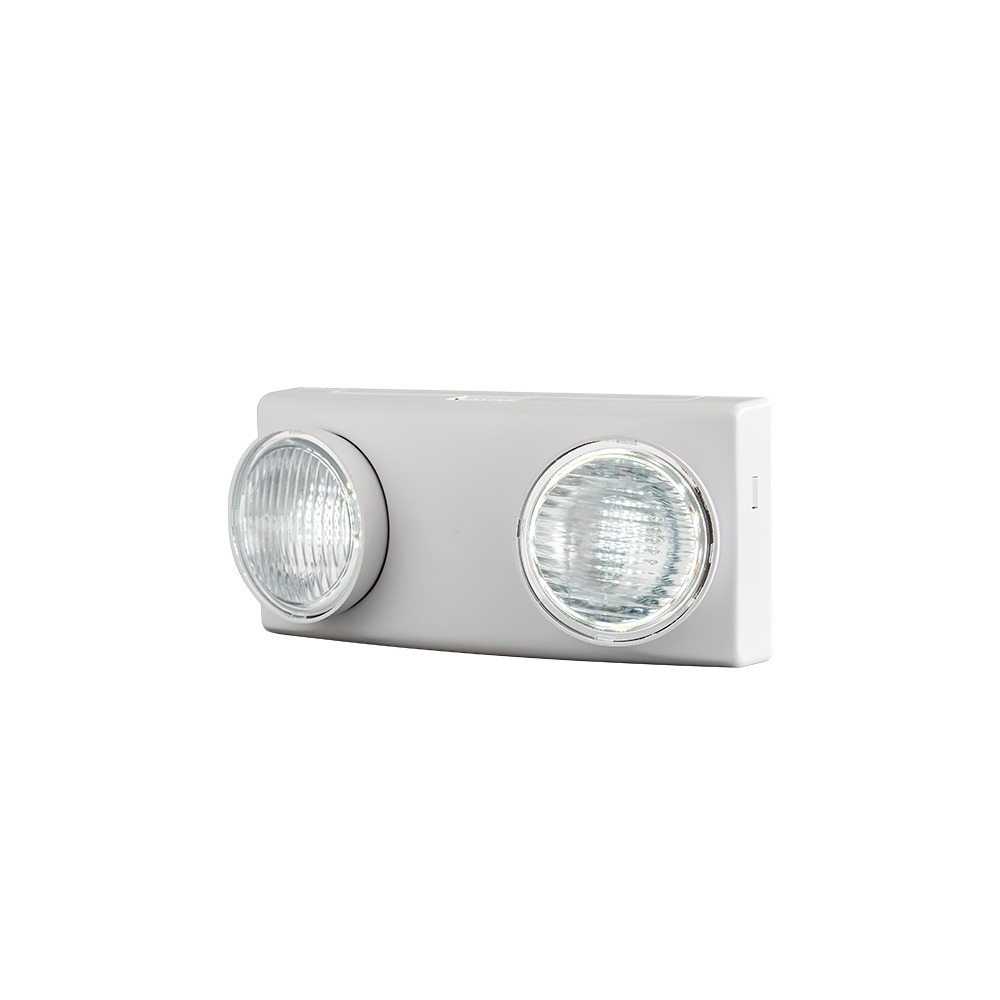
Non Maintained Emergency Lighting Price and What Drives It
| Class | Typical Rating or Output | Duration or Runtime | Indicative FOB USD |
|---|---|---|---|
| Entry bulk non-maintained exit sign | 8-15 lm face illumination, single-sided | 90 min | 4.50 – 8.00 |
| Standard non-maintained LED bulkhead | 150-300 lm emergency, ~10-20 % of normal 1500 lm fitting | 90 min | 9.00 – 16.00 |
| Performance non-maintained LED bulkhead | 400-600 lm emergency, ~25-35 % of normal 2000 lm fitting | 2 h | 14.00 – 24.00 |
| Non-maintained twin-spot | 2 × 300-500 lm heads, 600-1000 lm total | 3 h | 18.00 – 32.00 |
| Non-maintained emergency driver for LED high bay | 10-25 W emergency output, 1000-2500 lm at 50-100 % of normal | 90 min – 3 h | 22.00 – 45.00 |
| Non-maintained emergency driver for panel/linear | 5-15 W emergency output, 500-1500 lm at 10-30 % of normal | 90 min – 3 h | 16.00 – 35.00 |
Prices are indicative FOB Shenzhen for carton-quantity orders and vary with cell chemistry, approval status and annual volume. They do not include sea freight, insurance, duty or local VAT.
Battery Cells as the Dominant Line Item
The battery pack typically accounts for 25-40 % of the ex-factory cost in a non-maintained emergency fitting. Three chemistries dominate export production:
| Chemistry | Nominal Voltage | Typical Capacity Range | Cycle Life | Weight vs Energy | Notes |
|---|---|---|---|---|---|
| NiCd 3-5 cell stick | 3.6-6.0 V | 600-1500 mAh | 300-500 cycles | Heavy, robust | Declining in EU due to cadmium restrictions; still specified in some Middle East and African tenders |
| Li-ion 18650 cylindrical | 3.7 V per cell, 2S or 3S packs | 2000-3500 mAh | 500-800 cycles | Moderate | UN 38.3 test report required for air freight; IATA PI 965 Section IA/IB or Section II governs transport mode |
| LiFePO4 prismatic or cylindrical | 3.2 V per cell, 4S common | 1500-3000 mAh | 1000-2000 cycles | Heavier per Wh than Li-ion, thermally stable | Preferred for 3-hour duration and high-temperature ambients; lower fire risk supports freight flexibility |
A 90-minute non-maintained bulkhead drawing 3-5 W emergency load needs roughly 7.5-12.5 Wh delivered. Accounting for inverter efficiency of 80-85 % and end-of-discharge voltage protection, the pack stores 10-18 Wh. That translates to:
- NiCd 4.8 V 1500 mAh: 7.2 Wh stored; tight for 3-hour runs, marginal at low temperatures
- Li-ion 7.4 V 2200 mAh (2S1P): 16.3 Wh stored; comfortable for 90 minutes, adequate for 2 hours at moderate load
- LiFePO4 12.8 V 1500 mAh (4S1P): 19.2 Wh stored; supports 3-hour duration or higher lumen maintenance
The cheapest quotes usually substitute a 1000-1200 mAh cell or accept a lower emergency output percentage—5 % instead of 10 % of normal wattage—to make the smaller pack work. EN 1838 and BS 5266-1 set minimum illuminance on the escape route, not percentage of normal output, so a 5 % emergency level may still comply if the host luminaire was oversized for normal operation. Buyers should verify the supplier’s photometric file or ask for the emergency lumen figure directly, not just the percentage.
Driver Electronics and Changeover Relay
The emergency driver and inverter stage represent 15-25 % of material cost. A non-maintained circuit requires:
- Mains detection circuit monitoring AC 85-265V or 220-240V
- Changeover relay or solid-state switch isolating the emergency LED string from the normal driver
- Constant-current inverter output, typically DC 9-60 V at 150-700 mA depending on LED configuration
- Charge management IC matched to the cell chemistry: 0.1C to 0.3C charge rate, trickle or float termination for NiCd; CC-CV for Li-ion and LiFePO4 with temperature-qualified charge suspend
Self-test and DALI test facilities add a microcontroller and communication interface, raising driver cost by 15-30 %. EN 62034 defines the automatic test cycle durations and fault reporting intervals. A manual test key is cheaper but relies on building staff discipline; facilities managers in the UK and Europe increasingly specify self-test to reduce labour and demonstrate compliance to insurers.
Enclosure Hardware and Thermal Design
The housing, diffuser, gaskets and mounting hardware run 10-18 % of cost. IP ratings matter for the application, not just the marketing:
| IP-Schutzklasse | Suitable Environment | Typical Construction Cost Impact |
|---|---|---|
| IP20 | Dry interior corridors, ceiling voids | Baseline |
| IP44 | General interior, occasional condensation | +8-12 % for gasketed joints |
| IP65 | Dusty industrial, external canopies, wash-down areas | +20-35 % for sealed lens, cable glands, corrosion-resistant hardware |
IK08 or IK10 impact resistance, required in some transport and public-sector specifications, adds polycarbonate or thick aluminium castings. Ambient temperature range also drives material selection: standard ABS or polycarbonate handles 0 °C to +50 °C; extended-range fittings for Middle East roof voids or cold-storage entries need -20 °C to +60 °C rated cells and driver capacitors, with cost premiums of 10-20 %.
Third-Party Approval and Amortised Certification
Testing and certification typically form the second-largest cost block after the battery, especially for smaller batch sizes. A supplier holding valid test reports to EN 60598-2-22, EN 61347 (for LED control gear) and the applicable national deviations can amortise that investment over thousands of units. A buyer requesting a new variant—different LED colour temperature, custom legend face, or revised battery configuration—triggers partial re-testing.
What buyers should request:
| Document | What It Demonstrates | Validity Check |
|---|---|---|
| EN 60598-2-22 test report | Construction, endurance, temperature, fault conditions | Report number traceable to accredited laboratory; covers the exact model or a declared product family |
| Battery UN 38.3 test summary | Lithium cell transport safety | Matches the cell manufacturer and model in the product |
| CB certificate to IEC 61347-2-7 (emergency lighting units) or IEC 61347-2-13 (LED drivers) | International baseline for national certification | Active status on IECEE CB database |
| UL 924 or AS/NZS 2293 test data | Market-specific compliance for North America or Australia/New Zealand | Scope matches the intended product variant |
A supplier quoting 30 % below competitors without current reports is likely offering an untested design or a report that does not cover the battery chemistry offered. Customs clearance and local inspector acceptance depend on the mark matching the documentation; a CE label without supporting technical file risks detention in Europe and penalties under the UK Product Safety and Metrology Regulations.
Assembly Labour and Export Logistics
Assembly labour in Guangdong runs 8-15 % of product cost for emergency fittings, higher than standard LED luminaires because of the additional wiring, battery insertion and functional testing steps. Each unit requires charge-state verification and often a discharge cycle on sample basis.
Export packing adds 2-4 %: double-wall cartons, 10-20 units per carton, palletised to 1.0-1.2 m height for container loading. Lithium battery restrictions shape freight mode:
| Freight Mode | Restriction | Cost Impact |
|---|---|---|
| Sea freight (IMDG Code) | Li-ion and LiFePO4 classified as Class 9; limited quantities or full dangerous goods declaration depending on watt-hour rating | Baseline; UN-certified packaging and shipper’s declaration required |
| Air freight (IATA DGR) | Stricter watt-hour limits per package; Section II limited to 35 kg net lithium content per package for standalone cells | 3-8 × sea freight cost; often prohibitive for bulky emergency bulkheads |
| Courier (UPS/FedEx/DHL) | Accepts Section II shipments with UN 38.3 and 1.2 m drop test documentation | Highest per-kilogram rate; viable only for samples and urgent spares |
Insurance at 110 % of CIF value, destination duty (typically 3-8 % for lighting in EU/UK under HS 9405.10), VAT at 20 % in UK/EU or 5 % in Gulf Cooperation Council states, and clearance broker fees of 150-400 USD per consignment complete the landed cost. Buyers comparing FOB quotes should model these through to site, not just the container price.
Why the Cheapest Quote Differs
| Cost Reduction Tactic | What the Buyer Receives | Compliance Risk |
|---|---|---|
| 1000 mAh NiCd or 1200 mAh Li-ion instead of rated capacity | Shorter real duration at low temperatures; faster cycle degradation | Fails to meet 90-minute or 3-hour requirement under EN 1838 at end of battery life |
| 5 % emergency output vs. 10 % in photometric design | Dim escape route lighting; requires closer spacing or higher normal-output host fitting | Inspector may measure lux on floor and find non-compliance |
| No third-party testing; supplier self-declares CE | Product untested for fault conditions, thermal runaway, endurance | Liability exposure; insurance void; customs detention |
| Non-maintained wiring only, no maintained option | Cannot be wired for maintained operation even if site conditions change | Rework cost if designer revises specification |
| Standard 0 °C to +50 °C rating | Battery capacity collapses in cold; charger over-volts in heat | Premature failure, warranty dispute |
Five-Year Running Cost Comparison
Assume 100 non-maintained LED bulkheads in a warehouse, operated 12 hours/day normal, tested monthly.
| Scenario | Entry Quote | Mid-Range Quote | Performance Quote |
|---|---|---|---|
| Unit FOB | 7.00 | 13.00 | 22.00 |
| Battery chemistry | NiCd 4.8 V 1200 mAh | Li-ion 7.4 V 2200 mAh | LiFePO4 12.8 V 1500 mAh |
| Cycle life | 350 cycles | 650 cycles | 1500 cycles |
| Annual deep discharge events (test + real) | 15 | 15 | 15 |
| Battery replacement cycle | Year 2 and Year 4 | Year 4 | None in 5 years |
| Replacement battery pack cost (landed) | 4.50 | 6.50 | 8.50 |
| Labour per replacement: 0.5 hour at 35 USD/hour | 17.50 | 17.50 | 17.50 |
| Routine testing: manual key, 0.25 hour × 12/month × 100 units at 30 USD/hour | 9,000 / 5 years | — | — |
| Routine testing: self-test/DALI automated, annual verification 2 hours at 30 USD/hour | — | 60 / 5 years | 60 / 5 years |
| Expected failure rate (conservative) | 8 % per year | 4 % per year | 2 % per year |
| Spare unit and call-out cost per failure | 45.00 | 55.00 | 65.00 |
| 5-year failure cost | 180.00 | 110.00 | 65.00 |
| 5-year total per 100 units | ~12,600 | ~8,200 | ~7,500 |
The entry quote saves 6,000 USD on purchase but costs 5,400 USD more to run over five years, assuming labour rates typical in Western Europe. In markets with lower technician wages, the crossover extends; in markets with strict liability or high downtime costs, the reliability premium pays back faster. The self-test/DALI capability in the mid-range and performance tiers eliminates most of the manual testing labour, which often exceeds the hardware price difference in the first two years alone.
Supplier Qualification Checklist
Buyers evaluating non-maintained emergency lighting sources should verify:
- Battery traceability: Cell manufacturer, model, UN 38.3 status, and whether the supplier assembles packs in-house or sources complete packs from a third party
- Inverter output window: DC voltage range and mA capability against the host fixture’s LED string voltage; a mismatch requires a different driver or a custom resistor dissipating energy as heat
- Approval coverage: Whether the test report explicitly covers the non-maintained wiring configuration, the battery chemistry offered, and the IP/IK rating quoted
- Change flexibility: Lead time and MOQ for switching from non-maintained to maintained wiring within the same product family; some suppliers share a single chassis with a wiring variant, others treat them as separate SKUs with longer delivery
- Spare parts commitment: Availability of replacement battery packs and driver modules at year 3 and year 5, documented in the supply agreement
Hymark produces non-maintained emergency drivers and luminaires across the output and duration ranges above. Technical datasheets specify the exact battery cell model, inverter output window and approval documentation status for each variant. Samples carry the same cell and driver as production batches; buyers can run discharge duration verification on arrival before placing volume orders.
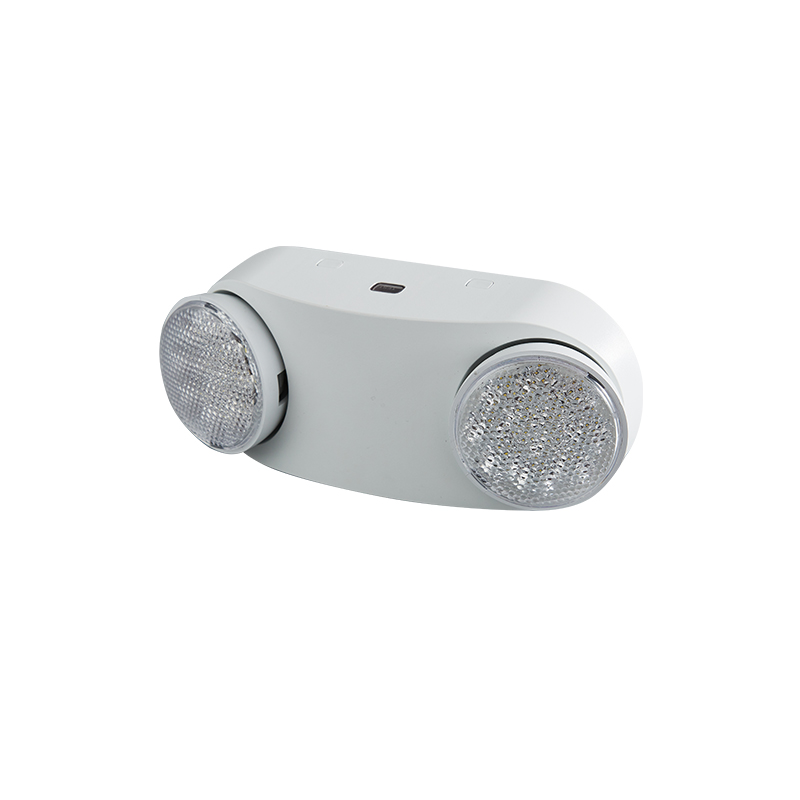
Industry Applications for Non Maintained Emergency Lighting
Commercial Offices and Fit-Outs
| Sector | Typical Installation | Recommended Specification | Why This Product Fits |
|---|---|---|---|
| Commercial offices and fit-outs | Recessed LED panels, surface-mounted linear battens, downlights | Non-maintained driver, AC 220-240V input, DC 36-42V 350mA output, 3W emergency load, LiFePO4 3.2V 1500mAh, 90 min duration, self-test | Host luminaires run normal hours; emergency only activates during power failure, avoiding unnecessary battery cycling |
Office fit-outs typically specify 90 minutes emergency duration to meet BS 5266-1 or local variants of EN 1838. The emergency output is often 10% of normal lumen output—for a 4000 lm LED panel, that translates to roughly 400 lm in emergency mode. Buyers should verify the non-maintained driver delivers a constant current output stable at DC 36-42V, 350mA to match the LED module’s forward voltage. LiFePO4 packs at 3.2V 1500mAh suit this load because they reach full charge in 4-6 hours and tolerate 800-1200 cycles at 25°C ambient. Self-test circuitry per EN 62034 reduces manual testing labour in multi-floor installations. The driver must include a changeover relay that isolates the normal supply completely during emergency operation.
Hospitals and Clinics
Healthcare facilities demand 3-hour duration for patient areas and 2-hour duration for circulation zones under BS 5266-1 and NFPA 101. Non-maintained emergency drivers here typically run 5W to 10W LED loads at DC 25-40V, 500mA output, producing 600-1200 lm emergency output from host fixtures rated 6000-12000 lm normal. Battery capacity scales accordingly: Li-ion 18650 7.4V 2600mAh or LiFePO4 6.4V 3000mAh configurations are common. Charge time extends to 6-8 hours for these larger packs. The IP rating must reach IP44 minimum for ward ceilings, with IP65 for treatment rooms requiring disinfection protocols. DALI test facility is preferred for integration with building management systems. Buyers should request supplier documentation showing the battery pack’s UN 38.3 test summary for air freight, as lithium cells face IATA Section II or Section IB shipping restrictions depending on watt-hour rating.
Schools and Universities
Educational buildings balance cost against duty cycle. Non-maintained drivers suit classrooms and lecture halls where normal lighting operates during occupied hours only. Standard specification: 85–265 V Wechselstrom wide-range input for compatibility with legacy electrical infrastructure, DC 24-36V, 300mA output driving 3 W emergency load from LED panels or linear battens. NiCd 3.6V 1200mAh remains common in budget specifications despite heavier weight and 500-700 cycle life; LiFePO4 3.2V 1500mAh costs 15-25% more but delivers 800-1200 cycles and eliminates cadmium disposal obligations under EU Battery Directive obligations. Emergency duration is 90 minutes per EN 1838 for escape routes, with 10% minimum of normal output—typically 300-500 lm from a 3000-5000 lm host fixture. Manual test key suffices for smaller installations; self-test becomes economical above 50 luminaires.
Warehouses and Logistics Centres
High-bay environments expose emergency drivers to 35-45°C ambient at ceiling level, with dust accumulation demanding IP65 minimum and IK08 mechanical protection. Non-maintained drivers for 80-200W LED high bays require DC 180-260V, 300mA output windows to match the series-parallel LED configuration, with emergency output at 10% producing 800-2000 lm for 90 minutes or 2 hours. Battery packs scale to LiFePO4 12.8V 4500mAh or Li-ion 14.8V 5200mAh, with charge time 8-10 hours and cycle life 600-1000 cycles at 25°C (derated 20% per 10°C above). The constant current inverter must maintain output within ±5% across the battery discharge curve to prevent LED flicker as voltage sags. Buyers in Middle Eastern markets should confirm 50°C ambient rating; standard 25°C-rated batteries degrade prematurely in unconditioned steel structures.
Car Parks and Stairwells
These transition spaces combine intermittent occupancy with harsh environmental conditions. Non-maintained bulkheads and twin-spotlights dominate, with specifications at IP65 for covered decks and IP66 for open-air ramps. Emergency output: 300-600 lm per head from 5 W LED modules, DC 12-24V, 400mA output. Battery: NiCd 4.8V 1500mAh for cold-temperature resilience (operating to -10°C) or LiFePO4 6.4V 2000mAh for cycle life. Duration is 2 hours minimum for covered car parks under BS 5266-1, 3 Stunden for basement levels. The changeover relay must switch within 0.5 seconds to avoid disorientation during power interruption. Self-test with fault signalling to central BMS is standard for structures exceeding 200 spaces. IK10 rating prevents vandal damage in public access stairwells.
Hotels and Residential Common Areas
Guest room corridors and apartment building escape routes use non-maintained downlights and slimline bulkheads where aesthetic discretion matters. Specification: AC 220-240V input, DC 9-12V, 250mA output for compact 2W emergency modules, producing 200-300 lm at 10% of normal output from 2000-3000 lm host downlights. LiFePO4 3.2V 1000mAh packs suffice for 90 minute duration, with 4 hour charge time and 1000+ cycle life at shallow discharge. The maintained versus non-maintained wiring distinction is critical here: non-maintained units require separate switched live to the normal driver and unswitched permanent live to the emergency module, complicating two-gang switching layouts. AS/NZS 2293 markets require 120 minute duration and 8% minimum normal output in emergency mode. DALI test facility adds 15-20% to driver cost but enables automated compliance logging for building managers.
Ordering and Importing Step by Step
Three mistakes ruin more non-maintained emergency lighting shipments than any other issue. Each has a one-line fix.
| Mistake | Fix |
|---|---|
| Output window does not match the host fixture’s LED driver | Record the fixture’s nominal LED voltage and current before you order; demand the emergency driver output window sits comfortably inside that envelope |
| Duration or illuminance below local code minimum | State the required duration—90 min, 120 min or 180 min—and the minimum emergency lux level on the escape route in the purchase order, not in a side email |
| Missing lithium battery or conformity documentation at customs | Require UN 38.3 test summary, MSDS and the conformity assessment file reference in the proforma invoice before payment |
Checklist Before You Order
1. Record the host fixture type, wattage and driver architecture
Non-maintained emergency drivers sit dormant until mains failure, then must strike the fixture’s LED module instantly. The inverter’s output window must envelop the LED operating point, not merely touch it.
| Fixture parameter | What to record | Typical Hymark non-maintained driver match |
|---|---|---|
| LED forward voltage at operating current | 24V–42V, 36V–48V, 150V–260V, etc. | 24–42V DC at 150–350mA; 150–260V DC at 100–200mA |
| Normal driver output current | 250mA, 350mA, 500mA, 700mA | Inverter rated for same or adjacent current; constant current topology preferred |
| Normal power | 10W, 20W, 40W, 60W | Emergency output typically 3W, 5W, 8W, 10W (25–50% of normal) |
| Driver architecture | Integrated linear, switched-mode external, 0–10V dimmable, DALI | Non-maintained kit needs changeover relay or switched live; verify compatibility with dimming if maintained option added later |
If the fixture uses a multi-channel driver or tunable white, the emergency kit must know which channel to energise. Single-channel non-maintained kits default to the warmest or highest-CRI channel; specify if you need different behaviour.
2. Confirm required duration and emergency output level
| Application | Typical duration | Minimum emergency output | Battery chemistry |
|---|---|---|---|
| Open-plan office, UK | 3 hours to BS 5266-1 | 10% of normal or 50 lm minimum on escape route | LiFePO4 6.4V 3000mAh or Li-ion 18650 7.4V 2600mAh |
| High-bay warehouse, Europe | 90 minutes to EN 1838 | 10% of normal, minimum 0.5 lux at floor | LiFePO4 12.8V 4500mAh |
| Corridor, Middle East | 90 minutes to NFPA 101 local adoption | 50% of normal or 1.0 ft-candle | NiCd 3.6V 4000mAh (ambient >45°C) |
| Retail, Southeast Asia | 120 minutes to local code | 30% of normal | Li-ion 18650 7.4V 5200mAh |
Emergency output in lumens, not just watts, determines compliance. A 40W high-bay at 150 lm/W delivers 6000 lm normally; 10% emergency output is 600 lm. Verify the supplier states lumens at the emergency power fraction, not the fixture’s normal luminous efficacy.
3. Choose maintained or non-maintained wiring
| Wird nicht gepflegt | Gepflegt | |
|---|---|---|
| Wiring | Switched live to normal driver; emergency kit energises LED module directly on mains failure | Permanent live to emergency kit; kit runs LED module continuously via changeover relay |
| Energy use | Zero parasitic load to LED module in standby; small trickle to battery | Full emergency wattage drawn constantly; relay switching losses |
| Lamp life | LED module sees only emergency hours | LED module ages at full rate |
| Cost | Lower component count, lower price | Higher; requires relay and permanent live |
| Best for | LED panels, high bays, linear fixtures where normal driver is efficient and reliable | Fluorescent conversions, critical task areas requiring instant reassurance |
Non-maintained is the default for new LED fixtures with reliable normal drivers. If the host fixture serves a space where occupants need visible proof of emergency function—hospitals, control rooms—maintained may be mandated despite the cost.
4. Decide manual test key versus self-test versus DALI
| Test facility | Wiring complexity | Compliance burden | Best for |
|---|---|---|---|
| Manual test key | Two-pole switch on luminaire or remote | Monthly and annual tests require site visit, logbook | Small installations, budget constraints, sites with dedicated maintenance staff |
| Self-test to EN 62034 | Same wiring as manual; internal timer and relay | Automatic monthly function test, annual duration test; fault indication via LED or buzzer | Most commercial installations; reduces maintenance contract cost |
| DALI self-test | DALI bus plus mains; addressed communication | Central reporting, automatic logging, integration with BMS | Large campuses, smart buildings, sites with DALI infrastructure |
Self-test adds 15–25% to kit cost but typically pays back within two years through avoided labour. DALI requires addressed commissioning; confirm the supplier provides a DALI application controller or detailed commissioning guide.
5. Confirm mains voltage and frequency
| Market | Nominal voltage | Frequency | Tolerance expected in driver |
|---|---|---|---|
| UK, Ireland | 230V AC | 50Hz | 220–240V |
| Continental Europe | 230V AC | 50Hz | 220–240V |
| Middle East (GCC) | 230V AC | 50Hz or 60Hz | 220–240V; verify 60Hz rating |
| North America | 120V AC or 277V AC | 60Hz | 100–277V wide-range preferred |
| Southeast Asia | 220V AC or 230V AC | 50Hz | 220–240V |
| Africa (most) | 220V AC or 230V AC | 50Hz | 220–240V; wide-range 85–265V for grid instability |
| Latin America | 127V AC or 220V AC | 60Hz | 100–277V wide-range essential |
Wide-input drivers (AC 85–265V, 50/60Hz) cost 10–15% more but eliminate voltage-specific stock and protect against grid excursions. If ordering for multiple markets, standardise on wide-range.
6. Confirm the conformity mark and test report the destination market needs
| Market | Mark or standard typically required | What to request from supplier |
|---|---|---|
| UK | UKCA or CE (transitional); BS EN 60598-2-22 | Test report to BS EN 60598-2-22 and BS EN 1838; declaration of conformity |
| EU, EEA | CE; EN 60598-2-22, EN 1838, EN 62034 | EU-type examination or module B+C; technical file reference |
| UAE, Saudi Arabia | ECAS, SASO IECEE, or G-Mark | CB test certificate to IEC 60598-2-22; national deviation testing |
| Australia, New Zealand | RCM; AS/NZS 60598-2-22 | Test report to AS/NZS 60598-2-22 and AS/NZS 2293 |
| North America | UL 924, CSA C22.2 No. 141 | UL 924 test report; field evaluation if individual luminaire not listed |
| Africa, Southeast Asia, Latin America | Varies; often accepts CE or CB | CB test certificate; EN 60598-2-22 report; local importer to confirm acceptance |
Never assume a CE mark on the carton satisfies a customs inspector in Lagos or Riyadh. Request the specific conformity assessment documents in the purchase order, with file numbers, before production begins.
7. Check IP and ambient temperature for the mounting position
| Mounting environment | Minimum IP | Ambient range | Battery implication |
|---|---|---|---|
| Clean office ceiling | IP20 | 0°C to +25°C | Li-ion 18650 acceptable; LiFePO4 for longer cycle life |
| Car park, covered | IP54 | -10°C to +35°C | LiFePO4 preferred; NiCd if frequent sub-zero |
| Exterior canopy, Middle East | IP65 | -20°C to +50°C | LiFePO4 mandatory; derate capacity 20% at +50°C |
| Tunnel, industrial | IP65, IK08 | -20°C to +40°C | LiFePO4; verify charge voltage temperature compensation |
| Cold store | IP65 | -25°C to +10°C | NiCd or special low-temperature LiFePO4; standard Li-ion will not charge below 0°C |
LiFePO4 cells tolerate +60°C ambient and 2000+ cycles but cost 40% more than Li-ion 18650. Li-ion 18650 delivers higher energy density for compact kits but degrades above +45°C and below 0°C. NiCd survives temperature extremes and abuse but carries cadmium content with disposal restrictions in the EU.
8. Agree MOQ and sample approval before mass production
| Item | Typical range | Negotiation point |
|---|---|---|
| MOQ | 500–2000 units per SKU | Lower for standard kits; higher for custom output windows or private-label packaging |
| Sample lead time | 7–14 days | Request two samples: one for electrical validation, one for photometric test |
| Production lead time | 30–45 days | 60 days if custom battery pack or bespoke firmware |
| Sample cost | $50–$150 per kit | Credited against first mass order above MOQ |
Approve the sample against a signed specification sheet: output voltage window, mA set point, battery V and mAh, charge indicator behaviour, test key response, and label artwork. Photograph the sample’s PCB layout and battery pack for later batch comparison.
9. Require batch duration test records
EN 62034 and BS 5266-1 assume type testing, but prudent buyers demand batch-level verification. Request:
- 100% function test (mains failure simulation, 5-second strike)
- 10% duration test (full 90 min, 120 min or 180 min discharge) with recorded lumen output at start and end
- Battery open-circuit voltage and internal resistance spot checks at 5% sampling
Records should be dated, traceable to production batch by serial number, and available within 48 hours of request. Reject batches where duration test failures exceed 1% or where end-of-discharge lumens fall below 80% of rated emergency output.
Checklist Before Shipment
10. Arrange lithium battery shipping documents and the right freight mode
| Requirement | Document or action |
|---|---|
| UN 38.3 test summary | Mandatory for all lithium cells >20Wh or batteries >100Wh; request copy with supplier’s UN 38.3 test lab reference |
| MSDS (SDS) | Section 14 transport information; UN number 3480 (lithium ion) or 3090 (lithium metal) |
| IATA/IMDG packing instruction | PI 965 Section IA/IB for standalone; PI 966 for with equipment; PI 967 for in equipment |
| State of charge | Maximum 30% for air freight (IATA); often 50–60% for sea freight |
| Package marking | Class 9 lithium battery label; cargo aircraft only if exceeding passenger limits |
| Freight mode | Sea freight for >500kg battery mass; air freight for urgent samples or small MOQ with correct documentation |
Hymark’s LiFePO4 packs at 6.4V 3000mAh (19.2Wh) and 12.8V 4500mAh (57.6Wh) fall under PI 967 when installed in equipment. Standalone battery shipments require PI 965 compliance and stricter limits. Clarify in the order whether batteries ship loose, assembled in drivers, or installed in complete luminaires.
11. Confirm carton and pallet packing and labelling
| Item | Spezifikation |
|---|---|
| Inner carton | Individual kit in anti-static bag; foam insert preventing battery terminal contact |
| Master carton | 20–50 kits; gross weight under 15kg for manual handling; barcode label with SKU, batch, quantity |
| Pallet | 800×1200mm Euro pallet or 1000×1200mm; 500–800 kits per pallet depending on kit size |
| Pallet label | Consignee, destination, gross/net weight, UN 3481 marking if batteries contained in equipment, handling symbols |
| Container loading | 20GP or 40HQ; verify lithium battery stowage segregation from reactive materials |
Request photos of pilot packing before mass shipment. A shifted battery pack in transit can crush the PCB, rendering the kit a warranty claim before installation.
Checklist After Delivery
12. Commission and schedule the first annual test
| Step | Action | Standard reference |
|---|---|---|
| Visual inspection | Correct legend on exit signs; no obstruction; luminaire clean | BS 5266-1 Clause 12 |
| Function test | Simulate mains failure; verify every luminaire strikes within 5 seconds; record any failure | EN 62034 monthly test |
| Duration test | Full 3-hour (or specified) discharge; measure illuminance at designated points; replace any unit failing below minimum | BS 5266-1 Clause 13; EN 1838 |
| Log entry | Date, location, test result, remedial action; retain 6 years in UK, per local requirement elsewhere | BS 5266-1 Annex D |
| Annual repeat | Same duration test annually; monthly function test if not self-testing | EN 62034 |
Self-test systems still require annual visual inspection and verification that the central log matches local requirements. DALI systems should have their event log downloaded and archived.
Non-maintained kits that have never operated in emergency may still have aged batteries from trickle-charge time. The first annual duration test is the only way to discover latent battery degradation. Schedule it before the warranty expires, not after.
Related Hymark Products
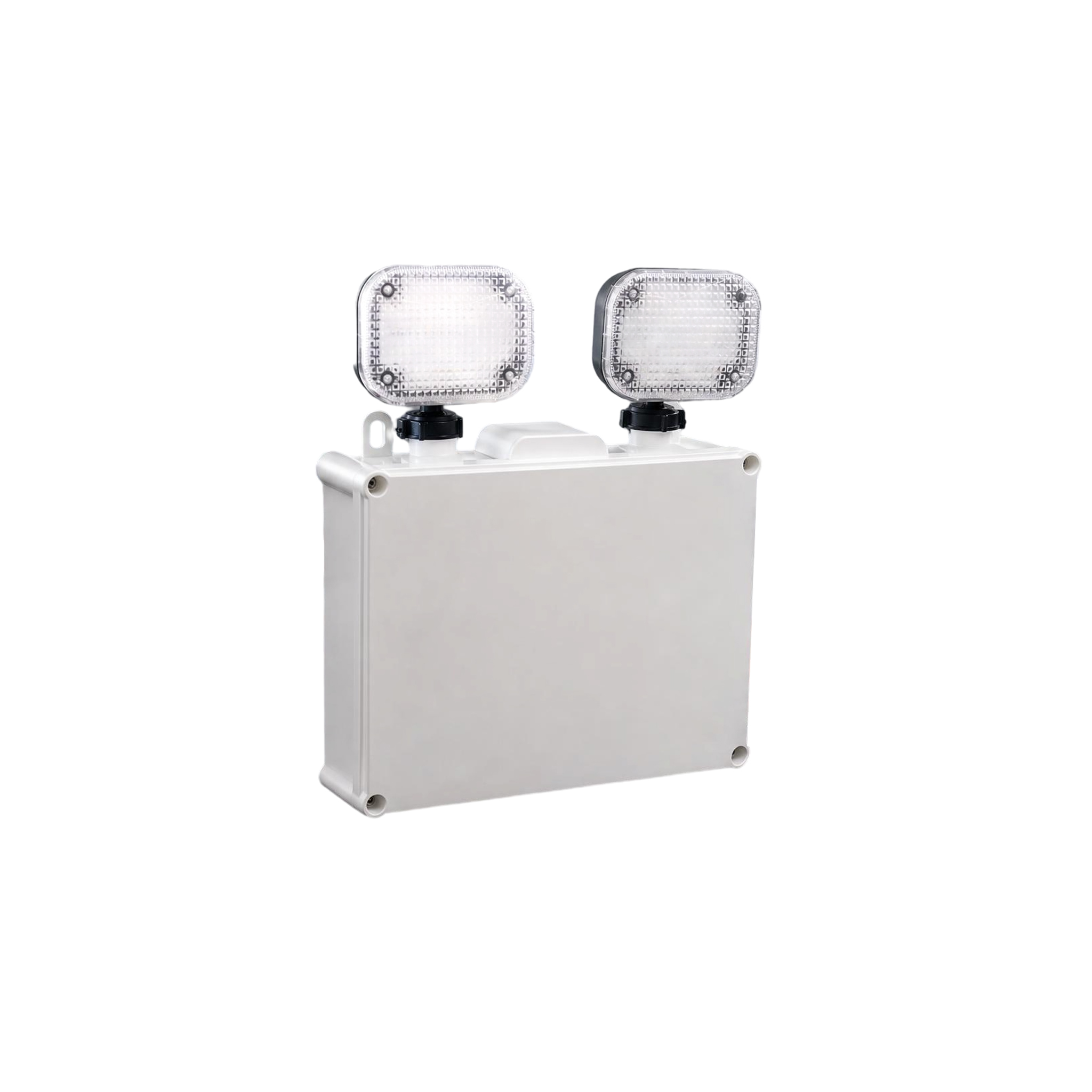
Notbeleuchtung
Self-contained emergency lighting with selectable 90 minute to 3 hour duration and maintained or non-maintained wiring.
Frequently Asked Questions About Non Maintained Emergency Lighting
Q: How do I confirm a non-maintained emergency driver suits my host fixture?
Match three parameters: input voltage range, emergency output window, and physical fit. Hymark non-maintained drivers accept AC 85-265V or 100-277V mains. Emergency output is typically DC 9-42V at constant current, with 150mA to 700mA options covering 3W to 25W LED loads. Verify the driver’s 3-hour lumen output—commonly 300lm to 1500lm, or 10% to 30% of normal output—meets EN 1838 minimums for your ceiling height and escape route width. Check the mounting footprint: 53mm × 28mm × 22mm is typical for compact LED panel drivers, while high-bay units need larger enclosures with IP65 rating and -20°C to +50°C ambient tolerance.
Q: What emergency duration and output options are available?
Standard durations are 90 minutes, 2 hours, and 3 hours. Three-hour duration is mandatory for UK escape routes per BS 5266-1 and common across EU projects referencing EN 60598-2-22. Output levels scale with battery capacity: a 3.2V LiFePO4 3000mAh pack delivers roughly 4W for 3 hours at 400lm to 500lm; a 7.4V Li-ion 18650 2600mAh twin-cell configuration achieves 8W for 90 minutes at 800lm to 1000lm. Higher wattage non-maintained drivers for LED high bays—15W to 25W—use 11.1V or 14.8V Li-ion packs with 5200mAh to 7800mAh capacity, yielding 1500lm to 2500lm for 90 minutes.
Q: What is the wiring difference between maintained and non-maintained emergency?
Non-maintained emergency uses a switched live feed to the driver: the unit charges in standby and illuminates only when mains fails. The wiring requires one permanent live, one switched live, and neutral. Maintained emergency needs an additional unswitched live so the lamp operates during normal hours and switches to battery backup on failure. Non-maintained is simpler to wire, consumes no standby lamp energy, and suits storerooms, car parks, and intermittently occupied spaces where continuous illumination is unnecessary. Maintained is compulsory for some escape routes in BS 5266-1 and mandatory in theatrical and healthcare applications where lamp failure must be immediately visible.
Q: What self-test and remote monitoring options exist?
Manual test via a key switch or push button is standard. Automatic self-test per EN 62034 performs brief functional and duration tests at set intervals—typically monthly and annually—with visual LED status indication. DALI-2 emergency test facility allows networked monitoring from a central BMS, logging each luminaire’s battery health, charge state, and fault status. DALI requires a DALI bus pair in addition to power wiring. Self-test adds 15% to 25% to driver cost; DALI capability adds 30% to 40%. For large facilities with 200+ points, DALI eliminates manual record-keeping and satisfies building control requirements in many Middle East and Southeast Asian specifications.
Q: Which battery chemistry should I specify and what is the replacement interval?
NiCd packs (3.6V to 9.6V, 600mAh to 1800mAh) are lowest first cost but carry memory effect, require full discharge cycling, and face RoHS and transport restrictions in EU markets; replacement every 3 to 4 years is typical. Li-ion 18650 (3.7V, 2000mAh to 3500mAh per cell) offers higher energy density and 500 to 800 cycles, with 4 to 5 year service life. LiFePO4 (3.2V, 1500mAh to 6000mAh) provides 1500 to 2000 cycles, stable voltage plateau, and superior thermal tolerance up to 60°C, but at 20% to 30% cost premium and lower nominal voltage requiring more cells for equivalent wattage. LiFePO4 is preferable for high ambient temperatures in Middle East and African installations.
Q: How do lithium batteries affect shipping and what documents are needed?
Lithium cells and packs are UN 38.3 classified dangerous goods. Air freight (IATA) requires UN 38.3 test summary reports, MSDS/SDS, and lithium battery labels on each carton; watt-hour rating must not exceed 100Wh per pack or 20Wh per cell for passenger aircraft, with 35kg net lithium content limit per package. Sea freight (IMDG) is less restrictive but needs proper shipping names and Class 9 labels. Hymark ships samples by air with full UN 38.3 documentation; bulk orders typically move by sea FOB Shenzhen to reduce freight cost and avoid IATA quantity limits. Lead time is 25 to 35 days for sea freight to UK or EU ports; air freight samples deliver in 7 to 10 days.
Q: What conformity marks and test reports should I request for my market?
UK and EU: ask for EN 60598-2-22 and EN 1838 test reports for the complete emergency luminaire or driver; CE conformity assessment documentation; and UKCA marking evidence post-Brexit. EN 62034 applies to self-test systems. Middle East: many Gulf states accept CB scheme reports with EN or IEC basis plus local deviation testing; SASO IECEE recognition is common for Saudi Arabia. Southeast Asia and Africa: IEC 60598-2-22 test reports typically suffice, though Nigeria and Kenya require SONCAP and PVOC respectively. UL 924 is required for North American projects; AS/NZS 2293 for Australia and New Zealand. Request the specific report number and issuing laboratory for verification—do not accept generic claims.
Q: What are typical MOQ, lead time, sample policy, and warranty terms?
MOQ is 500 pieces for standard non-maintained emergency drivers, 1000 pieces for exit signs and twin spots, with 2000 to 3000 pieces for OEM custom housings or branded packaging. Lead time is 20 to 30 days after confirmed order and deposit. Samples of one to three units ship within 3 to 5 days against pro forma invoice; sample cost is typically 1.5× to 2× bulk unit price, credited against first order above MOQ. Standard payment terms are 30% T/T deposit, 70% against B/L copy for FOB or CIF orders; L/C at sight accepted above USD 50,000. Warranty is 3 years on driver electronics, 2 years on Li-ion and LiFePO4 battery packs, 1 year on NiCd. Spare battery packs and driver modules are stocked for 5 years post-model discontinuation. Installation commissioning support is available via video conference with English-speaking technicians; on-site support requires travel cost coverage.
Important Notice
Specifications, output and duration figures and price ranges in this guide are indicative and are provided
for planning purposes only. Actual emergency output, duration, battery life, ingress protection and available conformity documentation
differ by model and by destination country, and emergency lighting design remains the responsibility of the project designer. Buyers
must confirm their own mains voltage and frequency, the emergency lighting standard enforced locally, the host fixture compatibility
and their import requirements before placing an order. All figures are subject to written confirmation in the final proforma invoice
issued by Hymark.
Sourcing Non Maintained Emergency Lighting from Hymark
Why Non Maintained Suits Most New Builds
Non maintained emergency lighting draws zero power during normal operation. The LED emergency driver sits idle, the changeover relay keeps the battery disconnected from the lamp, and the only running load is the trickle charge circuit. For a 3W maintained indicator that runs 12 hours daily, the annual energy difference against a non maintained unit is roughly 13 kWh per fitting. At £0.30/kWh, that is £3.90 per year per luminaire before lamp replacement costs. Across a 500-luminaire warehouse, the maintained premium pays for itself only if the space sees genuine dual-use hours.
The trade-off appears in wiring complexity. Non maintained units need a switched live that drops when normal power fails. Maintained units can share the permanent live with the normal LED driver. Installers working in retrofit often prefer maintained because they avoid running a separate switch line. Specifiers writing for new construction with dedicated emergency circuits typically prefer non maintained for the lower parasitic load.
Matching the Emergency Driver to the Host Fixture
Hymark’s LED emergency driver range for non maintained use covers:
| Host Fixture Type | Normal Load | Notfallausgang | Duration | Battery | Charge Time |
|---|---|---|---|---|---|
| LED panel 600×600 | 36W | 3W (8%), 300 lm | 90 min | LiFePO4 3.2V 3000mAh | 24 h |
| LED tube 1200 mm | 18W | 3W (17%), 320 lm | 3 h | Li-ion 18650 3.7V 2600mAh | 24 h |
| LED high bay 150W | 150W | 15W (10%), 1500 lm | 90 min | LiFePO4 6,4 V 6000 mAh | 24 h |
| LED linear 1200 mm | 24W | 5W (21%), 500 lm | 2 h | LiFePO4 3.2V 4500mAh | 24 h |
The constant current inverter output window is typically DC 9–42V at 150–700mA, set at factory to match the LED module forward voltage. Buyers should confirm the host fixture’s LED string voltage falls inside this window before ordering. A mismatch forces either a custom inverter tap or a different driver model.
What to Verify from Any Supplier
Non maintained emergency drivers must perform a clean changeover. Ask these questions:
- Changeover relay rating: Is it rated for the host fixture’s normal operating current, or will inrush degrade contacts over time?
- Battery chemistry and cycle life: LiFePO4 delivers 500–800 cycles to 80% capacity; NiCd delivers 300–500 but tolerates wider temperature swings. Li-ion 18650 sits between them on energy density.
- Test facility: Manual test key is standard; self-test to EN 62034 adds cost but removes the 30-second monthly key test burden; DALI self-test integrates into building management systems.
- Ambient range: LiFePO4 performs from −10°C to +55°C; NiCd extends to −20°C. Specify the actual ceiling or enclosure temperature, not the room setpoint.
- IP and IK rating: IP65 with IK08 suits car parks and industrial aisles; IP20 suffices for ceiling voids with dust covers.
Do not accept a supplier’s general claim of compliance. Request the test report number for EN 60598-2-22 and EN 1838 photometric data, then cross-check that the report covers the exact battery and LED module configuration in your quotation. Hymark provides these documents per SKU on request.
Export Configuration and Lead Time
Hymark ships non maintained emergency drivers and complete luminaires with selectable maintained or non-maintained wiring, selectable 90-minute, 2-hour or 3-hour duration, and battery packs tested to UN 38.3 for air and sea freight under IATA and IMDG rules. Standard input voltage is AC 85–265V 50/60Hz for global compatibility; regional variants at 220–240V or 100–277V are available on MOQ adjustment.
Carton packing is 20 units per inner carton, 400 units per pallet for drivers; luminaire quantities vary by size. FOB Shenzhen or CIF destination port terms. MOQ is 100 units for standard configurations; 500 units for OEM housing colour, silkscreen legend or custom duration. Sample lead time is 7 days; production lead time is 25–30 days after order confirmation.
Send the host fixture type and wattage, the emergency duration your code requires, your mains voltage and your destination port. Hymark returns a quotation within 24 hours via WhatsApp or email with matched driver specification, battery configuration and packing plan.
Get a Factory Direct Quote on Non Maintained Emergency Lighting
JIALINGHANG ELECTRONIC CO., LTD. has been in LED lighting since 2013 and has focused on
LED emergency technology and high performance LED strips since 2017. Hymark products are co-designed with our
dedicated manufacturing partners, built with selectable emergency duration and maintained or non-maintained wiring, and function
tested before packing. Send us the host fixture type and wattage, the emergency duration your local code requires, your mains
voltage and your destination port and we will return a quotation within 24 hours.


 English
  Spanish
  Arabic
  French
  German
  Russian
  Portuguese
  Italian
  Vietnamese