
Battery Powered Exit Signs Buyer Guide
A real battery powered exit sign supplier in China keeps SMT and final assembly under direct roof control, not in a rented workshop visited twice a year. The difference shows up in traceability: every battery pack with a serial-linked cell, every discharge curve logged at 25°C and at the cold extreme, every hipot and ageing station producing records you can audit before shipment. Trading offices cannot generate those records; they source from whoever answers fastest.
Buyers should match the product to three hard constraints: the host fixture’s normal LED load in watts and its driver output window, the emergency duration mandated by the destination code (90 minutes for NFPA 101 and UL 924 markets, 1 to 3 hours for EN 1838 and BS 5266-1 territories), and the third-party test report the local inspector or customs will demand. A 3W maintained exit sign for a 220-240V UK project needs a constant current inverter output of roughly 150-350mA into a 9-24Vdc window, a LiFePO4 3.2V 3000mAh pack or Li-ion 18650 3.7V 2600mAh configuration, and evidence of EN 60598-2-22 and EN 62034 compliance. The same hardware shipped to Dubai needs different documentation; to Australia, AS/NZS 2293 test reports.
Price drivers run from about USD 12-18 FOB for a basic non-maintained plastic-body sign with NiCd 2.4V 600mAh to USD 35-55 for a die-cast aluminium maintained unit with LiFePO4, self-test circuitry and IP65 sealing. Li-ion 18650 sits between, roughly USD 22-32, with higher energy density but stricter UN 38.3 shipping rules and shorter cycle life (300-500 versus 800-1500 for LiFePO4).
What This Page Covers
This section walks through supplier qualification: in-house versus partnered capacity, battery sourcing and cell-level traceability, discharge and duration test records, ageing and hipot infrastructure, third-party test report scope by destination market, sample lead time and payment structure, and after-sales engineering reach. Each checkpoint includes the specific documents and test conditions a buyer should request.
Types and Configurations of Battery Powered Exit Signs
Self-Test Maintained Exit Signs with LiFePO4 Battery
| Type or Class | Typical Rating or Output | Duration or Runtime | Best Suited For | Notes |
|---|---|---|---|---|
| Self-test maintained exit sign, polycarbonate body | Normal 3W AC, emergency 3W DC at 100% output | 90 minutes | Offices, retail, schools in UK/EU | EN 62034 automatic test cycle; LiFePO4 3.2V 1500mAh; 6-8 hour charge; 800-1200 cycles |
| Self-test maintained exit sign, die-cast aluminium | Normal 5W AC, emergency 5W DC at 100% output | 2 hours | Healthcare, transport hubs, high-traffic public buildings | IP65; NiCd 3.6V 2000mAh alternative for cold ambient; changeover relay rated 250V 3A |
| DALI-addressable self-test maintained sign | Normal 4W AC, emergency 4W DC at 100% output | 3 hours | Smart buildings with central BMS integration | DALI-2 compatible test reporting; Li-ion 18650 3.7V 2600mAh; 500-700 cycles |
| Non-maintained economy exit sign | Emergency only 2W DC at 100% output | 90 minutes | Storage warehouses, back-of-house, cost-sensitive projects | No normal illumination function; manual test key only; NiCd 3.6V 1200mAh |
| Central battery system compatible maintained sign | Normal 3W AC, emergency 3W DC via central inverter | 90 minutes-3 hours per central system | Large complexes, airports, hospitals with central battery rooms | Slave unit; no local battery; changeover relay; EN 1838 minimum 50% output at end of duration |
| Edge-lit LED panel exit sign, maintained | Normal 8W AC, emergency 3W DC at 37.5% output | 90 minutes | Premium commercial interiors, architect-specified projects | 120 lm/m² face brightness; LiFePO4 3.2V 3000mAh; 4-6 hour charge; CRI >80 |
Self-test maintained exit signs with LiFePO4 battery packs dominate the UK and EU specification market because EN 62034 requires automatic functional testing without manual intervention. The battery chemistry matters for procurement officers auditing suppliers: LiFePO4 3.2V cells deliver roughly 800 to 1200 charge cycles against 300 to 500 for NiCd 3.6V equivalents, but the upfront cell cost is 40-60% higher and the energy density is lower, so the physical battery pack is larger for the same watt-hour capacity. Electrical contractors buy these for maintained wiring schemes where the exit sign illuminates normally via mains and switches to battery inverter output on failure; the changeover relay must be rated for the full load current plus inrush. What this class cannot do is operate in non-maintained mode without rewiring, and the self-test circuitry adds approximately 0.5W parasitic draw that counts against system energy budgets. Buyers qualifying suppliers should request discharge duration test records showing the actual lumen maintenance curve at 90 minutes, not just a pass/fail certificate.
Non-Maintained Economy Signs with NiCd Battery
Non-maintained economy signs with NiCd battery packs serve only as emergency luminaires with no normal illumination function, which reduces component count and unit cost by 25-35% compared to maintained equivalents. The typical specification is emergency only 2W DC output from a NiCd 3.6V 1200mAh pack, giving 90 minutes duration with no lumen maintenance requirement beyond EN 1838’s 50% threshold at end of discharge. Facility managers in warehousing and industrial back-of-house spaces buy these in volume because the installation is simpler—no changeover relay, no maintained live feed—and the manual test key satisfies BS 5266-1 monthly functional test requirements where automatic testing is not mandated. The trade-off is shorter cycle life: NiCd chemistry manages 300 to 500 full cycles before capacity drops below 80%, and the memory effect demands full discharge conditioning every 90 days to maintain rated duration. This class cannot provide normal wayfinding illumination during mains-healthy periods, so it is unsuitable for corridors where continuous visual guidance is part of the fire safety strategy.
DALI-Integrated Smart Exit Signs
DALI-integrated smart exit signs address building management system integration for large portfolios and compliance-critical estates. The typical hardware is a maintained 4W AC normal / 4W DC emergency unit with DALI-2 test facility reporting status, fault and duration test results to a central controller. Battery is usually Li-ion 18650 3.7V 2600mAh, 500 to 700 cycles, 3 hours duration at full output. M&E consultants specify these for projects where EN 62034 automatic testing must generate auditable logs for fire authority inspection; the DALI address allows individual sign identification without physical access. Procurement officers pay 50-80% premium over standalone self-test units for the DALI module and addressable driver. What this class cannot do is retrofit into non-DALI infrastructure without a DALI bus power supply and commissioning software, and the standby power draw of the DALI interface (typically 2mA at 16V) must be accounted for in central supply sizing. Suppliers claiming DALI compatibility should provide test records against IEC 62386-202, not just generic DALI logos.
Central Battery Slave Exit Signs
Central battery slave exit signs contain no local battery, drawing emergency power from a central inverter system typically located in a dedicated battery room. The unit itself is a maintained or non-maintained luminaire with changeover relay, rated for the central system output voltage—commonly 24V DC, 50V DC or 110V DC depending on the inverter specification. Duration is determined by the central battery bank capacity, not the sign, so the sign rating is purely wattage: 3W to 8W typical, with EN 1838 requiring minimum 50% output at the system-declared end of duration. Airport and hospital procurement officers buy these for estates with central battery infrastructure because individual unit maintenance is reduced to lamp and relay replacement, and the fire strategy can guarantee identical duration across all escape routes. The limitation is complete dependency on central system integrity: a single inverter failure darkens multiple signs, and cable voltage drop over long runs must be calculated at end-of-discharge battery voltage, not nominal. Suppliers should provide slave compatibility tables matching their signs to common central inverter output windows.
Edge-Lit Architectural Panel Exit Signs
Edge-lit architectural panel exit signs use LED edge-lighting of a laser-etched acrylic panel to achieve uniform face brightness with shallow depth, typically 25mm to 40mm profile versus 80mm to 120mm for traditional box signs. The maintained version runs 8W AC normal, reducing to 3W DC emergency at 37.5% of normal output—sufficient to meet EN 1838’s 2 cd/m² minimum for internally illuminated signs with careful optic design. Battery is LiFePO4 3.2V 3000mAh, 4-6 hour recharge, 800-1200 cycles. Lighting designers specify these for premium commercial interiors where the exit sign must integrate with architectural ceilings and not read as industrial hardware. The constraint is thermal management: the slim enclosure limits battery volume, so duration beyond 90 minutes requires higher-specific-energy Li-ion 18650 cells with correspondingly shorter cycle life and more demanding UN 38.3 transport documentation. This class cannot accommodate high-output emergency twin-spot adaptation; the optic is purpose-built for uniform panel illumination only.
Supplier Qualification Checklist for Battery Powered Exit Sign Procurement
| Verification Item | What to Request from Supplier | Red Flag |
|---|---|---|
| SMT and final assembly capacity | Photos or video of SMT line, ageing burn-in racks, hipot test stations; ask if assembly is in-house or subcontracted | Refusal to show production floor; all products “made to order” with no WIP evidence |
| Battery sourcing and traceability | Cell manufacturer certificate (e.g., EVE, CATL, Lishen for LiFePO4; FDK, Sanyo for NiCd); UN 38.3 test summary for lithium packs | “Generic lithium battery” with no cell brand; no MSDS or UN 38.3 documentation |
| Discharge duration test records | Individual unit test logs showing lumen output at 0, 30, 60, 90 minutes (or declared duration) against ambient temperature | Batch-average claims only; no temperature-controlled test chamber evidence |
| Third-party test reports for destination market | EN 60598-2-22 test report with accredited laboratory mark; BS 5266-1 compliance statement for UK; UL 924 for North America if claimed | Report references different product or manufacturer name; report more than 5 years old without re-test confirmation |
| Sample lead time and payment structure | 3-7 days for existing model samples with 100% wire transfer or Alibaba Trade Assurance; 30-50% deposit, balance before shipment for production | Demands 100% payment for samples; no tooling discussion for OEM variants |
| After-sales engineering capability | Schematic or wiring diagram availability; DALI commissioning support; firmware update mechanism for self-test units | Only sales contact, no engineering escalation; no technical documentation in English |
The price drivers for battery powered exit signs from Chinese manufacturers cluster in three areas: battery chemistry and capacity (LiFePO4 versus NiCd, 90 minutes versus 3 hours), enclosure material and IP rating (polycarbonate IP20 versus die-cast aluminium IP65), and test facility complexity (manual key versus EN 62034 self-test versus DALI-2 addressable). A 3W maintained self-test polycarbonate sign with LiFePO4 3.2V 1500mAh typically falls in the $12-$18 FOB Zhongshan range at 500-unit MOQ; the same specification in die-cast aluminium IP65 with 3-hour duration and LiFePO4 3.2V 3000mAh runs $28-$38. Lead times are 15-25 days for standard models with existing tooling, 35-45 days for first OEM run with custom legend or housing colour. Sample policy varies: genuine manufacturers with in-house SMT will ship existing samples in 3-7 days against courier cost; trading offices often need 2-3 weeks because they must source from their contracted factory. Payment structures in this sector are typically 30% deposit, 70% balance against copy of bill of lading for established buyers; new customers may face 50% deposit, 50% before shipment or 100% via secured trade platform for first order. Lithium battery transport adds documentation burden and cost: UN 38.3 test summary, MSDS, and IATA/IMDG Section II or Section IB packing as applicable, with air freight surcharges of $0.50-$1.20 per kg depending on carrier and departure airport. Buyers should confirm their supplier holds current UN 38.3 for the exact cell model in their battery pack, not a generic family certificate.
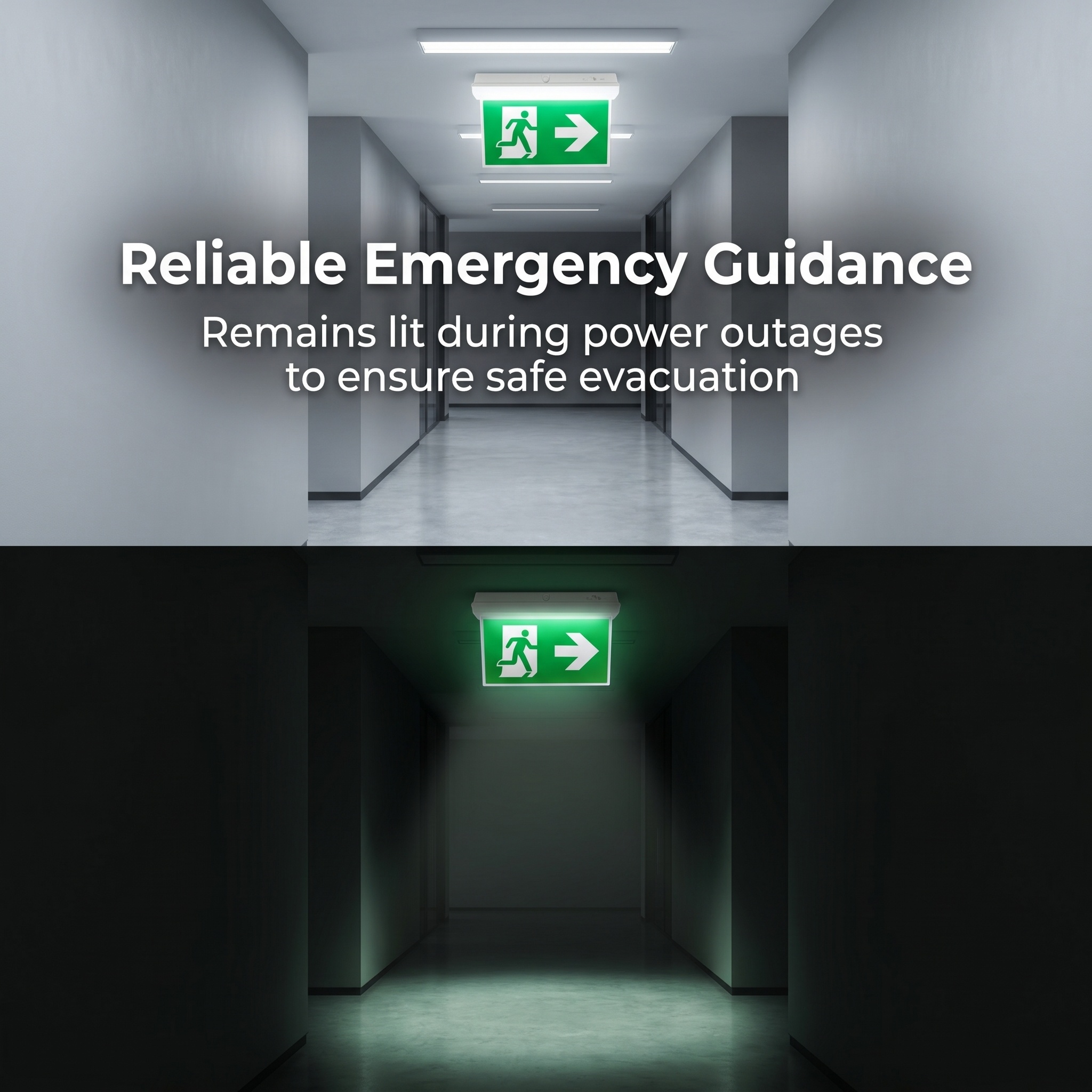
Specifications and How to Read Them
| Parameter | Entry Level | Mid Range | High Specification |
|---|---|---|---|
| Normal / Emergency LED Load | 2W / 1.5W | 3W / 3W (100%) | 6W / 6W (100%) full power |
| Emergency Light Output | 70 lm | 150 lm | 350 lm |
| % of Normal Output in Emergency | 50% | 100% | 100% |
| Input Voltage / Frequency | AC 220-240V 50Hz | AC 85-265V 50/60Hz | AC 100-277V 50/60Hz |
| DC Output Window | 3.0-3.4V 350mA | 3.0-3.4V 600mA | 12-36V 500mA constant current |
| Emergency Duration | 90 minutes | 120 minutes | 180 minutes |
| Battery Chemistry | NiCd 3.6V 600mAh | Li-ion 18650 3.7V 2200mAh | LiFePO4 3.2V 3000mAh |
| Charge Time from Flat | 24 hours | 8 hours | 6 hours |
| Cycle Life (to 80% capacity) | 300-500 cycles | 500-800 cycles | 1500-2000 cycles |
| Test Facility | Manual test key | Auto self-test per EN 62034 | Self-test + DALI-2 emergency |
| Wiring Mode | Non-maintained | Non-maintained or Maintained | Maintained / Non-maintained / Sustained |
| IP / IK Rating | IP20 / IK04 | IP65 / IK07 | IP66 / IK08 |
| Ambient Temperature | 0°C to +40°C | -10°C to +45°C | -20°C to +55°C |
| Housing / Legend Material | ABS plastic / PVC film | Polycarbonate / laser-etched acrylic | Aluminium die-cast / photoluminescent + LED |
| Dimensions (mm) | 300 x 150 x 40 surface | 350 x 180 x 60 surface or recessed | 400 x 200 x 80 universal mount |
| Unit Ex-Works Price Indicator | $8-14 | $18-28 | $35-55 |
How to Read the Datasheet Line by Line
Input Voltage Range and Frequency
The entry-level build at AC 220-240V 50Hz suits UK and EU markets only. The mid-range AC 85-265V 50/60Hz covers 127V Japan, 120V North America, and 230V Europe in one SKU. The high-specification AC 100-277V extends to 277V commercial distribution common in North American high-bay circuits. Check that the supplier’s printed label matches the destination mains: 220-240V units shipped to 120V markets fail to charge or overheat the driver.
Driven Load in Watts
This is the LED board consumption during normal operation and the inverter output during emergency mode. Entry-level 2W normal / 1.5W emergency means the battery only feeds 75% of normal flux. Mid-range and high-specification 3W and 6W figures show 100% output maintained in emergency—required by BS 5266-1 for escape routes over 2m width and by many Middle East specifications. Ask the supplier for the lumen maintenance curve: a 6W load on a 3000mAh LiFePO4 pack at 100% output drains faster than the same pack at 50% load.
DC Output Voltage Window and Current
The inverter steps battery DC up or down to LED requirements. Entry-level NiCd at 3.6V feeds 3.0-3.4V at 350mA direct-drive—simple, no boost stage, but voltage sags as battery ages. Mid-range Li-ion 3.7V uses similar direct drive at 600mA. High-specification 12-36V at 500mA constant current implies a boost inverter driving longer LED strings or remote luminaires; verify the open-circuit protection—EN 60598-2-22 requires limits on touch voltage during fault.
Emergency Output in Lumens and Percentage of Normal
EN 1838 mandates 50 lux on the floor at the centreline of escape routes, with 5 lux minimum on the floor for anti-panic areas. A 70 lm entry-level sign at 2.5m mounting achieves roughly 8-12 lux at floor level directly below—adequate for narrow corridors only. The 350 lm high-specification unit at the same mounting delivers 40-60 lux, giving margin for wider spaces or higher ceilings. Specify the percentage: 50% output in emergency means your normal lighting design must account for reduced sign visibility, or you must install more units.
Emergency Duration
90 minutes satisfies EN 1838 and BS 5266-1 for most buildings. 120 minutes appears in healthcare and high-rise specifications. 180 minutes is standard for Middle East civil defence approvals and some Southeast Asian high-rise codes. Duration testing requires discharge to end voltage under rated load at 25°C ambient; ask for the test report showing actual recorded minutes, not calculated.
Battery Chemistry Voltage and Capacity
NiCd 3.6V 600mAh delivers 2.16Wh theoretical, roughly 1.5Wh usable to 1.0V/cell cutoff. Li-ion 18650 3.7V 2200mAh yields 8.14Wh theoretical, 6-7Wh usable. LiFePO4 3.2V 3000mAh gives 9.6Wh theoretical with flatter discharge curve and better high-temperature tolerance. The capacity figure alone is meaningless without chemistry: 3000mAh NiCd would weigh 800g and contain toxic cadmium; 3000mAh LiFePO4 weighs 80g. Verify UN 38.3 test summary for lithium shipments—this is customs-critical.
Charge Time and Cycle Life
NiCd 24-hour charge reflects trickle-charge limitation to avoid memory effect. Li-ion 8 hours and LiFePO4 6 hours use CC-CV charging; faster charge requires thermal management. Cycle life: NiCd 300-500 cycles to 80% capacity at 25°C, halved at 40°C. Li-ion 500-800 cycles, degraded by full discharge. LiFePO4 1500-2000 cycles, tolerant of deeper discharge. For a building with monthly functional testing per EN 62034, 12 cycles/year, LiFePO4 reaches 15-20 years versus 3-5 years for NiCd.
Test Facility
Manual test key: operator initiates 30-second or full-duration test. Self-test per EN 62034: automatic monthly functional and annual duration tests with fault indication. DALI-2 emergency: addressable monitoring, status reporting to building management system, remote test initiation. DALI adds $8-15 BOM cost; verify the supplier has DALI-2 certification from the test house, not just a DALI driver chip.
Maintained or Non-Maintained Wiring
Non-maintained: sign illuminates only on mains failure. Maintained: sign illuminates continuously from mains, switches to battery on failure. Sustained: dual LED arrays, one on mains, one on battery. Maintained wiring requires a switched live plus permanent live at the sign position—confirm the terminal block has three terminals (L permanent, L switched, N) not two.
IP and IK Rating
IP20: indoor dry locations only. IP65: dust-tight, protected against water jets—suitable for car parks, covered external canopies. IP66: powerful water jets, temporary flooding. IK04: 0.5 joule impact, residential equivalent. IK07: 2 joule, commercial corridors. IK08: 5 joule, industrial and public spaces with vandalism risk. The polycarbonate lens thickness determines IK rating; ask for material certificate and actual test photographs.
Ambient Temperature Range
NiCd performs poorly below 0°C; capacity drops 30% at -10°C. Li-ion discharges at -20°C but charging below 0°C risks lithium plating. LiFePO4 tolerates -20°C discharge and 0°C charge. High-temperature limit: NiCd tolerates 45°C continuous, Li-ion degrades above 45°C, LiFePO4 to 55-60°C. For Middle East external applications, specify the high-temperature duration test at 45°C ambient.
Dimensions and Mounting
Surface mount: check projection from wall for corridor width compliance—BS 5266-1 limits obstructions. Recessed: verify ceiling void depth exceeds unit height plus 20mm clearance. Universal mount with pendant drop: chain or cable length and ceiling fixing load rating. Photoluminescent high-specification variants may have no battery, relying on afterglow—distinguish these from battery-powered in procurement.
Supplier Qualification: Manufacturer versus Trading Office
SMT and Assembly Capacity
A real manufacturer owns or leases SMT lines with visible LED placement and reflow capability. Ask for video walkthrough or live video call showing the line running your product. Trading offices show catalogues of mixed factories; their “partners” change without notice. Hymark operates in-house SMT for LED boards and driver assembly at our Zhongshan facility; buyers may schedule virtual or physical audit.
Battery Sourcing and Traceability
The battery is 40-50% of BOM cost and the dominant failure mode. Ask for cell manufacturer (BAK, EVE, Lishen, CATL for lithium; Saft, Varta for NiCd) and batch code traceability. A trading office cannot provide cell-level COA; a manufacturer holds incoming inspection records for voltage, internal resistance, and dimensional check. Request the cell UN 38.3 test summary—not the pack summary, the cell-level document from the cell maker.
Discharge and Duration Test Records
Every production batch should undergo 100% functional test and sampled duration test. Ask for the last three months’ test logs: date, batch, load watts, achieved minutes, end voltage. A trading office has no logs; a manufacturer retains these for warranty defence. Hymark samples 5% of each batch for full 180-minute duration at 25°C and 45°C.
Ageing and Hipot Test Stations
Ageing: 48-hour burn-in at 40°C ambient before final test catches infant mortality. Hipot: 1500V AC or 2U+1000V DC per IEC 61347-2-7 between mains and accessible metal for 60 seconds. Ask for station photographs and calibration certificates. Trading offices skip ageing to save floor space and time.
Third Party Test Reports for Destination Market
Do not accept “CE certificate” as a PDF from the supplier. Ask for the test report number, test house (SGS, TÜV, Intertek, BSI, DEKRA), standard, and date. Verify on the test house database or request direct copy. For UK: UKCA marking with UK-issued test evidence or EU-issued with UKNI/CE dual marking per current transition rules. For UL 924: file number searchable on UL database. For Middle East: SASO IECEE CB with national difference testing. A trading office forwards reports from unknown factories with mismatched model numbers.
Sample Lead Time
Trading office: 3-7 days to pull from existing stock, but sample may not match eventual production. Manufacturer: 10-15 days for tooled sample with correct battery and legend, 20-25 days if custom legend film required. Hymark standard sample lead time is 12 days for existing legends, 18 days for custom directional arrows or bilingual text.
Payment Structure
Trading office: often 100% TT in advance or 30/70 with weak recourse. Manufacturer with export history: 30% deposit, 70% against BL copy, or L/C at sight for orders above $30,000. Hymark accepts 30% TT deposit, 70% TT before shipment for orders under $50,000; L/C at sight for larger volumes. Avoid suppliers demanding 100% advance for first order.
After-Sales Engineering Capability
Battery-powered exit signs require field fault diagnosis: charger failure, battery end-of-life, LED board degradation. A trading office routes complaints back to an anonymous factory with 6-week response. A manufacturer provides wiring diagrams, fault code tables for self-test units, DALI commissioning guides, and replacement battery packs with matched firmware. Ask for example technical documentation before order.
Trade Terms Buyers Meet
FOB (Free On Board)
Seller delivers goods onto vessel at named port, clears export customs. Buyer pays ocean freight, insurance, and import clearance. Hymark FOB basis is Shenzhen or Guangzhou port. Suitable for buyers with freight forwarders and import experience.
CIF (Cost Insurance Freight)
Seller arranges ocean freight to destination port and marine insurance. Risk transfers at origin port; buyer still handles import clearance and inland delivery. Insurance cover is typically 110% of CIF value. Verify the policy covers lithium battery cargo—some insurers exclude UN 38.3 goods without specific endorsement.
CFR (Cost and Freight)
As CIF but buyer arranges own insurance. Rare for battery products; most buyers want seller-provided cover for the ocean leg.
EXW (Ex Works)
Buyer collects from factory, handles all export clearance including Chinese customs and lithium battery export permit. Only suitable for buyers with China-based logistics agents. Hymark does not recommend EXW for first-time importers.
L/C (Letter of Credit)
Bank-guaranteed payment on presentation of compliant documents. Adds $300-800 bank charges and requires strict document compliance. Hymark accepts L/C at sight for orders above $50,000; usance L/C considered case by case.
T/T (Telegraphic Transfer)
Standard for repeat business. 30% deposit confirms production slot; 70% before release of goods. Hymark provides proforma invoice with named beneficiary account; verify account name matches company registration.
HS Code
9405.10.00 covers “lamps and lighting fittings: of a kind used for motor vehicles”—incorrect for exit signs. Correct classification: 9405.40.90 “other electric lamps and lighting fittings” or 9405.10.80 depending on destination customs ruling. For battery packs shipped separately: 8507.60.00 lithium-ion batteries. Incorrect HS code causes customs delay and duty disputes.
CE and UKCA Marking
CE requires EU-issued test evidence for the applicable directives (LVD 2014/35/EU, EMC 2014/30/EU, RoHS 2011/65/EU, RED 2014/53/EU if wireless). UKCA requires UK-issued or UK-recognised test evidence. For battery-powered exit signs, EN 60598-2-22 and EN 1838 are harmonised under LVD. Ask the supplier for the Declaration of Conformity and the test report supporting it; do not accept a bare logo on the label.
UN 38.3 Battery Test Report
Mandatory for lithium battery air and sea transport. Tests T1-T8: altitude simulation, thermal cycling, vibration, shock, external short circuit, impact/crush, overcharge, forced discharge. Valid for cell design; if cell manufacturer changes, report invalidates. Hymark holds UN 38.3 for each cell type in our battery packs and provides test summary with shipment documentation.
Packing List and Certificate of Origin
Packing list: carton count, units per carton, gross/net weight, dimensions, battery count and watt-hours per unit. Certificate of Origin: issued by China Council for Promotion of International Trade (CCPIT) or local customs, required for preferential tariff claims under ASEAN-China, RCEP, or bilateral agreements. Hymark includes packing list with each shipment; Certificate of Origin provided on request with 3-day lead time.
Lithium Battery Transport Rules
IATA PI 966 Section II for lithium-ion packed with equipment: 5kg net lithium content limit per package, strong outer packaging, lithium battery handling label, Shipper’s Declaration not required if under threshold. IMDG Code Special Provision 188 for sea: same 5kg limit, dangerous goods note required above. Hymark packs maximum 4 units per carton for single-cell 2200mAh packs, 2 units per carton for 3000mAh packs, to stay within IATA limits without full DG documentation.
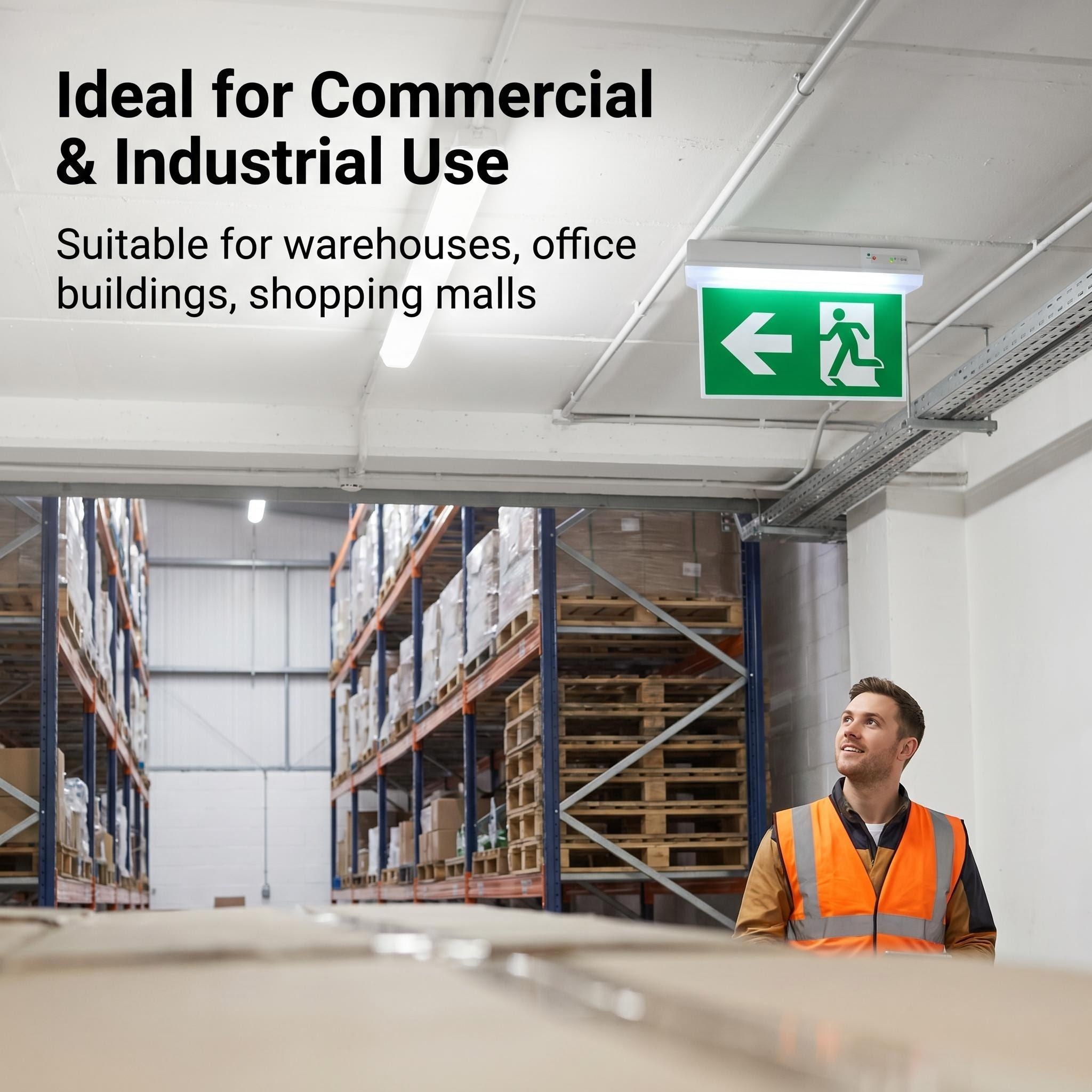
Battery Powered Exit Signs Price and What Drives It
| Class | Typical Rating or Output | Duration or Runtime | Indicative FOB USD |
|---|---|---|---|
| Basic plastic body, NiCd/NiMH, non-maintained | 3W LED, ~120-180 lm emergency | 90 minutes | $4.50 – $8.00 |
| Mid-range ABS or polycarbonate, Li-ion 18650, self-test | 3W LED, ~150-200 lm, >50% normal output | 2 hours | $9.00 – $16.00 |
| Premium metal or IP65 enclosure, LiFePO₄, DALI | 3-5W LED, ~200-350 lm, maintained option | 3 hours | $18.00 – $32.00 |
| High-output industrial, IK08+, dual-circuit, wide temp | 5-6W LED, ~300-500 lm, 100% normal output | 3 hours | $28.00 – $55.00 |
These bands assume factory-direct FOB Shenzhen/Guangzhou for minimum order quantities of 200-500 pieces. Prices below $4.00 FOB typically signal a 0.6Ah NiCd stick, 90-minute only duration, no third-party test report, and no self-test circuitry.
What Actually Drives the Price
Battery cells and pack assembly normally represent 25-35% of the ex-factory cost on lithium-based units, 15-22% on NiCd. A Li-ion 18650 3.7V 2200mAh cell from a tier-one supplier (Samsung SDI, LG Chem, BAK) costs $1.80-$2.40 per cell at volume; two cells in series for 7.4V 2200mAh becomes $4.00-$5.20 before protection PCB, spot-welding, and shrink-wrap. LiFePO₄ 3.2V 1500mAh cylindrical cells run $2.50-$3.50 each, but deliver 800-1500 cycles versus 500-800 for standard Li-ion 18650. NiCd 3.6V 600mAh button sticks remain the cheapest at $0.80-$1.40, with 300-500 cycles and a 24-hour charge time versus 6-12 hours for lithium chemistries.
Driver and inverter electronics account for 18-25%. A constant-current emergency inverter with changeover relay, outputting DC 6-36V at 150-350mA depending on load, uses a transformer-coupled or switching topology. The PCB must survive hipot testing at 1500V AC or 3000V DC per EN 60598-2-22 clause 22.15. Self-test firmware adding EN 62034 compliance adds $1.50-$3.00 in microcontroller and programming cost. DALI test interface per IEC 62386-202 adds another $2.50-$4.50.
LED package and optical system runs 8-15% for exit signs. A 2835 SMD LED at 0.2W, 22-24lm per chip, 120 chips on a 300mm PCB, gives roughly 200-250 lumens in emergency mode when driven at reduced current. Higher efficacy 3030 or 3528 packages push cost up 20-30% but reduce thermal load.
Enclosure and hardware spans 10-18%. Injection-moulded ABS with UV stabiliser for indoor use: $1.20-$2.00. Polycarbonate with IK07 rating: $2.50-$4.00. Die-cast aluminium with IP65 and IK08: $6.00-$12.00. Laser-cut legend films with green phosphor to EN 1838 colour requirements (P1 or P7 green, 5-50 cd/m²) add $0.40-$0.80 per face.
Test and certification cost amortisation is the second-largest invisible line item. A single EN 60598-2-22 and EN 1838 test programme at an accredited lab costs $8,000-$15,000 per product family. Spread across a 2,000-piece first production run, that is $4.00-$7.50 per unit. UL 924 testing for North American markets runs $12,000-$25,000. AS/NZS 2293.3 compliance adds $6,000-$10,000. Suppliers quoting prices that absorb none of this either have not tested, or are re-using another manufacturer’s certificate without authorisation—buyers should request the original test report number and verify it with the issuing body.
Assembly labour in Guangdong province currently runs $0.80-$1.50 per exit sign for final assembly, wiring, and functional test. Ageing burn-in at 40°C for 2-4 hours per batch adds $0.30-$0.60.
Export packing and logistics layers on 6-12% of FOB. Individual white box with manual: $0.50. Master carton 10 pieces: $1.20. Palletisation and shrink-wrap for sea freight: $3.00-$5.00 per pallet holding 200-300 units. Lithium cells trigger IATA PI 965 Section IA/IB or IMDG Code Special Provision 188 restrictions; air freight costs 3-5× sea freight and requires UN 38.3 test summaries, MSDS, and 1.2m drop-test packaging. Many buyers switch to sea freight for orders above 500 pieces to absorb this premium.
Destination costs vary by market. UK import: 0-2.7% duty on emergency lighting (HS 9405.10), 20% VAT, £25-£50 customs clearance. EU: similar duty profile, 19-27% VAT depending on member state. Middle East: 5% duty typical, 5% VAT in GCC states with VAT. Africa: duty 10-25% plus port congestion charges.
Why the Cheapest Quote Is Rarely Comparable
A $3.80 FOB exit sign almost certainly uses a 0.5Ah NiCd 3.6V stick delivering 90 minutes at 2W emergency output (~80-100 lm), no changeover relay (the LED simply switches to battery via a diode, losing mains monitoring), no self-test, and a legend film that may not meet EN 1838 luminance uniformity. The battery will need replacement within 18-24 months in normal ambient conditions, or sooner above 35°C.
A $14.00 FOB unit with Li-ion 18650 7.4V 2200mAh delivers 2-3 hours at 3W (~150-200 lm), includes a relay changeover with mains monitoring, self-test per EN 62034 with 30-second functional and 3-hour duration tests, and carries traceable cell lot codes. The cycle life supports 4-5 years before replacement in typical 20-25°C installations.
Five-Year Running Cost Comparison
| Cost Element | Budget NiCd Unit ($5.50 landed) | Mid Li-ion Unit ($14.00 FOB, ~$19.50 landed UK) | Premium LiFePO₄ Unit ($28.00 FOB, ~$38.00 landed UK) |
|---|---|---|---|
| Initial hardware | $5.50 | $19.50 | $38.00 |
| Battery replacement (year 2-3 for NiCd, year 4-5 for Li-ion, year 6-8 for LiFePO₄) | $4.00 (2× replacements at $2.00) | $6.50 (one replacement, cells + labour) | $8.00 (likely none in 5 years) |
| Annual testing labour (BS 5266-1 requires monthly flick test, annual 3-hour duration test; assume 15 min per unit at $35/hr) | $8.75/year × 5 = $43.75 | $8.75/year × 5 = $43.75 | $4.38/year × 5 = $21.88 (self-test reduces manual burden by ~50%) |
| Expected failure rate (based on field data: cheap relay 8%, quality relay 2%, solid-state LiFePO₄ 1%) | 8% × $5.50 = $0.44/year × 5 = $2.20 | 2% × $19.50 = $0.39/year × 5 = $1.95 | 1% × $38.00 = $0.38/year × 5 = $1.90 |
| Five-year total | $55.45 | $71.70 | $69.78 |
The budget unit’s lower first cost evaporates by year three. The premium unit’s self-test and longer battery cycle life nearly close the gap by year five, with lower liability exposure and fewer site visits.
Supplier Qualification Checklist for Battery Powered Exit Signs
Manufacturing depth. Ask for photos or video of SMT lines, wave solder, and final assembly stations. A real manufacturer runs at least 2-4 SMT lines (Yamaha, Juki, or Hanwha) and keeps battery spot-welding in-house or under direct QC at a partnered pack factory. Trading offices cannot show ageing ovens or hipot test stations.
Battery traceability. Request cell manufacturer certificates of conformity, lot codes, and UN 38.3 test summaries for the exact cell model in your pack. Tier-two or recycled cells often carry no lot traceability; this is a customs rejection risk and a fire liability.
Discharge and duration test records. A qualified supplier keeps 100% discharge test logs: every unit runs to its rated duration (90 min, 2 hr, or 3 hr) at 25°C ±2°C before packing. Ask for a sample log sheet showing unit serial number, start voltage, end voltage, and pass/fail against EN 1838 minimum illuminance.
Ageing and hipot infrastructure. Look for burn-in racks at 40°C for 2-4 hours, and hipot testers rated to 3000V DC with mA leakage display. These are capital investments; their absence indicates assembly-only operations.
Third-party test reports for your destination. Do not accept a generic “CE certificate.” Ask for the EN 60598-2-22 test report issued by an ILAC-accredited lab (SGS, TÜV, Intertek, DEKRA, BSI), with your product model on the scope. For UK supply post-Brexit, confirm UKCA marking with a UK-approved body. For UL 924, the report must list the specific legend style and housing colour.
Sample lead time and engineering response. Genuine manufacturers deliver tooled samples in 7-12 working days for existing designs, or 18-25 days for legend customisation. Trading offices often quote 3-5 days because they pull from trader stock; this signals no production control.
Payment structure. Manufacturers typically ask 30% TT deposit, 70% against BL copy or LC at sight for first orders under $30,000. A supplier demanding 100% advance for a first order, or offering 180-day open terms without trade references, warrants scrutiny.
After-sales engineering. Confirm access to a bilingual engineer who can interpret EN 1838 spacing tables, BS 5266-1 installation categories, or AS/NZS 2293.3 classification requirements. Documented warranty terms should state 3 years on electronics, 2 years on Li-ion cells, 1 year on NiCd—reflecting actual chemistry life, not marketing aspiration.
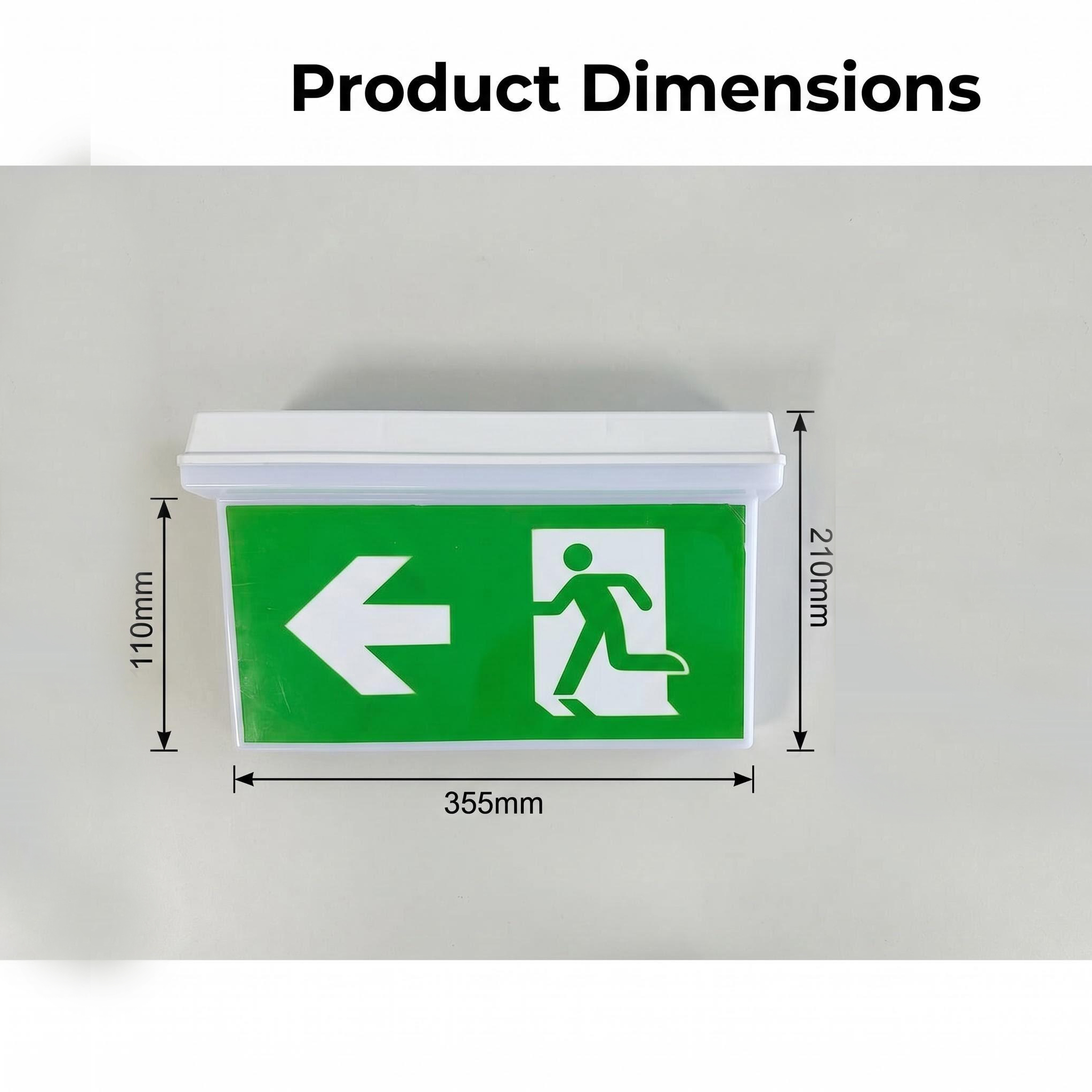
Industry Applications for Battery Powered Exit Signs
Battery powered exit signs serve distinct code and operational requirements across sectors. The table below matches typical installations to the specification a qualified buyer should verify, followed by sector-specific detail on what those numbers mean in practice.
| Sector | Typical Installation | Recommended Specification | Why This Product Fits |
|---|---|---|---|
| Commercial Offices and Fit-Outs | Ceiling or wall mounted above corridor intersections, open plan egress routes | Non-maintained, 90 min duration, 2W LED panel, LiFePO4 3.2V 1500mAh, AC 220-240V 50Hz, IP20, self-test | Minimal wiring disruption during tenant refits; self-test reduces maintenance call-outs in multi-let buildings |
| Hospitals and Clinics | Corridor ceilings, above ward doors, stairwell landings | Maintained or non-maintained, 3 hours duration, 3W output, LiFePO4 3.2V 3000mAh, AC 85-265V, IP44 minimum, DALI test | BS 5266-1 and HTM 05-02 require 3 hours for patient sleeping areas; maintained wiring supports 24/7 corridor illumination |
| Schools and Universities | Hallways, gymnasium exits, auditorium rear walls | Non-maintained, 90 min or 2 hours, 2W, NiCd 3.6V 1200mAh or Li-ion 18650 7.4V 2200mAh, AC 220-240V, IP33, manual test key | Budget pressure favours lower capacity NiCd options; vandal resistance and IK08 rating common in public circulation areas |
| Retail and Shopping Malls | Suspended ceiling grids, fascia signage, escalator heads | Non-maintained, 90 min, 2W-4W LED, LiFePO4 3.2V 2000mAh, AC 100-277V, IP20, self-test | Wide input voltage suits landlord distribution across international tenant mix; self-test essential for high ceiling access difficulty |
| Warehouses and Logistics Centres | High racking aisles, loading dock egress doors, mezzanine stair tops | Non-maintained, 90 min, 4W-6W, LiFePO4 3.2V 3000mAh or Li-ion 18650 11.1V 2600mAh, AC 100-277V, IP65, IK10 | EN 1838 requires 1 lux minimum on floor at end of duration; higher output compensates for 8-12m mounting heights |
| Car Parks and Stairwells | Soffit mounted, concrete wall fixings, tunnel-style continuous runs | Non-maintained, 90 min or 2 hours, 2W-4W, LiFePO4 3.2V 2500mAh, AC 220-240V, IP65 minimum, self-test | Condensation and vehicle impact demand IP65 and IK10; lithium batteries avoid NiCd temperature derating below 0°C |
Commercial Offices and Fit-Outs
Tenant churn drives specification here. A non-maintained battery exit sign drawing 2W emergency output from a LiFePO4 3.2V 1500mAh pack delivers roughly 90 minutes at constant current, typically 350mA from the inverter. The normal LED panel runs at 3W-5W from AC 220-240V 50Hz via the built-in changeover relay. Self-test circuitry per EN 62034 automates the 30-second functional and annual duration checks, removing the access burden in buildings where facilities management is contracted out. Buyers should request discharge test records showing the pack reached 90 minutes at 25°C ambient after 24-hour charge, and confirm the supplier’s ageing station can simulate 500 cycles to verify LiFePO4 capacity retention.
Hospitals and Clinics
Three-hour duration is non-negotiable for patient evacuation under BS 5266-1 and HTM 05-02. A 3W maintained exit sign with LiFePO4 3.2V 3000mAh pack runs the legend at reduced output during normal hours and switches to full emergency output on mains failure; the maintained wiring keeps the legend illuminated 24/7 via the internal relay. DALI test integration allows building management systems to poll individual fitting status, fault codes and remaining battery capacity. The wider AC 85-265V input suits sites with 120V medical-grade UPS distribution or 230V standard lighting circuits. IP44 minimum protects against corridor cleaning regimes. Buyers must verify the supplier holds discharge records at the 3-hour point, not extrapolated from 90-minute data.
Schools and Universities
Capital budgets here often steer buyers toward NiCd 3.6V 1200mAh packs with lower unit cost but shorter cycle life, typically 300-400 full discharges versus 500-800 for LiFePO4. The trade-off is replacement frequency: a school corridor with manual test key operation may see annual deep discharges during compliance testing, ageing NiCd faster than lithium chemistry. Li-ion 18650 7.4V 2200mAh configurations offer intermediate positioning. IK08 impact resistance is prudent for vandal-prone locations. EN 60598-2-22 requires the legend remain legible after mechanical test; ask for the supplier’s IK test report or hipot station records rather than assuming compliance.
Retail and Shopping Malls
Landlord specifications increasingly mandate AC 100-277V input to accommodate North American tenant equipment on 120V or Middle Eastern 230V distribution without separate SKU proliferation. A 2W-4W non-maintained sign with LiFePO4 3.2V 2000mAh pack and self-test module reduces ladder-access maintenance in 6-8m ceiling voids. The 90-minute duration satisfies most jurisdictions; confirm local amendments, as some Middle Eastern mall codes extend to 2 hours. Carton quantities of 20-40 units and palletised FOB Shenzhen terms suit developer-scale procurement with 4-6 week lead times for branded legends in Arabic or dual-language configurations.
Warehouses and Logistics Centres
Mounting height creates the specification tension. EN 1838 mandates 1 lux minimum on the escape route floor at end of duration; at 10m mounting with wide beam distribution, this demands 4W-6W emergency output from LiFePO4 3.2V 3000mAh or Li-ion 18650 11.1V 2600mAh configurations. The constant current inverter output window, typically DC 12-36V at 350mA-700mA depending on LED string voltage, must be matched to the load. IP65 and IK10 protect against dust ingress from forklift traffic and accidental impact from pallet movements. Non-maintained wiring is standard; maintained operation is rarely justified in intermittently occupied storage aisles. Battery traceability matters here: logistics operators with ISO 14001 commitments should request cell-level UN 38.3 test summaries for lithium shipments.
Car Parks and Stairwells
Temperature range separates lithium from legacy NiCd. Car park soffits in northern Europe or high-altitude locations see sustained sub-zero conditions where NiCd capacity derates 20-30%; LiFePO4 3.2V 2500mAh packs maintain rated discharge capacity at -10°C to +45°C ambient. IP65 prevents water ingress from pressure washing and salt spray in coastal or underground structures. Self-test is strongly preferred given the access difficulty and low occupancy that would delay fault detection. Stairwell installations often run continuous with standard emergency luminaires; verify the exit sign inverter output is compatible with shared battery systems if central battery architecture is specified. Buyers should confirm the supplier’s hipot test station applies 1500V AC or 2U+1000V minimum to each finished unit per IEC 61347-2-7, and request batch test records rather than type-test certificates alone.
Ordering and Importing Step by Step
The three mistakes that most often leave a delivered batch of battery powered exit signs unusable are easy to prevent with five minutes of specification work before issuing a PO. First, an output window that does not match the host fixture—fix by recording the fixture’s LED driver architecture and required DC input range before selecting the emergency inverter. Second, a duration or illuminance level below local code—fix by confirming the required emergency output in lumens and the minimum 90 minute, 2 hour or 3 hour duration against EN 1838, BS 5266-1 or AS/NZS 2293 before finalising the battery capacity. Third, missing lithium battery or conformity documentation at customs—fix by requiring UN 38.3 test summaries and the correct CE, UKCA, UL or RCM conformity evidence in the supplier’s pre-shipment file.
Supplier Qualification Before Ordering
A real manufacturer of battery powered exit signs controls SMT placement, PCB assembly, battery pack build and final ageing in one facility or under direct partnership. Ask to see:
- SMT and assembly capacity: In-house or partnered Yamaha or Juki pick-and-place lines, reflow ovens, and AOI stations. Trading offices show you a catalogue; manufacturers show you a floor plan with daily output numbers.
- Battery sourcing and traceability: Cell supplier names, batch codes, and incoming cell voltage/IR consistency records. LiFePO4 3.2V 1500mAh to 3000mAh packs and Li-ion 18650 3.7V 2000mAh to 2600mAh packs are standard; NiCd 3.6V to 9.6V 600mAh to 1500mAh packs persist in legacy specifications. Ask for the cell manufacturer’s own datasheet and the pack assembler’s welding pull-test records.
- Discharge and duration test records: Every batch should have sampled discharge curves at 25°C ambient showing maintained output at the rated wattage for the full duration. Ask for a template report before you order.
- Ageing and hipot test stations: 100 percent hipot at 1500V AC or 2U+1000V per EN 60598-2-22, plus minimum 2-hour ageing at full load before final test. Trading offices skip this or outsource it unpredictably.
- Third party test reports for your market: The supplier should hold or be able to obtain EN 60598-2-22 and EN 1838 test reports for the exact model variant, plus EN 62034 for self-test versions. For North America, UL 924. For Australia, AS/NZS 2293. Do not accept a report for a different housing or battery configuration.
- Sample lead time: 7 to 14 days for tooled variants, 3 to 5 days for stocked standard models. Anything longer suggests the supplier is routing through a subcontractor.
- Payment structure: 30 percent deposit, 70 percent against copy of bill of lading is standard for first orders. Escrow or L/C terms are reasonable for initial six-figure orders.
- After-sales engineering capability: Ask who redraws the wiring diagram if your host fixture uses a 1-10V dimming driver or a DALI broadcast circuit. The answer should be an in-house engineer, not a forwarded WeChat message.
The Ordering and Import Checklist
- Record the host fixture type, wattage and driver architecture
- Normal LED module power: __ W
- Driver type: constant voltage (typically 12V DC, 24V DC, 36V DC) or constant current (typically 250mA, 350mA, 500mA, 700mA)
- Output window required: __ V DC at __ mA
-
Whether the fixture has integrated dimming (1-10V, DALI, DALI-2) that the emergency inverter must bypass or respect
-
Confirm required duration and emergency output level
- Duration: 90 minutes / 120 minutes / 180 minutes (circle one)
- Emergency output as percentage of normal: 100 percent / 50 percent / 10 percent (non-maintained sign-only units may run at zero normal output)
- Minimum emergency illuminance on the sign face: 2 lux at floor level per EN 1838, or local variant
- Battery chemistry and capacity to achieve this: LiFePO4 __ V __ mAh, Li-ion 18650 __ V __ mAh, or NiCd __ V __ mAh
-
Charge time from flat: typically 24 hours for NiCd, 6 to 12 hours for LiFePO4 and Li-ion
-
Choose maintained or non-maintained wiring
- Maintained: live switched supply to the inverter, sign illuminated during normal operation, emergency battery engages on mains failure
- Non-maintained: unswitched supply to the inverter only, sign dark during normal operation, battery and inverter activate on mains failure only
-
Wiring diagram must show changeover relay rating: typically 2A at 250V AC for the relay contacts
-
Decide manual test key versus self-test
- Manual test key: push-button or switch on the inverter housing, requires physical access, lowest cost
- Automatic self-test per EN 62034: 10-second functional test monthly, 60-minute duration test annually, status LED on housing
-
DALI self-test: remote interrogation of test results and fault flags via DALI bus, requires DALI-compliant inverter and control gear
-
Confirm mains voltage and frequency
- Input voltage range: AC 85-265V 50/60Hz (universal), AC 100-277V 50/60Hz (North America), or AC 220-240V 50Hz (UK/Europe/Middle East/Africa)
-
Verify the inverter’s declared range covers your nominal plus statutory tolerance
-
Confirm the conformity mark and test report the destination market needs
- UK: CE or UKCA marking, EN 60598-2-22 and EN 1838 test reports, BS 5266-1 design compliance
- EU: CE marking, EN 60598-2-22 and EN 1838 test reports
- North America: UL 924 listing or ETL equivalent
- Australia/New Zealand: RCM marking, AS/NZS 2293 test reports
- Middle East/Gulf: G-Mark or SASO depending on specific country, often accepting CE test reports with local verification
- Southeast Asia: varies by country; Singapore requires SS 538, Malaysia requires MS 619, both derived from EN frameworks
-
Request the test report number and issuing laboratory accreditation before deposit payment
-
Check IP rating and ambient temperature for the mounting position
- Indoor dry: IP20, -10°C to +45°C ambient
- Indoor humid or dusty: IP54 minimum, -10°C to +40°C ambient
- Outdoor or harsh industrial: IP65 to IP66, -20°C to +50°C ambient with derated battery capacity below 0°C
-
IK rating for vandal resistance: IK08 (5J) for public areas, IK10 (20J) for high-risk environments
-
Agree MOQ and sample approval before mass production
- Standard MOQ for battery powered exit signs: 100 to 500 units depending on housing and legend complexity
- Sample approval: two signed-off samples retained by buyer and supplier respectively
-
Production lead time from approved sample: 25 to 35 days for orders under 2,000 units; 40 to 55 days for larger volumes or custom legends
-
Require batch duration test records
- Specify in the PO: 100 percent hipot and functional test, plus sampled discharge duration test on minimum 2 percent of batch or 5 units, whichever is greater
-
Records to include: battery pack batch code, ambient temperature during test, load in watts, duration in minutes, end-point voltage
-
Arrange lithium battery shipping documents and the right freight mode
- UN 38.3 test summary for each lithium cell and battery pack model, available from cell manufacturer and pack assembler
- UN 3480 (standalone lithium ion) or UN 3481 (lithium ion packed with equipment) classification for Li-ion; UN 3090 or UN 3091 for lithium metal if used
- IATA Dangerous Goods Regulations for air freight: typically limited to 30 percent state of charge, Section II or Section IB packing depending on watt-hour rating
- IMDG Code for sea freight: less restrictive, generally preferred for orders over 500 units
- Correct hazard labels, shipper’s declaration, and emergency response telephone number on outer packaging
-
Specify carton and pallet packing and labelling
- Individual carton: 5 to 10 units per carton for standard thermoplastic housings, 2 to 4 units for metal housings
- Carton dimensions and gross weight to suit your warehouse racking and manual handling limits
- Outer carton marking: product code, quantity, battery chemistry warning, UN number if lithium, handling orientation arrows
- Pallet: standard 1200mm × 1000mm Euro pallet or 1200mm × 800mm pallet, maximum 800kg per pallet, stretch-wrapped and banded
- Container loading: 20GP approximately 250 to 300 cartons depending on housing size; 40HQ approximately 600 to 700 cartons
-
Plan the commissioning and first annual test on site
- Commissioning: verify every unit illuminates on simulated mains failure, measure sign face illuminance with lux meter at specified points, record date and result
- First annual duration test: perform full discharge test to confirm the unit meets the rated duration; replace any unit that falls below 80 percent of rated duration
- Logbook format per BS 5266-1 or local equivalent, retained on site for inspector review
- DALI self-test systems: verify bus communication and automated test schedule before handover
Related Hymark Products
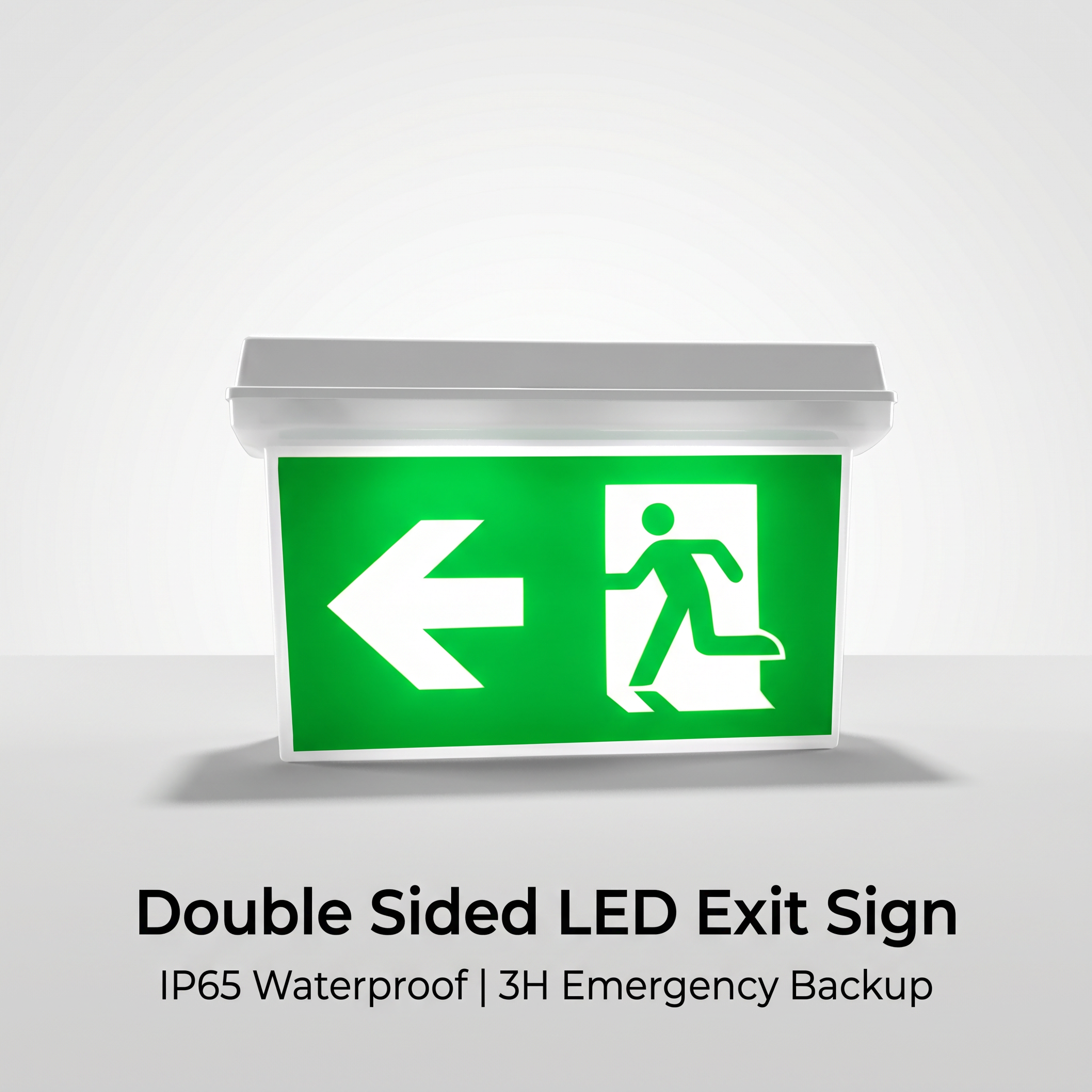
Emergency Exit Signs
Single and double sided LED exit signs with running man or lettered legend, surface or recessed mounting and integral battery backup.
Frequently Asked Questions About Battery Powered Exit Signs
Minimum Order Quantity and Price Drivers
Q: What is the typical MOQ for battery powered exit signs from a Chinese manufacturer, and what drives unit cost?
MOQ usually sits at 100 to 500 units for standard ABS-body signs with single-face legends, scaling to 1,000 units for custom aluminium housings or bespoke pictogram sets. Price drivers include: LiFePO4 versus NiCd battery chemistry (LiFePO4 adds 15-25% BOM cost but delivers 500-800 cycles versus 300-500), IP65 sealing versus IP20, and whether the inverter module is constant-current output (3.6V-9.6V DC window, 350mA or 700mA) or simpler resistor-limited. Laser-etched legends cost more than printed film but survive 50,000 hours without degradation.
Confirming Product Suitability for Host Fixtures
Q: How do I confirm a battery powered exit sign module will suit my existing luminaire or housing?
Request the supplier’s inverter module dimensions (typically 120mm x 40mm x 25mm for 3W emergency output), mounting hole pattern, and the LED board Vf range. Verify the changeover relay rating (3A at 250V AC is common for maintained wiring). For OEM integration, ask for the open-frame inverter module without the ABS enclosure, plus the LED indicator board wire length—150mm is standard, 300mm usually available on request. Check that the legend orientation matches your ceiling or wall mounting.
Emergency Duration and Output Options
Q: What emergency duration and light output options are available, and how do they relate?
Standard durations are 90 minutes, 120 minutes, and 180 minutes per EN 1838. A 3W LED emergency output at 50 lumens suits 90-minute duration with a 3.2V LiFePO4 3000mAh pack; stepping to 180 minutes at the same 3W requires 6000mAh or reduced output to 1.5W yielding roughly 25 lumens. EN 1838 mandates minimum 2cd/m² legend luminance for escape routes; verify the supplier’s test records show this at battery end-of-discharge voltage, not just at 30 minutes. High-output options at 5W (80 lumens) exist for high-ceiling applications.
Maintained Versus Non-Maintained Wiring
Q: Can the same battery powered exit sign work in maintained and non-maintained installations?
Most modules accept both wiring modes via a changeover relay. Non-maintained: permanent live to the inverter, lamp off in normal mains, energised only on failure. Maintained: separate switched live to the LED board for normal illumination, with the inverter taking a permanent unswitched feed for monitoring; the relay transfers load to battery on mains loss. Confirm the module has three terminals (L permanent, L switched, N) not two, and that the relay coil draw (typically 0.5W) is accounted for in your circuit loading per BS 5266-1 clause 7.
Self-Test and Remote Monitoring Options
Q: What test facility options exist, and what do they add to cost and wiring?
Manual test key is baseline: momentary switch interruption simulates mains failure. Self-test per EN 62034 adds 8-12% to module cost; the inverter runs automatic 10-second functional tests monthly and 90-minute duration tests annually, with LED fault indication. DALI self-test adds 15-20% and requires a DALI bus pair (16V typical, 2mA quiescent) alongside mains wiring, reporting status to central BMS. Non-DALI self-test modules cannot be retrofitted to DALI; specify at order.
Battery Chemistry and Replacement Interval
Q: What battery chemistries are used, and when must they be replaced?
NiCd 3.6V 1500mAh packs remain available for price-sensitive markets but carry 300-500 cycle life and 4-hour charge time; replacement interval 3-4 years. Li-ion 18650 3.7V 2600mAh delivers 500-700 cycles, 3-hour charge, 3-year replacement typical. LiFePO4 3.2V 3000mAh achieves 500-800 cycles, 2.5-hour charge, with calendar life extending to 5-7 years in 20°C ambient. All chemistries degrade faster above 35°C ambient; specify the Ta range (0°C to 50°C is common, -10°C to 60°C premium) and whether the module has temperature-compensated charging.
Lead Time Sample Policy and Payment Terms
Q: What lead time should I expect, and what is the typical sample and payment structure?
Standard product samples ship within 5-7 working days ex-factory; custom legends or housing colours add 10-12 days. Production lead time is 25-35 days for 500-2,000 units, 45-55 days above 5,000 units or during Q4 peak. Payment structure: 30% T/T deposit, 70% against B/L copy for orders under $50,000; L/C at sight negotiable above $100,000. Samples typically cost 1.5-2x unit price, credited against first production order. Verify the supplier holds raw battery stock or faces 15-20 day cell lead time from their tier-1 source.
Test Reports Conformity Marks and Destination Market Compliance
Q: Which test reports and conformity marks should I request for my destination market?
For UK/Europe: ask for third-party test reports to EN 60598-2-22 and EN 1838, with EN 62034 if self-test specified; CE marking is supplier self-declaration, so verify the test house is ILAC-accredited. For UL 924 North America: a true manufacturer can show OSHA NRTL test reports, not just a supplier’s word. For AS/NZS 2293 Australia: RCM marking requires local importer registration. For Middle East: SASO IECEE CB test certificates speed customs. Never accept photocopies without matching report numbers; cross-check with the test house online database where available.
Lithium Battery Shipping Documents and Mode
Q: How do lithium battery chemistries affect shipping mode and documentation?
Li-ion and LiFePO4 packs over 100Wh per unit (rare in exit signs; typical pack is 9.6Wh for 3.2V 3000mAh) fall under UN 38.3 Section II for air freight IATA PI 966/967, requiring 1.2m drop test and altitude simulation records from the cell supplier. Sea freight IMDG Code SP 188 applies below 100Wh with reduced documentation. UN 38.3 test summary (T1-T8) must be available for customs inspection; ask for the MSDS and dangerous goods transport certificate in advance. NiCd ships as non-dangerous goods, simplifying logistics to Africa and Latin America.
Warranty Spare Parts and After-Sales Engineering
Q: What warranty and spare parts support should a qualified manufacturer offer?
Standard warranty is 3 years on the inverter module, 2 years on Li-ion/LiFePO4 batteries, 1 year on NiCd. A manufacturer with in-house capacity stocks replacement inverters, battery packs, and LED boards with 2-week spare parts dispatch; trading offices often cannot. Ask for the MTBF figure (typically 50,000 hours for the inverter, 30,000 hours for the LED board at Ta 25°C) and whether firmware updates are possible for DALI self-test modules. After-sales engineering should include wiring diagram review and fault-code interpretation within 24 hours across time zones.
OEM Branding Packaging and Private Labelling
Q: What OEM branding and packaging options are available from the factory?
Laser-etched housing logos add no MOQ penalty but require vector artwork and 3-day setup. Custom carton printing at 1,000 units; standard export cartons are 10-unit double-wall with foam inserts, palletised 20 cartons per IPPC-ISPM15 hardwood pallet. Individual retail boxes at 3,000 units. Instruction sheets in local language (EN, DE, FR, ES, AR) at 500 units. Verify the supplier’s SMT line can adjust LED board colour temperature if your brand specifies 4000K versus 6000K; otherwise you receive their standard stock.
Installation Commissioning and Technical Support
Q: What installation and commissioning support does a real manufacturer provide versus a trading office?
A manufacturer with in-house assembly provides dimensioned CAD drawings, photometric IES files for lighting design software, and clause-by-clause compliance statements against EN 60598-2-22 or BS 5266-1. Commissioning support includes: maintained wiring schematic with changeover relay terminal numbering, DALI address programming guide, and battery initial charge time (24 hours for full capacity, 48 hours for LiFePO4 formation). Trading offices forward WeChat messages to the factory with 48-hour lag. Request a video call with the production floor and test station before placing deposit.
Important Notice
Specifications, output and duration figures and price ranges in this guide are indicative and are provided
for planning purposes only. Actual emergency output, duration, battery life, ingress protection and available conformity documentation
differ by model and by destination country, and emergency lighting design remains the responsibility of the project designer. Buyers
must confirm their own mains voltage and frequency, the emergency lighting standard enforced locally, the host fixture compatibility
and their import requirements before placing an order. All figures are subject to written confirmation in the final proforma invoice
issued by Hymark.
Sourcing Battery Powered Exit Signs from Hymark
What to Verify Before You Commit
A battery powered exit sign is only as reliable as the factory that built it. Ask your shortlisted supplier for three things: discharge test records that match your required duration, battery cell traceability back to the cell manufacturer lot, and a third-party test report for the exact destination market. EN 60598-2-22 requires 90 minutes minimum emergency duration; BS 5266-1 and AS/NZS 2293 may demand 2 hours or 3 hours depending on building classification. The report should cover the complete sign, not just the LED module. If the supplier cannot produce these within 48 hours, they are likely routing through a trading office.
How Hymark Structures Production and Verification
JIALINGHANG ELECTRONIC CO., LTD. was founded in 2013 as a global LED exporter in general illumination, shifted focus to LED emergency technology and high performance LED strips in 2017, and launched Hymark in 2026 as its premium brand. Product design and R&D are managed in-house; manufacturing runs through partnered facilities that have operated since 2013 and include SMT lines, battery pack assembly stations, ageing burn-in racks, and hipot test stations. Battery chemistry options span LiFePO4 3.2V 1500mAh to 3000mAh, Li-ion 18650 3.7V 2000mAh to 2600mAh, and NiCd 3.6V 700mAh to 1500mAh, with charge times from 16 hours (NiCd) to 6 hours (LiFePO4). Cycle life ranges from 500 cycles (Li-ion 18650) to 1500 cycles (LiFePO4). Constant current inverter output is typically DC 6V to 24V at 150mA to 700mA, driving 1W to 5W LED loads for emergency outputs of 50lm to 350lm depending on legend size and optics. Self-test and DALI test facilities are available; maintained or non-maintained wiring is selectable per order.
Price Drivers and Lead Time Reality
LiFePO4 packs add 15% to 25% to unit cost versus NiCd but deliver longer cycle life and lighter weight for air freight. Custom legend films, IP65 enclosures versus standard IP30, and 3-hour duration configurations each extend tooling and burn-in time. Standard configurations ship in 15 to 20 days after order confirmation; OEM colour or branded packaging adds 5 to 7 days. Samples ship in 5 to 7 days from confirmed specification. MOQ is typically 100 units for standard exit signs, 500 units for custom legend or housing colours. Terms are 30% deposit, 70% before shipment; FOB Shenzhen or CIF to your destination port.
Send Your Specification for Quotation
Send the host fixture type and wattage, the emergency duration your code requires (90 minutes, 2 hours, or 3 hours), your mains voltage (AC 85-265V, 100-277V, or 220-240V), and your destination port. Hymark will return a quotation within 24 hours via WhatsApp or email with matched inverter output, battery configuration, and packing detail.
Get a Factory Direct Quote on Battery Powered Exit Signs
JIALINGHANG ELECTRONIC CO., LTD. has been in LED lighting since 2013 and has focused on
LED emergency technology and high performance LED strips since 2017. Hymark products are co-designed with our
dedicated manufacturing partners, built with selectable emergency duration and maintained or non-maintained wiring, and function
tested before packing. Send us the host fixture type and wattage, the emergency duration your local code requires, your mains
voltage and your destination port and we will return a quotation within 24 hours.


 English
  Spanish
  Arabic
  French
  German
  Russian
  Portuguese
  Italian
  Vietnamese